
In July, you can immerse yourself in a tradition that is over 1,000 years old. The Gion Matsuri, which is held in July, is more than just a festival. It’s also a living museum that showcases Japanese culture, tradition, and community spirit. This month-long festival is Japan’s most popular summer event, drawing millions of people with its magnificent parades, vibrant streets, and ancient ceremonies. This guide will take you through the history of the Gion Matsuri. We’ll reveal the major events and highlights and give you travel tips to help you experience this celebration like a native. Discover why the Gion Matsuri will be a highlight of your trip to Japan.
Gion Matsuri, From plague ritual to cultural masterpiece
Kyoto’s history is woven around the Gion Matsuri. The Gion Matsuri began as a solemn, desperate prayer. Kyoto was devastated by a deadly epidemic in 869 AD. Many believed that the plague was caused by vengeful spirit. Emperor Seiwa instigated a ritual to appease the spirits and prevent an epidemic. Shinsen-en was an imperial garden where 66 ceremonial halberds were erected, one for every province in Japan at that time. The city was purified by a portable shrine ( mikoshi), which came from Yasaka Shrine. The festival was born with this first, emotional ceremony.
What began as a purification rite, or Goryo-e evolved over the centuries into a vibrant culture spectacle. As the city prospered wealthy merchants and artists began to sponsor and embellish the floats. They transformed them into magnificent pieces of art. These mobile masterpieces were known as yama or hoko. They allowed communities to display their wealth and craftsmanship.
The festival’s connection with Shinto and Yasaka Shrine is still its heart. The spiritual center of the festival is the shrine, affectionately known as “Gion”-san. The portable mikoshi is believed to house the deities of this shrine, and they are paraded around the city to bless streets and residents. The procession of the floats with the mikoshi is still considered a sacred purification act. This tradition has survived wars and fires as well as the march of modernization.
When and where Gion Matsuri takes place
Gion Matsuri, which is held in Kyoto for a month long celebration, is not just a day-long event. It is a major festival that takes over the city. The two main parades, which are always the most popular, are not only the highlights of the festival, but also the ones that draw the biggest crowds. The first, and most grandiose parade, Yamaboko Junko takes place on 17th July. The second parade is a smaller, but no less enchanting, procession that takes place on the 24th.
Kyoto’s downtown is the main location for festival events. The floats will be assembled and paraded down major thoroughfares like Shijodori or Kawaramachidori. Yasaka Shrine, in the Gion District, is the spiritual center. This is where many rituals and processions begin.
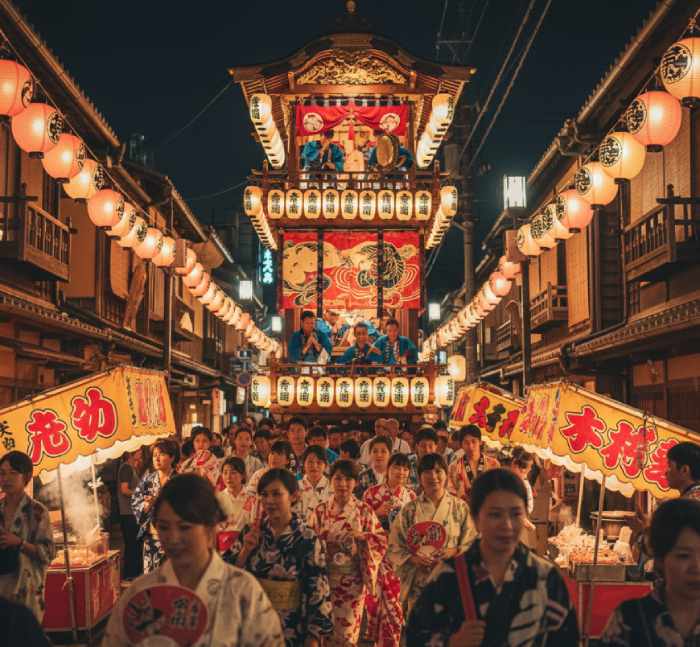
The mood changes dramatically from day to night. The air is charged with excitement during the day as people await the grand parades. The streets are transformed into a pedestrian only zone at night, especially during the three days leading up to the parades. There are lanterns, food stands, and live music. It’s a great opportunity to get up close and personal with the floats in a relaxed and festive atmosphere.
Gion Matsuri Highlights and Key Events
Gion Matsuri consists of a variety of events that each have their own charm and significance.
Yamaboko Junko
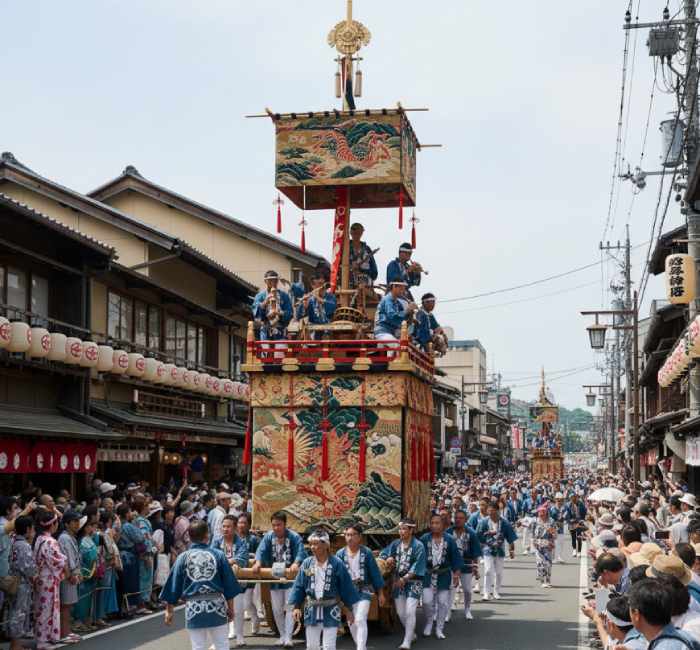
The Gion Matsuri is a major event. On the 17th of July, 23 magnificent floats are pulled through the streets. Some of these floats weigh over 10 tons and are built using traditional methods without nails or screws. Hoko is the largest of the two floats, with a central pole that towers over 25 meters. Yama is smaller, and often carries life-size effigies. The procession is an impressive display of community spirit, artistry and tradition. It’s set to the rhythmic sounds of traditional Gion Bayashi played by musicians aboard the floats.
Yoiyama Nights
The Yoiyama night is the name given to the three nights that precede the main parade on July 14th, 15, and 16. Traffic is prohibited in the streets surrounding the floats, which are transformed into a lively, open-air festival. Visitors can admire the intricate details of the floats and purchase festival charms. The floats will be illuminated with lanterns. Gion Bayashi fills the air with the smell of street food. Byobu Matsuri is an event where many homes and businesses display their family heirlooms and treasures.
Rituals & Processions
The festival includes many ancient rituals as well as smaller processions. The Omukae Chochin processional sees children with lanterns lead the sacred Mikoshi into Shijo-Otabisho. This is a temporary resting spot. The Shinko Sai, and Kanko Sai, rituals, which take place on the 17th and the 24th of July, involve the procession and worship of portable shrines from Yasaka Shrine. This is a deeply spiritual and solemn part of the festival.
Kyoto’s historic role as a cultural and commercial center is reflected in the festival by the tapestry decorations that decorate the floats. Some of these are from Persia or Belgium. Participants, dressed in traditional kimonos and yukatas add to the timeless, immersive atmosphere.
Gion Matsuri: Cultural Importance
The Gion Matsuri is more than a tourist attraction. It is a celebration of Japanese culture. The festival is organised and maintained by local groups known as chonai. The chonai is responsible for building and maintaining their designated float. It is a family tradition. This is a source for pride and unity.
The festival’s religious roots and cultural roots cannot be separated. The rituals and performances at Yasaka Shrine reinforce the bond between the community, the deities and themselves. The rituals also serve as a purification of the city every year. In 2009, UNESCO designated the Gion Matsuri Yamabokojunko a Cultural Intangible Heritage of Humanity. Its global significance and role in the preservation of old traditions are acknowledged.
Enjoy local food, shopping, and experiences
Gion Matsuri is a Japanese festival which would not be complete without food. Yoiyama Night is full of street food stalls that sell popular Japanese foods. Try takoyaki or chicken skewers to cool down from the summer heat.
A unique shopping experience is also offered by the festival. The festival also offers a unique shopping experience. Many stalls sell special Gion Matsuri charms, which are said to bring luck and protection from misfortune.
Travel Tips to Attend Gion Matsuri
Due to its popularity, it is important to plan ahead.
Arrive Early: To get a good spot to watch the parade, arrive before 9:00 AM on the 17th of July. Early evening is the best time to visit the Yoiyama Nights. This allows you to see the floats without the crowds.
Best Viewing Areas: Although the parade route is crowded, you can find quieter viewing areas on the side streets. You can get around using public transportation, but you should be prepared for crowded buses and trains. You can easily move around the main parade route by walking.
Accommodation: Book accommodation well in advance as hotels and guesthouses are booked up months in advance. It is more convenient to stay near the main parade routes, but it can also be more expensive.
Cultural Etiquette: Remind yourself that you are attending a culturally and religiously significant event. Respect rituals and avoid blocking locals’ paths. Ask permission before taking pictures of people. Dress modestly if you are planning to visit a temple or shrine.
Compare Gion Matsuri with Other Japanese Festivals
The Gion Matsuri is one of many festivals in Japan. The Gion Matsuri is unique in its blend of ancient traditions and grand-scale art. It stands out from other festivals, such as the Nebuta Matsuri, which is celebrated in Aomori for its illuminated, colorful floats or the Awa Odori, held in Tokushima for its energetic, dance parades. The Gion Matsuri is the most historical festival in Japan because of its floats with their intricate craftsmanship and historical significance. The UNESCO designation further cements its status as a cultural jewel.
FAQs (Frequently Asked Questions)
When does Gion Matsuri take place? Throughout the month of July with the two main parades taking place on July 24th and 17th.
Is it free to attend the festival? The festival and parades are both free. You will only be charged for food and souvenirs or for special seating reserved for the parades.
Yes, international visitors are welcome to join in the celebrations. Tourists are welcome to attend the festival.
Can I take pictures during the parades or is it prohibited? No, you cannot photograph, but please be courteous and don’t use flash or block other people’s views.
The conclusion of the article is:
Gion Matsuri offers a journey through history, a perfect blend of ancient spirituality with vibrant community life. The Gion Matsuri is a unique opportunity to see Japan’s heart and soul. It shows the nation’s dedication to its culture. The pulsating streets, the majestic floats and the solemn ceremonies all combine to create a grand experience.
Plan a trip to Kyoto to experience this unique festival in July. This is an invitation not only to see but also to take part in one of the most spectacular cultural celebrations on earth.