
Ireland during March is a memorable experience when the nation changes into a vibrant center of music, green and celebration. Although St. Patrick’s Day is an international phenomenon it is the best spot to soak up the true spirit of the holiday than in the country it is based on. This blog article will take you through the very heart of this renowned celebration. We’ll explore the fascinating story of St. Patrick, explore the rich traditions that mark the day, and point you to the most appropriate locations to celebrate the day, from the busy avenues in Dublin to the picturesque villages in rural Ireland. Be prepared to experience the joy that is St. Patrick’s Day.
The Origins and History of St. Patrick’s Day
To fully appreciate St. Patrick’s Day, one must first know the history behind it. The person who created the legend was not Irish. He was born within Roman Britain in the late 4th century His surname was Maewyn Succat. At 16 years old He was abducted by Irish pirates and taken into Ireland to be a slave which was where he worked as an oxen farmer for six years. In this time he sought refuge through faith in his Christian faith. Following seeing a vision, he left then returned to Britain and became Priest and changed his name back to Patrick. Later, he came back to Ireland as a missionary which would forever connect him in his homeland of the Emerald Isle.
St. Patrick is credited for his contribution to bringing Christianity to Ireland and blending Christian doctrines with pagan rituals. The most well-known legend is the use of the shamrock with three leaves to represent the Holy Trinity: the Father and the Son as well as Holy Spirit. This simple gesture established the Shamrock as a symbol of national significance. Although the tale is probably an embellishment later on that speaks to Patrick’s inventiveness in making complicated religions accessible to native Irish.
For many centuries, St. Patrick’s Day was a solemn holiday. It was a time for Mass and contemplation, an opportunity to take a break from the Lenten fasting time. It was the first St. Patrick’s Day parade was, however, not originate from Ireland. The first parade that was recorded was organized by Irish soldiers who were part of the British army in New York City in 1762. It was an opportunity for Irish immigrants to honor their culture as well as reconnect to their ancestral roots. The tradition of parades spread across the Irish diaspora throughout North America and beyond before returning to Ireland. In the beginning, an officially recognized St. Patrick’s Day parade in Ireland was held in Waterford in 1903 before Dublin following suit in 1931.
Traditions and Customs in Ireland
Modern St. Patrick’s Day celebrations in Ireland are a mix of deeply rooted traditions and contemporary celebrations. The most famous custom is, naturally, the wearing of shamrocks and the color green. While blue was initially linked to St. Patrick, green became the official color because of its connection to the shamrock as well as the lush landscapes of Ireland. It is said that wearing green for St. Patrick’s Day wards away leprechauns who are naughty–a enjoyable, yet purely American belief. In Ireland the shamrock has become the main symbol, usually worn as a lapel ornament or attached to the top hat.
The practice of religious observance is a crucial element of daily life for many. Even though it’s a public holiday and a day to celebrate there are lots of Irish people still attend morning Mass. It’s a peaceful time to pay tribute to of the patron saint’s legacy prior to when the festivities begin.
The heartbeat of culture on St. Patrick’s Day in Ireland is the music and dance. Traditional music gatherings, or ceilis can be heard in the air. Fiddles, the bodhrans, and tin whistles (an Irish frame drum) is heard in pubs and out onto the streets. Irish dancers traditional and contemporary are seen at events and festivals and showcase the thumping dance and spirit that is characteristic of Irish culture.
What’s a party without food and drinks? Although food and drink, the American practice of serving corned cabbage and beef is well known but it’s actually an Irish-American invention. In Ireland the most traditional dinner is bacon and cabbage, or the delicious Irish stew that is made from lamb, potatoes along with root vegetable. Soda bread is a common staple and is often eaten warm and with butter. Of course the day is always accompanied with the drinking of a pint Guinness. The tradition that is known as “drowning the shamrock,” or Pota Phadraig, involves putting a shamrock into the last glass of whiskey and a toast to the health of the saint before drinking the whiskey.
How St. Patrick’s Day is Celebrated in Ireland Today
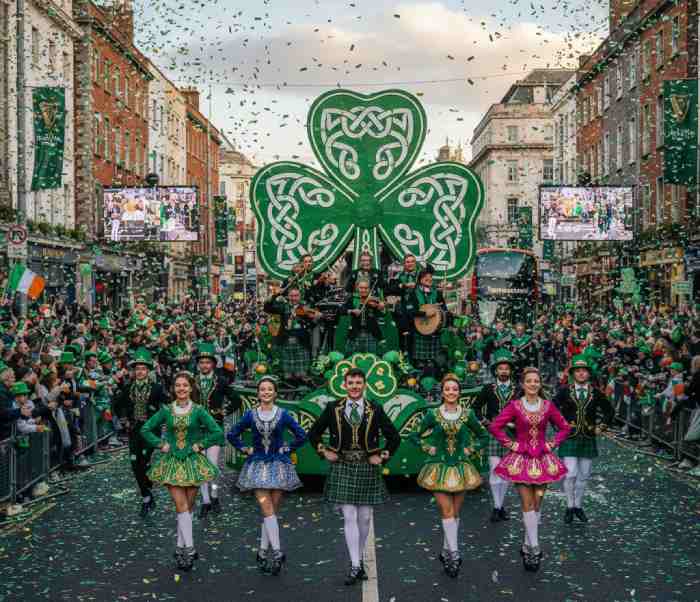
Today, St. Patrick’s Day is a nationwide celebration that extends far beyond just a single day. The most important event is the parade. It’s a display of community, imagination and national pride. Parade bands from all over the globe elaborate floats and street performers fill the streets with colors and music. The festival usually lasts many days, with street performances, concerts and cultural activities.
In small and large towns alike, celebrations are truly a community effort. Businesses, schools and even volunteer groups all take part. Within cities, the streets are shut to allow street celebrations and live music however, in smaller towns the parades are less intimate, with local families and clubs providing an authentic, local experience. Pubs are the central social hubs during the week, featuring live music and a relaxed ambience. It’s the perfect place to have fun and good company. (fun with good people) as well as music (music) which brings people together to enjoy the celebrations.
Best Places in Ireland to Celebrate St. Patrick’s Day
How to choose where to commemorate St. Patrick’s Day in Ireland depends on the type of experience you’re hoping to have.
Dublin: The capital city of Ireland hosts the famous St. Patrick’s Festival, an event that spans several days, culminating in the principal parade on the 17th of March. More than half a million people gather in the streets to witness the parade, which includes spectacular pageantry and entertainment. The festival also features treasure hunts along with walking tours and concerts in open air. If you’re looking for the largest event with the most energy, Dublin is the place to be.
Cork: Ireland’s second-largest city has an inclusive festival for children, with an energetic parade and a commitment to the community. Cork’s St. Patrick’s Festival Cork St. Patrick’s Festival includes a parade that has every year a different theme as well as street performers along with music, as well as cultural discussions.
Galway: Known as the capital of culture in Ireland The Galway festival is full of the bohemian spirit and art. The parade is dramatic and imaginative, frequently featuring the renowned Macnas street theatre group. With a huge student population, the city is home to an energetic and lively atmosphere.
Kilkenny and Limerick: For a little smaller, but more authentic atmosphere, these two cities provide a wonderful blend of vibrant celebrations and a local flair. Kilkenny’s medieval streets are an idyllic backdrop for the parade as well as it hosts the Kilkenny Tradfest, which runs parallel to the Tradfest, providing a wide range of traditional music events for free. Limerick’s St. Patrick’s Festival features Ireland’s only International Band Championship, making it an essential event for anyone who loves music.
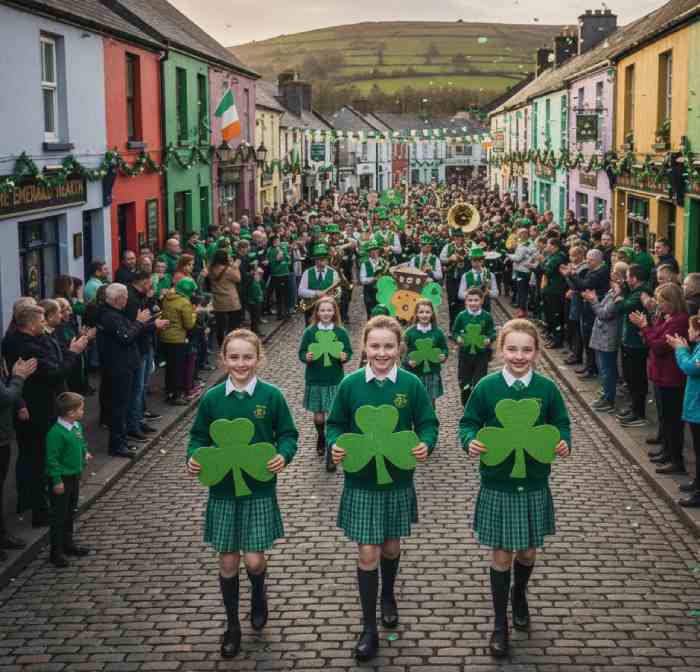
Village festivals: For a truly local experience, go into one of the small villages or towns. These parades aren’t about spectacle, but more about fostering community spirit. You’ll see the local band, floats for children and heartfelt, genuine celebrations that provide a genuine experience of the traditional Irish life.
Travel Tips for Experiencing St. Patrick’s Day in Ireland
Travelling to Ireland to celebrate St. Patrick’s Day requires some careful planning. The ideal time to go is during the period of celebration that usually begins a few days prior to the 17th of March.
Pre-book: Flights and accommodation are sold out and prices rise. Make reservations as early as you can, at minimum six months to one year in advance to secure the lowest prices and to ensure availability.
Dress appropriately for conditions: Weather in March Ireland has a reputation for being unpredictable. Wear layers of clothing and be ready for sun, rain, or even a cold winds.
Be ready for large crowds: Main parade route will be extremely busy. Be sure to arrive early for an ideal viewing location particularly if you have children. Be prepared for long lines in restaurants and pubs.
Cultural manners: While many pubs are busy, stay clear of the over-the-top, stereotypical behavior of tourists. Do not request “green beer” (it’s not an Irish custom) Be aware it’s St. Patrick’s Day is an official holiday for banks, which means that there may be some businesses closed.
Budgeting: Taxis are difficult to find and cost a lot during the day. Consider public transportation or walk. Be prepared with cash, as smaller establishments and shops might require a minimum card.
St. Patrick’s Day Beyond Ireland
St. Patrick’s Day is a testament to the international influence that is people from the Irish diaspora. International parades that are famous like those of New York, Boston, and Sydney are huge celebrations of Irish-American or the Irish-Australian heritage. In Chicago, the Chicago River is famously dyed green, a practice which began in 1962.
The main difference between festivities in Ireland and in other countries is the importance. International celebrations, especially within the U.S., are often considered to be a celebrating of Irishness and are often heavily commercialized however, the celebration of Ireland tends to be more of a celebration of culture and national holiday. It’s a time to celebrate Irish culture, history and culture, as well as giving an ode to the country’s religional heritage.
Conclusion
Experiencing St. Patrick’s Day in Ireland is an unforgettable and deeply satisfying experience. It’s more than an event It’s an display of national pride and an opportunity to celebrate a rich culture. The parades bring the streets to life with laughter and music to the moments of quiet reflection in a local bar and pub, the celebration connects people to the core and soul that is this Emerald Isle. If it’s your first visit or planning a return take a look at making St. Patrick’s Day your reason to go. You’ll be left with a deeper appreciation for the beauty of the past, culture, and warm welcome that is Ireland as well as its inhabitants.
FAQ
What is the date that St. Patrick’s Day celebrated in Ireland? St. Patrick’s Day is celebrated on the 17th of March each year. The main celebrations, especially in the major cities, typically last for several days prior to 17th March.
Are St. Patrick’s Day a public holiday in Ireland? Yes, St. Patrick’s Day is a public holiday that is celebrated across Ireland. The government, banking establishments as well as a number of businesses, are closed on the entire day.
Are there any top Irish food items to try during St. Patrick’s Day? Traditional Irish food items include bacon and the cabbage Irish stew and soda bread. Chowder with seafood is also popular in the coastal areas.
Are all Irish towns have St. Patrick’s Day parades? Almost every town and village in Ireland has some sort of an St. Patrick’s Day parade that ranges from huge extravagant events in the cities to smaller, local parades that are geared towards the community in rural regions.
What makes St. Patrick’s Day different in Ireland as compared in the US? The Irish celebrate St. Patrick’s Day in Ireland, St. Patrick’s Day is a major public holiday that is a mix of traditional and religious beliefs. The U.S., it is not a national holiday and festivities are typically more commercialized, featuring customs like green beer and the corned beef and cabbage that aren’t indigenous to Ireland.