

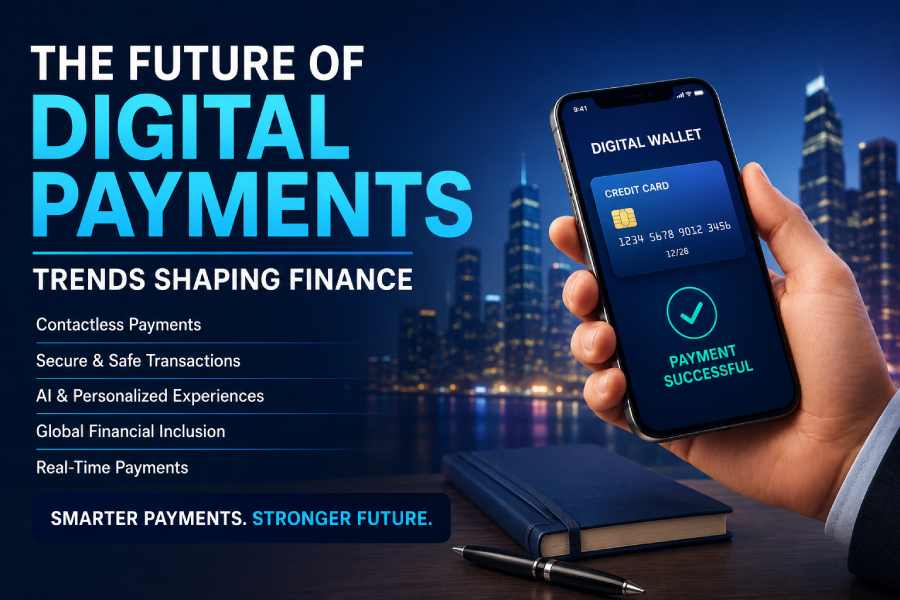
Digital transactions are expected to represent a larger percentage of global commerce as technological innovation continues accelerating. Artificial intelligence, embedded finance, blockchain infrastructure, and instant settlement systems are reshaping how money moves across economies.
This guide explores emerging trends, technological developments, and innovations expected to influence digital payments throughout 2026 and beyond.
Trend 1: Digital Wallet Adoption Continues Growing
Digital wallets have become one of the most widely adopted payment technologies worldwide. Consumers increasingly prefer mobile-first experiences that simplify purchases and reduce dependency on physical cash.
Wallet ecosystems continue expanding beyond payments by integrating rewards programs, identity verification, ticketing systems, and financial management features.
Popular Wallet Features
- Contactless transactions and biometric authentication
- Stored payment methods and P2P transfers
- Loyalty programs and cross-border capabilities
- Subscription management and integrated financial tools
Trend 2: Real-Time Payment Networks
Consumers and businesses increasingly expect immediate settlement capabilities. Real-time payment infrastructure enables funds to move instantly between accounts, reducing delays associated with traditional legacy banking systems.
Advantages of Instant Payments
- Improved cash flow management and faster transaction completion
- Enhanced customer experience and reduced settlement latency
- Greater operational transparency and corporate efficiency
Instant payment ecosystems are steadily becoming a key baseline component of modern global banking infrastructure.
Trend 3: Embedded Finance Expands
Embedded finance integrates financial services directly within non-financial platforms, creating completely seamless payment experiences for consumers. Instead of visiting an isolated bank application separately, users can access localized lending, payments, insurance, and checking tools inside common applications.
Examples of Embedded Finance
- Buy Now Pay Later (BNPL) integrations
- In-app retail lending and merchant financing
- Embedded point-of-sale insurance policies
- Automated marketplace payment splits and subscription billing systems
Trend 4: Artificial Intelligence in Payments
Artificial intelligence is transforming payment ecosystems by optimizing advanced automation, fraud prevention, personalization, and cross-network operational efficiency. AI engines scale across immense transactional data points to parse patterns and consumer preferences cleanly.
AI Applications in Payments
- Real-time transaction fraud detection and risk scoring
- Automated support interfaces and predictive spending models
- Behavioral financial personalization and structural identity intelligence verification
Trend 5: Blockchain Infrastructure
Distributed ledger technologies continue attracting enterprise momentum as payment providers deploy next-generation settlement models. Blockchain systems optimize transparency, reduce complex intermediary chains, and deliver permanent transaction traceability.
Potential Advantages
- Accelerated international transfer clearing pipelines
- Minimized operational processing fees and clearing margins
- Programmable liquidity distributions using secure smart contracts
Trend 6: Central Bank Digital Currencies (CBDCs)
Central Bank Digital Currencies continue attracting global attention as sovereign monetary authorities evaluate modern alternatives to physical mint systems. CBDCs stand as digitized sovereign currencies managed directly by central banks, explicitly built to work smoothly alongside traditional financial frameworks.
Potential Benefits of CBDCs
- Optimized public payment efficiency and cross-border interoperability
- Enhanced institutional transparency and broad financial inclusion models
- Lower systemic transaction overhead and instant sovereign settlements
Challenges Under Discussion
- Consumer data privacy boundaries and cybersecurity defenses
- Infrastructure requirements and cross-jurisdictional regulatory coordination
Trend 7: Accelerating Transition Toward a Cashless Economy
Consumer preferences continue shifting toward contactless, frictionless payment configurations. Modern retail businesses increasingly prioritize digital acceptance pathways that scale checking out efficiency and drop back-end manual handling overhead.
While physical cash retains utility in specific domains, the global volume of digital alternative payments is expected to expand continuously throughout 2026.
Trend 8: Cross-Border Payment Modernization
International settlements have historically carried high conversion fees, prolonged clearing periods, and fragmented intermediary bank processing loops. New architectural stacks aim to streamline international commerce by optimizing clearing transparency and dropping real transfer settlement times down to minutes.
Trend 9: Open Banking Ecosystems
Open banking frameworks empower safe consumer account data delivery to authorized fintech platforms using secure Application Programming Interfaces (APIs). This model fosters competition, giving modern users access to deep personalized finance applications, centralized budgeting ecosystems, and hyper-relevant wealth recommendation models.
Trend 10: Payment Security Innovations
Mitigating asset risk sits as the highest parameter within modern digital financial architecture. Financial networks deploy advanced cryptographic protections, zero-trust server environments, and algorithmic multi-factor access protocols to stop mutating vectors of fraud completely.
Trend 11: Biometric Authentication
Biometric checking is systematically replacing standard alphanumeric access strings across hardware ecosystems. Modern transactions lean on native fingerprint loops, facial maps, iris validation routines, and behavioral biometric profiling to isolate true user intent securely without adding friction.
Payment Trends Comparison Metrics
| Trend Component | Growth Potential | Innovation Tier | Industry Impact Profile |
|---|---|---|---|
| Digital Wallets | High | High | Significant Scale Change |
| CBDCs | Medium | Very High | Transformational Framework |
| Embedded Finance | High | Very High | Major Commercial Pivot |
| AI Payments | Very High | Very High | Systemic Infrastructure Upgrade |
| Open Banking | High | High | Significant Distribution Shift |
| Blockchain Payments | Medium | Very High | Moderate Niche Expansion |
| Biometric Security | High | High | Major Consumer Standard |
Emerging Opportunities for Fintech Companies
The changing landscape creates key vectors where modern agile development teams can scale business solutions:
- White-label embedded financial layers for retail and service apps
- Cryptographic identity tokenization layers and regulatory technology compliance stacks
- Machine-learning predictive merchant payment matching and cash-flow analytics tools
Digital Payment Ecosystem Adoption Roadmap
| Projected Window | Expected Infrastructure Milestone |
|---|---|
| 2026 | Mass deployment of real-time multi-network rails and automated AI fraud scoring systems |
| 2027 | Deep vertical expansion of non-banking embedded payment pipelines in global B2B networks |
| 2028 | Standardization of biometric checking baselines for multi-device digital signatures |
| 2029 | Sovereign clearing optimization via active Central Bank Digital Currency frameworks |
| 2030 | Unified global clearing compatibility layer operational across distinct international networks |
How Businesses Can Prepare for Evolving Trends
Enterprises looking to insulate conversion margins can adopt proactive parameters to support upcoming payment formats:
- Integrate modern decoupled digital checkout channels and support real-time local networks
- Transition security models over to zero-trust standards and deploy automated risk mitigation loops
- Track open banking ledger updates and maximize internal payment data monetization metrics ethically
Featured Snippet: The Future of Digital Payments
The primary future trends of digital payments in 2026 focus heavily on real-time settlement rails, hyper-personalized AI transaction risk analytics, embedded finance modules within consumer applications, the global deployment of Central Bank Digital Currencies (CBDCs), and the structural replacement of access credentials with biometric verification paths.
Conclusion
The current path of digital payment innovation is defined by speed, intelligent telemetry, absolute accessibility, and localized security. As transactional engines drop manual validation steps, financial workflows will become increasingly invisible and contextually relevant inside daily personal routines.
Frequently Asked Questions (FAQs)
What are digital payments?
Digital payments refer to electronic methods used to transfer money between individuals, businesses, and institutions without relying on physical cash instruments.
Will digital wallets replace traditional banking?
No. Digital wallets serve as optimized frontend delivery modules and consumer software endpoints that safely complement core regulated banking networks rather than replacing them.
Are CBDCs the same as decentralized cryptocurrencies?
No. CBDCs stand as digital representations of fiat national currencies backed directly by sovereign central banks, whereas private cryptocurrencies rely entirely on decentralized token mechanisms.
Why are real-time payments becoming popular?
Immediate asset clearing provides consumers and corporate enterprises with unparalleled liquidity velocity, completely dropping traditional settlement times down to zero.
How does AI improve payment systems?
AI improves structural efficiency by executing instant risk mitigation assessments, optimizing processing anomalies, and detecting hidden vectors of fraud before funds leave destination vaults.