

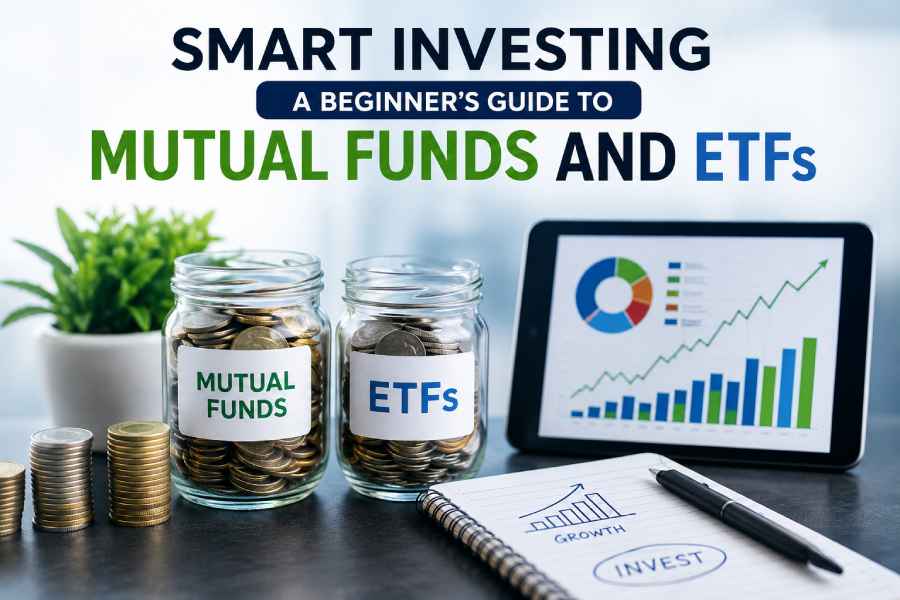
 This comprehensive operational guide details the operational design of modern pooled investments, compares cost efficiencies, provides structural templates for fintech business scaling, highlights real corporate asset tracking cases, and outlines an actionable blueprint for individual and platform deployment.
Deep-Dive: What Are Mutual Funds?
A mutual fund is an institutional asset vehicle that pools capital from hundreds of thousands of individual investors to build a massive, diversified portfolio of securities. Professional asset management companies (AMCs) manage these funds, tasking experienced fund managers with researching, tracking, and acquiring equities, fixed-income corporate bonds, or alternative assets based on a clear investment objective.
When you allocate cash toward a mutual fund, you purchase specific units of the overall fund. The net calculation of your holdings relies entirely on the fund’s **Net Asset Value (NAV)**, which is compiled, balanced, and published once at the close of every active trading day. This system prevents short-term intra-day trading volatility from disrupting long-term asset structures.
[Internal Link Placeholder: Link to an analytical guide explaining Net Asset Value calculations and processing routines]
Mechanics of Exchange-Traded Funds (ETFs)
Exchange-Traded Funds (ETFs) have completely revolutionized the retail investment landscape by blending the deep diversification benefits of mutual funds with the instant, flexible trading mechanics of individual common stocks. An ETF holds a basket of underlying components designed to replicate the exact movements of a specific target index, such as the S&P 500, Nasdaq 100, or designated physical commodity benchmarks.
Unlike mutual funds, ETFs trade continuously on public stock exchanges throughout the day. This provides investors with immediate price discovery, real-time trade confirmation, and the ability to execute complex orders like stop-losses or limit orders to protect their capital against sudden market shifts.
Mutual Funds vs. ETFs: Core Structural Differences
Understanding the operational trade-offs between these two major asset structures is critical for optimizing long-term compounding returns and managing tax overhead effectively.
- Initial Capital Rules: Mutual funds often require fixed minimum entry limits, whereas ETFs let you purchase fractional shares starting at the price of a single unit.
| Operational Metric | Mutual Fund Vehicles | Exchange-Traded Funds (ETFs) |
|---|---|---|
| Trading Lifecycle | Processed once daily at post-market NAV settlement | Executed instantly during market hours in real time |
| Expense Framework | Typically higher due to active research and administrative structures | Ultra-low baseline expense ratios owing to automated tracking |
[Internal Link Placeholder: Link here to a complete comparative study on passive index funds versus automated ETF allocation strategies]
Classifications and Strategic Sector Index Baskets
Diversification requires allocating capital across distinct fund categories based on your current investment horizon and risk tolerance:
- Equity Baskets: Designed for capital appreciation by targeting large-cap, mid-cap, or emerging small-cap corporate equities.
- Fixed-Income Debt Funds: Structured around government bonds and high-grade corporate debt instruments to provide steady income and insulate against market corrections.
- Passive Index Trackers: Low-cost funds built to match the performance of major benchmark indexes without the drag of high active management fees.
Systematic Allocations (SIP) vs. Tactical Lump Sum Models
Deploying capital into volatile markets requires a clear, disciplined strategy rather than emotional guesswork or attempts to time the market perfectly.
The Strategy of Dollar-Cost Averaging (DCA): By setting up an automated Systematic Investment Plan (SIP), you buy fewer units when market valuations are high and acquire more units automatically when asset prices drop, lowering your average cost basis over time.
Conversely, a tactical lump-sum strategy works best when deploying large capital reserves during major market drawdowns, positioning your portfolio to capture maximal upside when conditions stabilize.
Asset Platform Blueprinting: Business Plan Templates & Pitching
As retail demand for low-cost index products grows, fintech platforms are building specialized micro-saving tools and automated advisory platforms to capture market share. Launching a platform in this space requires a highly structured, scalable operational design to manage regulatory compliance and user onboarding effectively.
The Investment Platform Business Plan Template Structure
Before writing a line of code for an automated micro-allocation app, your foundational business blueprint must cover these key pillars:
- Executive Value Proposition: Define the core problem your software addresses—such as giving users automated access to low-cost ETF baskets or custom tax-loss harvesting models.
- Regulatory & Compliance Layer: Map your custodial integration points, anti-money laundering (AML) controls, and partnerships with cleared broker-dealers to ensure full legal compliance.
- Technology Infrastructure Blueprint: Document your real-time data sync strategies, data encryption standards, and API connection points to major exchange networks.
- User Acquisition Funnel: Outline your strategy for scaling organic traffic through educational content, minimizing your user acquisition costs (CAC) over time.
- Platform Monetization Model: Detail your revenue strategy, whether it relies on fixed monthly platform fees, minor transaction commissions, or subscription-based software tiers.
Structuring an Institutional Investor Pitch
Venture capital firms in the financial technology sector look past basic user growth projections to closely evaluate your underlying technology stack and regulatory compliance. When pitching an automated asset allocation tool, your presentation deck should focus heavily on three core areas:
- The Scalability of Your Customer Acquisition: Present clear data showing that your financial education content drives highly qualified organic traffic, lowering your marketing costs relative to customer lifetime value.
- API and Infrastructure Stability: Detail your integrations with established trading networks to show that your system can process millions of recurring transactions safely and efficiently.
- Regulatory Safeguards: Prove that your software architecture has passed complete security audits, protecting user assets from both operational errors and cyber threats.
FinTech Execution Models: Real Financial Examples
A software-driven financial platform’s economic projections should always avoid arbitrary growth estimates. Instead, they must be built directly from core operational variables like cloud hosting fees, customer support metrics, and data API costs.
The table below details a realistic three-year financial scaling path for an automated index-allocation app, showing the transition from launch phase to high-efficiency market scaling:
| Platform Growth Metric | Year 1 (Beta Deployment) | Year 2 (Market Integration) | Year 3 (Enterprise Scale) |
|---|---|---|---|
| Gross Subscription Revenue Inflow | $180,000 | $850,000 | $2,900,000 |
| Data Pipeline & Cloud Storage Cost | $35,000 | $90,000 | $210,000 |
| Compliance, Legal & Licensing Fees | $65,000 | $140,000 | $320,000 |
| Content & SEO Acquisition Marketing | $40,000 | $150,000 | $380,000 |
| Net Operating Profit Margin | 22.2% | 55.2% | 68.6% |
| Realized Net Annual Profits | $40,000 | $470,000 | $1,990,000 |
When presenting these projections to institutional partners during a funding round, you should always explicitly note your baseline assumptions—including expected monthly user retention rates, average order values (AOV), and asset volume trajectories.
Real-World Case Studies: Systematic Scaling Models
To see how disciplined asset allocation and automated tracking operate in real-world environments, let’s review two case studies focused on individual wealth tracking and enterprise platform growth.
Case Study 1: Transforming Personal Capital via Index Tracking
A professional working in digital product design was struggling to build an investment portfolio due to overcomplicating their strategy. They spent hours attempting to pick individual high-risk growth stocks, resulting in a flat returns profile over three years because of emotional panic-selling during minor market corrections. Their strategy pivoted when they committed to a disciplined index allocation framework.
They set up an automated system to route 35% of their monthly income directly into low-cost index ETFs tracking global equity baskets. By ignoring short-term market corrections and automatically reinvesting all dividends, their total portfolio value crossed the $150,000 threshold within 36 months, proving that low-cost, hands-off indexing outpaces emotional manual trading over time.
Case Study 2: Rapid Scaling of a Micro-Saving Platform
Let’s look at an investment advisory startup that wanted to make index investing accessible to younger retail users but faced unsustainably high customer onboarding and advice costs. By building a customized micro-savings platform using a structured Business Plan Template, they automated core processes like user risk scoring, portfolio generation, and recurring daily fraction purchases.
The company used their initial transaction volume data to secure a $450,000 seed expansion investment from a venture capital firm. By utilizing automated indexing tools to manage customer portfolios efficiently, the platform scaled its total active user base from 5,000 accounts to over 85,000 accounts within 24 months, showing that software-driven allocation models can democratize access to the markets while building a highly profitable enterprise.
Common Portfolio Strategy Mistakes to Avoid Completely
Building a resilient portfolio requires keeping your cost structures lean and avoiding emotional execution traps. Watch out for these common investment mistakes:
- Chasing Recent Short-Term Outperformance: Flowing capital into specific thematic sector funds simply because they saw large gains the previous year, rather than maintaining broad diversification.
- Underestimating the Drag of High Expense Ratios: Paying high active management fees for underperforming funds, which can quietly erode your compounding returns over long periods.
- Failing to Periodically Rebalance Your Portfolio: Allowing a strong run in equities to over-allocate your capital to high-risk buckets, exposing you to unexpected volatility during market drawdowns.
- Liquidating Positions During Market Corrections: Letting emotional panic drive you to sell your index assets during temporary market downturns, locking in losses and missing the eventual recovery.
Actionable Asset Allocation Checklist
Use this comprehensive operational checklist once a quarter to ensure your investment portfolios remain balanced, highly cost-efficient, and aligned with your long-term goals:
- Audit the expense ratios across all your current fund holdings to ensure your fees remain highly competitive.
- Verify that your recurring automated SIP transfers are processing correctly on your platform on payday.
- Compare your portfolio’s current asset split against your target defensive cash and liquid emergency allocations.
- Check your portfolio’s tracking error metrics to ensure your index funds are mirroring their targets accurately.
- Rebalance your portfolio back to its target strategic allocations if market movements have skewed your risk profile.
- Dedicate two hours to researching updated low-cost ETF listings and institutional asset management updates.
Conclusion & Platform CTA
Mutual funds and exchange-traded funds serve as foundational building blocks for modern long-term investment portfolios. Whether you prefer the hands-off, professional management of a structured mutual fund or the low-cost, flexible execution of an exchange-traded index basket, the core principles of success remain exactly the same: maintain absolute consistency, keep fees minimal, and stay focused on your long-term plans.
Building a successful financial future requires moving past complex trading strategies and focusing instead on sustainable execution systems. By setting clear financial milestones, deploying capital automatically via systematic plans, and using structured planning templates, you can navigate changing market cycles with complete confidence.
Don’t wait for a perfect market environment to begin building your foundation. Automate your first asset allocation today, keep your investment costs low, and let the mathematical power of compounding build your long-term financial freedom.
Ready to maximize your long-term compounding? Download our complete portfolio allocation spreadsheets and fintech tracking frameworks on LotsDiary.com today, or share your thoughts in the comment section below to let us know which index basket you are deploying capital into first!