
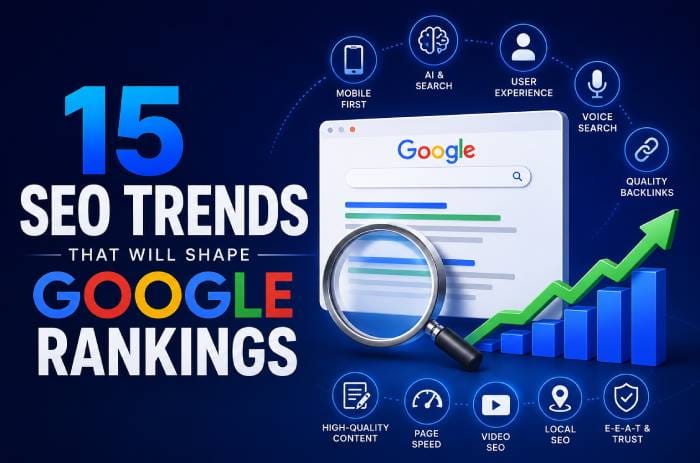
In this comprehensive guide, you’ll learn the 15 biggest SEO trends expected to shape Google rankings in 2026 and discover practical strategies to stay ahead of your competitors.
Artificial intelligence has become deeply integrated into search. Search engines can now understand context, relationships between topics, user intent, and even content quality at a much deeper level.
This means website owners must focus on creating genuinely useful content instead of trying to manipulate rankings through outdated SEO tactics.
SEO Trend 1: AI-Powered Search Expansion
Artificial intelligence is expected to become one of the most influential factors in search results throughout 2026.
Google’s AI systems are becoming increasingly capable of generating direct answers, summaries, and recommendations within search results. As a result, websites must adapt their content strategies to remain visible.
Instead of simply targeting keywords, content creators should focus on answering questions clearly and comprehensively.
How to Optimize for AI Search
- Create detailed topic clusters.
- Answer common user questions.
- Use clear heading structures.
- Provide factual and trustworthy information.
- Include original insights and examples.
- Implement structured data markup.
Websites that publish genuinely helpful content are more likely to appear in AI-powered search experiences.
SEO Trend 2: Topical Authority Matters More Than Ever
Google increasingly rewards websites that demonstrate expertise across an entire subject rather than focusing on individual keywords.
This concept is known as topical authority.
For example, if your website covers SEO, publishing a single article about keyword research is not enough. Google wants to see extensive coverage of related topics such as:
- On-page SEO
- Technical SEO
- Link Building
- Local SEO
- Content Marketing
- Schema Markup
- Google Updates
- SEO Audits
- Keyword Research
The more comprehensive your coverage, the stronger your authority becomes in Google’s eyes.
This strategy helps improve rankings across hundreds or even thousands of related keywords.
SEO Trend 3: User Experience Becomes a Stronger Ranking Signal
User experience has become a major priority for Google.
Even if your content is excellent, poor user experience can negatively affect rankings.
Visitors expect fast-loading pages, mobile-friendly designs, clear navigation, and easy-to-read content.
Important UX Factors in 2026
- Core Web Vitals
- Mobile Responsiveness
- Page Speed
- Navigation Structure
- Content Readability
- Visual Stability
- User Engagement Metrics
Improving these factors can enhance both rankings and conversions.
SEO Trend 4: Search Intent Optimization Dominates Rankings
One of the biggest SEO mistakes website owners make is targeting keywords without understanding search intent.
Google has become extremely effective at determining why users perform searches.
Most searches fall into four categories:
- Informational
- Navigational
- Commercial
- Transactional
If your content does not align with the user’s goal, ranking becomes significantly more difficult.
Successful SEO in 2026 requires creating content that perfectly matches what users expect to find.
SEO Trend 5: EEAT Continues to Grow in Importance
EEAT stands for:
- Experience
- Expertise
- Authoritativeness
- Trustworthiness
Google increasingly rewards content written by people with real-world experience and proven expertise.
Generic content created solely for search engines is becoming easier for Google’s systems to identify.
Ways to Improve EEAT
- Add detailed author profiles.
- Include real case studies.
- Publish original research.
- Show industry experience.
- Use expert sources.
- Maintain transparent contact information.
Trust is becoming one of the strongest ranking advantages available to website owners.
SEO Trend 6: Video SEO Will Dominate More Search Results
Video content has been growing rapidly for years, but 2026 is expected to be a major turning point. Google increasingly displays video results throughout search pages because users often prefer watching information rather than reading long articles.
Businesses and publishers that invest in video SEO can gain visibility in multiple areas of Google Search, including video carousels, featured snippets, and Google Discover.
A well-optimized video can drive traffic not only from search engines but also from video-sharing platforms and social media channels.
How to Optimize Videos for SEO
- Create videos that solve specific problems.
- Use keyword-rich video titles.
- Write detailed video descriptions.
- Add timestamps for important sections.
- Include transcripts whenever possible.
- Use attractive thumbnails.
- Embed videos within relevant articles.
For example, if you publish an article about technical SEO, adding a detailed tutorial video can improve user engagement and increase time spent on the page.
Google increasingly values content that satisfies different learning preferences, making video SEO a valuable long-term investment.
SEO Trend 7: Entity-Based SEO Will Continue to Expand
Traditional SEO focused heavily on keywords. Modern SEO increasingly focuses on entities.
An entity is a person, place, organization, product, concept, or topic that Google can clearly understand and connect to other information.
Google’s Knowledge Graph uses entities to understand relationships between topics and improve search results.
For example, when Google sees references to search engines, ranking factors, keyword research, backlinks, and technical optimization within the same content, it gains a stronger understanding that the page is about SEO.
Why Entity SEO Matters
- Improves contextual relevance.
- Strengthens topical authority.
- Helps Google understand content meaning.
- Supports semantic search optimization.
- Improves visibility across related queries.
Rather than focusing on repeating exact keywords, successful SEO strategies now emphasize covering related entities and concepts naturally throughout content.
This creates a stronger contextual signal and helps Google understand the overall topic more effectively.
SEO Trend 8: Brand Authority Will Influence Rankings More Than Ever
Google increasingly rewards brands that users trust.
Strong brands often generate direct searches, social mentions, backlinks, citations, and positive engagement signals. These factors help Google determine whether a website deserves higher visibility.
Even when two websites publish similar content, the stronger brand frequently receives better rankings.
Ways to Build Brand Authority
- Publish consistently high-quality content.
- Build a recognizable brand identity.
- Earn mentions from reputable websites.
- Develop an active social media presence.
- Collect positive reviews and testimonials.
- Create original research and industry insights.
Google wants to recommend websites that users recognize and trust. As competition continues to increase, brand authority becomes an important ranking advantage.
Businesses that invest in long-term brand building often see SEO benefits that extend beyond traditional optimization techniques.
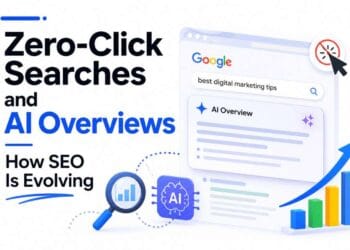
SEO Trend 9: Zero-Click Searches Will Continue to Rise
Many searches now end without a click because Google provides answers directly within search results.
Featured snippets, knowledge panels, AI-generated summaries, People Also Ask sections, and instant answers all contribute to the growth of zero-click searches.
While some website owners view this trend negatively, it also creates opportunities for increased visibility and authority.
How to Optimize for Zero-Click Searches
- Answer questions clearly and directly.
- Use FAQ sections.
- Structure content with descriptive headings.
- Create concise definitions and summaries.
- Implement schema markup.
- Target featured snippet opportunities.
Appearing within featured snippets can significantly increase brand exposure even when users do not immediately click through to your website.
The goal is to become the source Google trusts when presenting information directly within search results.
SEO Trend 10: First-Hand Experience Will Become a Major Differentiator
As AI-generated content becomes more common, original experiences become more valuable.
Google continues to emphasize content created by people who have direct knowledge and real-world experience.
This aligns closely with the Experience component of EEAT.
Content based on actual testing, case studies, personal insights, and original research often performs better than generic articles that simply repeat existing information.
Examples of Experience-Based Content
- Product testing results.
- Case studies.
- Personal tutorials.
- Industry experiments.
- Original surveys.
- Real-world examples.
- Success stories.
For example, an SEO agency sharing actual ranking improvements from client campaigns may provide stronger signals than a generic article summarizing SEO advice.
Google wants users to access information that comes from genuine expertise and practical experience.
Websites that consistently publish original insights will have a significant advantage in 2026.
SEO Trend 11: Semantic Search Will Become Even Smarter
This is known as semantic search.
In 2026, successful SEO will require covering topics comprehensively rather than stuffing pages with exact-match keywords.
How to Optimize for Semantic Search
- Cover related subtopics thoroughly.
- Use natural language.
- Answer common questions.
- Include synonyms and related phrases.
- Create topic clusters.
- Build strong internal linking structures.
Google wants to provide the most complete answer possible. Websites that demonstrate deep topical coverage are more likely to rank across a wide range of related searches.
SEO Trend 12: Technical SEO Automation Will Increase
Technical SEO remains essential, but automation is transforming how websites manage optimization.
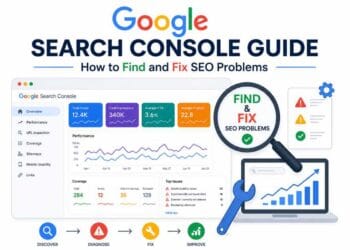
Modern SEO tools can automatically identify crawl errors, broken links, indexing problems, schema issues, duplicate content, and page speed concerns.
This allows SEO professionals to focus more on strategy and content quality rather than manual audits.
Technical SEO Priorities for 2026
- Core Web Vitals optimization.
- Schema markup implementation.
- XML sitemap management.
- Mobile-first optimization.
- Indexing monitoring.
- Internal linking improvements.
- Site architecture optimization.
Websites that maintain strong technical foundations make it easier for Google to crawl, understand, and rank content effectively.
SEO Trend 13: Voice Search Evolution Continues
Voice search is becoming increasingly common as smart devices, smartphones, and virtual assistants continue to grow in popularity.
People typically use longer and more conversational queries when speaking compared to typing.
This shift creates opportunities for websites that optimize content around natural language questions.
Voice Search Optimization Tips
- Target question-based keywords.
- Create FAQ sections.
- Use conversational language.
- Optimize for local searches.
- Provide concise answers.
- Implement structured data.
Content that directly answers user questions has a greater chance of appearing in voice search results.
SEO Trend 14: Visual Search Will Continue Expanding
Visual search technology allows users to search using images rather than text.
As image recognition systems improve, visual search is expected to become more important for eCommerce websites, travel blogs, fashion websites, and content publishers.
Google increasingly understands image content, making image optimization more valuable than ever.
Visual Search Best Practices
- Use descriptive file names.
- Write keyword-rich alt text.
- Compress images for speed.
- Use high-quality visuals.
- Implement image schema.
- Create unique graphics whenever possible.
Optimized images can drive additional traffic while supporting overall SEO performance.
SEO Trend 15: Content Refresh Strategies Become Essential
Publishing content is no longer enough.
Google increasingly rewards fresh, accurate, and updated information.
Many websites lose rankings because they publish articles and never update them again.
Regular content updates help maintain relevance and improve long-term visibility.
Content Refresh Checklist
- Update outdated statistics.
- Add new examples.
- Improve internal links.
- Expand thin sections.
- Refresh screenshots and visuals.
- Add recent industry developments.
- Optimize for new search intent trends.
Refreshing existing content is often faster and more effective than creating entirely new articles.
Frequently Asked Questions
What is the biggest SEO trend in 2026?
AI-powered search experiences, topical authority, and EEAT are expected to be among the most influential ranking factors in 2026.
Does EEAT matter for SEO?
Yes. Experience, Expertise, Authoritativeness, and Trustworthiness help Google evaluate content quality and credibility.
Can AI-generated content rank on Google?
AI-generated content can rank if it provides value, accuracy, originality, and satisfies user intent.
How important is technical SEO in 2026?
Technical SEO remains critical because it helps search engines crawl, index, and understand website content efficiently.
Should websites focus on topical authority?
Absolutely. Building comprehensive coverage around a niche helps establish expertise and improves rankings across related keywords.
Google Discover Optimization Tips
- Use original featured images larger than 1200px wide.
- Create compelling headlines without clickbait.
- Publish evergreen and trending content.
- Demonstrate expertise and trustworthiness.
- Maintain a consistent publishing schedule.
- Focus on user value rather than keyword stuffing.
- Ensure mobile-friendly design.
Google Discover rewards content that is engaging, trustworthy, visually appealing, and relevant to user interests.
Final Thoughts
The future of SEO is becoming increasingly focused on quality, expertise, trust, and user satisfaction.
While technical optimization and keywords remain important, they are no longer enough on their own. Google’s ranking systems now evaluate content using advanced AI, semantic understanding, and engagement signals.
Website owners who embrace AI search optimization, topical authority, EEAT, user experience improvements, and content freshness will be better positioned to succeed in 2026 and beyond.
Rather than chasing short-term ranking tricks, focus on creating the most helpful content in your niche.
That strategy is likely to remain effective regardless of how Google’s algorithms evolve.