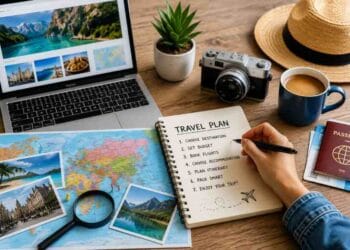

The core appeal of adventure travel lies in step-by-step engagement with the natural world. Instead of viewing a destination through a bus window, active itineraries put you directly on the ground. Whether you are aiming to push your personal physical boundaries or simply wish to experience wild landscapes in a responsible, sustainable way, finding the right trip requires aligning your physical fitness, budget, and personal interest with local seasonal conditions.
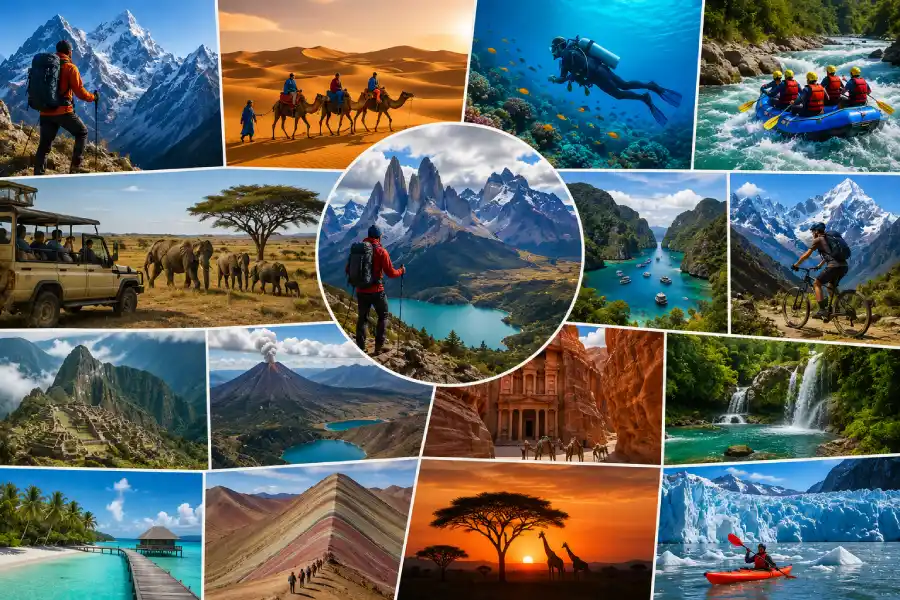
This comprehensive travel guide evaluates the 25 best adventure tours and destinations for 2026. Each featured entry details the core outdoor activities, recommended physical preparation, optimal seasonal windows, safety considerations, and practical planning advice to help you choose your next journey.
Why Adventure Travel Is Popular in 2026
Outdoor travel continues to see strong growth across international tourism markets. Travelers increasingly seek experiences that combine physical activity, natural immersion, local cultural engagement, and environmental awareness.
Industry research highlights key outdoor travel trends for 2026, including multiday trekking, e-bike cycle touring, wilderness wellness retreats, and marine conservation expeditions. Regions like Scandinavia, Central Asia, and the High Himalayas continue to attract outdoor travelers looking for wide open spaces and sustainable tourism practices.
This shift gives travelers options across a broad spectrum of difficulty levels. An memorable adventure does not require technical mountaineering or free-solo climbing. A multi-day gravel cycling trip, a guided river rafting journey, a sea-kayaking expedition, or a remote cultural trek can provide equal rewards for travelers willing to step outside their comfort zone.
Core Elements of an Exceptional Adventure Tour
- Striking Natural Surroundings: Destinations defined by pristine landscapes, protected national parks, or unique geology.
- Appropriate Difficulty Tiers: Itineraries clearly categorized so travelers can choose routes that match their fitness level.
- Experienced Local Guides: Certified professionals who understand local terrain, weather shifts, and emergency protocols.
- Comprehensive Safety Measures: Reliable communication, evacuation plans, and modern safety gear.
- Seasonal Alignment: Trips scheduled during optimal weather windows to minimize climate risks.
- Community Integration: Operations that support local economies and preserve cultural heritage.
How to Choose the Right Adventure Tour
Selecting an outdoor holiday requires realistic self-assessment. A trip that looks stunning in promotional photography may involve long hours of steep climbing, rough weather, or basic camping facilities.
1. Honestly Assess Your Fitness Level
Review tour itineraries carefully, taking note of daily walking distances, cumulative elevation gains, terrain types, packs carried, and environmental exposure. A moderate 12-kilometer hike on a flat paved path is entirely different from a 12-kilometer mountain trek over loose scree at an elevation of 3,500 meters.
2. Align Your Dates with Local Seasons
Weather heavily dictates the safety and quality of outdoor pursuits. Mountain passes can become blocked by early autumn snow, river water levels fluctuate rapidly between dry and monsoon seasons, and ocean visibility for scuba diving changes with regional currents. Always research regional weather patterns before locking in flight dates.
3. Vetting the Tour Operator
Prioritize tour companies that employ licensed local wilderness guides, maintain up-to-date safety certifications (such as Wilderness First Responder or PADI Master Instructors), carry satellite communication devices, and enforce strict client-to-guide ratios. For high-risk activities, safety infrastructure should always take priority over low prices.
Top Adventure Destinations #1–#8
1. Everest Base Camp Trek, Nepal
Best For: High-altitude mountain trekking, Sherpa culture, and iconic Himalayan scenery.
The trek to Everest Base Camp (5,364m) in Nepal remains one of the world’s classic mountain journeys. Starting with a flight to the mountain airstrip of Lukla, the trail weaves through the Sagarmatha National Park, crossing high suspension bridges hung over the Dudh Koshi River, climbing through Namche Bazaar, and passing ancient Buddhist monasteries like Tengboche.
The true reward of the trek lies in the gradual journey through the Khumbu Valley. Trekkers acclimatize over several days, surrounded by giant granite peaks including Ama Dablam, Lhotse, Nuptse, and Mount Everest itself.
- Daily Distance: 10–15 km per day over 12–14 days.
- Physical Rating: Strenuous (High altitude requires solid cardiovascular conditioning).
- Best Season: Pre-monsoon (March to May) and Post-monsoon (September to November).
Practical Tip: Never rush high-altitude itineraries. Include at least two dedicated acclimatization rest days (typically at Namche Bazaar and Dingboche) to reduce the risk of Acute Mountain Sickness (AMS).
2. Ladakh Mountain Adventure, India
Best For: High-altitude road trips, trans-Himalayan motorcycle touring, remote valley trekking, and cultural photography.
Situated between the Karakoram and Zanskar mountain ranges in northern India, Ladakh is a high-altitude cold desert defined by stark mountain passes, glacial lakes, and ancient Tibetan Buddhist monasteries. Adventure itineraries here range from riding Royal Enfield motorcycles across Khardung La (5,359m) to trekking through the Markha Valley or camping beside the turquoise waters of Pangong Tso and Nubra Valley.
Ladakh offers an excellent combination of road-based exploration and rugged wilderness trekking, appealing to both overland drivers and backpackers.
- Core Activities: Motorcycling, overland 4WD safaris, high-altitude trekking, white-water rafting on the Zanskar River.
- Physical Rating: Moderate to Demanding (High altitude exposure).
- Best Season: May to September (When mountain passes are free of heavy snow).
Practical Tip: Upon flying into Leh (3,524m), rest for 48 hours before undertaking physical exertion or driving over high mountain passes.
3. White-Water Rafting in Rishikesh, India
Best For: River rafting, cliff jumping, riverside camping, and entry-level adventure trips.
Located along the foothills of the Himalayas in Uttarakhand, Rishikesh is widely recognized as India’s premier river-rafting hub. The Ganges River flows through rocky gorges, offering rapids ranging from Class II to Class IV+ with names like “Roller Coaster,” “Golf Course,” and “Three Blind Mice.”
Itineraries vary from short 12-kilometer runs suitable for beginners to multi-day 35-kilometer expeditions combining river navigation, beach camping, and cliff jumping under professional river guide supervision.
- Core Activities: White-water rafting, kayaking, bungee jumping, zip-lining, riverside camping.
- Physical Rating: Easy to Moderate (Dependent on rapid grade).
- Best Season: October to June (Avoid monsoon season from July to September when rivers flood).
Practical Tip: Book with operators certified by the Indian Mountaineering Foundation (IMF) or international rafting bodies to ensure modern life jackets, helmets, and throw-bag safety protocols are enforced.
4. Safari Adventure in Kenya
Best For: Wildlife watching, wilderness photography, open-savannah game drives, and Maasai cultural visits.
A classic Kenyan wildlife safari delivers a memorable wilderness experience. Across open savannahs like the Maasai Mara, Amboseli, and Samburu National Reserve, travelers explore protected ecosystems that host vast populations of lions, leopards, elephants, rhinos, and buffaloes (the “Big Five”).
During the annual Great Migration (typically July to October), millions of wildebeest, zebras, and gazelles brave crocodile-infested river crossings between the Serengeti and Maasai Mara, creating an incredible wildlife spectacle.
- Core Activities: 4WD game drives, walking safaris with armed rangers, hot-air balloon flights, bush camping.
- Physical Rating: Easy (Accessible for all age groups).
- Best Season: July to October (Great Migration) and January to February (Dry season wildlife viewing).
Practical Tip: Choose eco-certified conservancy operators that limit vehicle numbers at wildlife sightings and reinvest safari fees into local community conservancies.
5. Patagonia Hiking Adventure, Chile & Argentina
Best For: Multiday wilderness trekking, granite peaks, glacial lakes, and wind-swept trail landscapes.
Spanning the southern tip of South America across Chile and Argentina, Patagonia is a premier destination for mountain wilderness lovers. Iconic routes like the “W” Trek or “O” Circuit in Torres del Paine National Park (Chile) and the trails surrounding Mount Fitz Roy in Los Glaciares National Park (Argentina) take hikers past massive glaciers, turquoise alpine tarns, and sheer granite towers.
The region is famous for its unpredictable weather, where hikers can experience all four seasons in a single afternoon.
- Core Activities: Multiday backpacking, day hiking, ice-walking on Grey Glacier, boat tours.
- Physical Rating: Moderate to Strenuous.
- Best Season: November to March (Southern Hemisphere summer).
Practical Tip: Secure campsite and mountain hut (refugio) reservations at least 6 months in advance, as park authorities strictly limit daily trail entry.
6. Scuba Diving in the Maldives
Best For: Marine life exploration, coral reef diving, pelagic encounters, and island-hopping liveaboards.
While known for overwater bungalows, the Maldives offers world-class scuba diving beneath its Indian Ocean surface. The archipelago’s deep channels (kandus) and submerged pinnacles (thilas) funnel nutrient-rich currents, attracting vast schools of pelagic marine life.
Divers can swim alongside manta rays at cleaning stations, spot whale sharks in South Ari Atoll, and encounter grey reef sharks, sea turtles, and vibrant coral ecosystems. Liveaboard diving vessels offer the best way to explore remote atolls away from resort islands.
- Core Activities: Scuba diving, drift diving, night diving, snorkeling, liveaboard cruising.
- Physical Rating: Moderate (Some channels feature strong currents requiring Advanced Open Water certification).
- Best Season: November to April (Dry northeast monsoon offering peak visibility).
Practical Tip: Carry a surface marker buoy (SMB) and dive computer, as drift diving in deep channels requires precise buoyancy control and open-water safety stops.
7. New Zealand Multi-Sport Adventure
Best For: Alpine hiking, mountain biking, sea kayaking, skydiving, and road trip exploration.
New Zealand’s South Island operates as an outdoor adventure capital. Around Queenstown, Wanaka, and Fiordland National Park, travelers can pack multiple outdoor sports into a single itinerary. From hiking Great Walks like the Milford or Kepler Tracks to jet-boating canyon rivers, skydiving, and heli-skiing, the region accommodates every thrill level.
The country’s well-maintained infrastructure, clear trail systems, and strict safety regulations make self-drive campervan itineraries exceptionally popular.
- Core Activities: Multiday hiking, mountain biking, bungee jumping, sea kayaking, canyoning, road tripping.
- Physical Rating: Adaptable (Ranging from easy scenic walks to technical alpine climbs).
- Best Season: December to March (Summer for hiking/biking) and June to September (Winter for skiing).
Practical Tip: Book Great Walk hut passes through the Department of Conservation (DOC) as soon as annual bookings open, as popular trails sell out in minutes.
8. Costa Rica Rainforest Adventure
Best For: Rainforest canopy zip-lining, white-water rafting, volcanic hiking, and tropical wildlife spotting.
Costa Rica is a global leader in eco-adventure, holding over 25% of its landmass within protected national parks and biological reserves. Adventurers can raft the Pacuare River through primary rainforests, zip-line through cloud forest canopies in Monteverde, hike around the active Arenal Volcano, and surf coastal breaks along the Pacific coast.
Its rich biodiversity lets travelers spot sloths, howler monkeys, toucans, and poison dart frogs right along active trail routes.
- Core Activities: Canopy zip-lining, Class III–IV rafting, waterfall rappelling, surfing, night rainforest walks.
- Physical Rating: Easy to Moderate.
- Best Season: December to April (Dry season / “Verano”).
Practical Tip: Hire certified local naturalist guides for park hikes; their trained eyes spot camouflaged wildlife that independent hikers almost always miss.
Top Adventure Destinations #9–#17
9. Jaisalmer Desert Adventure, India
Best For: Thar Desert camping, camel safaris, 4WD dune bashing, and cultural desert exploration.
Rising out of the Thar Desert in Rajasthan, Jaisalmer offers a classic desert adventure. Beyond exploring its 12th-century living sandstone fort, travelers can venture deep into the rolling sand dunes of Sam or Khuri. Overnight itineraries involve camel trekking across golden ridges, riding 4WD vehicles over dunes, and camping in traditional desert tents under clear night skies.
- Core Activities: Camel safaris, dune bashing, quad biking, desert camping, cultural folk performances.
- Physical Rating: Easy to Moderate.
- Best Season: October to March (Winter months with pleasant daytime temperatures).
Practical Tip: Temperatures drop significantly in the desert at night during winter; pack warm thermal base layers alongside daytime sun protection.
10. Iceland Volcano and Glacier Adventure
Best For: Glacier walking, ice caving, volcanic lava field trekking, and geothermal hot spring exploration.
Iceland’s dramatic terrain offers an unmatched landscape shaped by volcanic forces and ice. Travelers driving the Ring Road can strap on crampons to walk across Vatnajökull glacier, explore natural blue ice caves, hike past erupting geysers, walk along black sand beaches in Vik, and soak in geothermal hot springs.
- Core Activities: Glacier hiking, ice climbing, snowmobiling, lava tube exploration, super-jeep touring.
- Physical Rating: Moderate.
- Best Season: June to August (Midnight sun and open hiking trails) or November to March (Ice caves and Northern Lights).
Practical Tip: Never step onto a glacier or enter an ice cave without a certified glacier guide and technical safety equipment (crampons, ice axes, and helmets).
11. Swiss Alps Hiking & Via Ferrata, Switzerland
Best For: Alpine hut-to-hut trekking, mountain biking, via ferrata climbing routes, and scenic mountain trains.
The Swiss Alps deliver incredible alpine infrastructure for mountain lovers. Regions like the Bernese Oberland (surrounding Grindelwald and Lauterbrunnen) and Zermatt feature thousands of kilometers of marked hiking trails that wind beneath peaks like the Eiger, Mönch, Jungfrau, and Matterhorn.
For an extra thrill, experienced hikers can tackle Via Ferrata (“iron path”) routes—climbing vertical rock faces using fixed steel cables, ladders, and carabiner safety lanyards.
- Core Activities: Alpine hiking, Via Ferrata routes, mountain biking, paragliding, trail running.
- Physical Rating: Moderate to Strenuous.
- Best Season: July to September (Summer trail season).
12. Galápagos Islands Nature Expedition, Ecuador
Best For: Close-up wildlife encounters, snorkeling with sea lions, volcanic island hiking, and marine conservation.
Located 1,000 kilometers off the coast of Ecuador, the Galápagos archipelago offers an exceptional wildlife experience. Because species evolved without natural human predators, marine iguanas, giant tortoises, blue-footed boobies, and Galápagos penguins show no fear of human observers.
Expedition small-ship cruises or land-based island-hopping tours allow travelers to hike volcanic craters, snorkel alongside playful sea lion pups, and kayak through mangrove inlets.
- Core Activities: Snorkeling, sea kayaking, volcanic hiking, wildlife observation, natural history walks.
- Physical Rating: Easy to Moderate.
- Best Season: Year-round (December to May offers warmer water for snorkeling; June to November brings cooler, nutrient-rich currents).
13. Tanzania Safari & Mount Kilimanjaro Trek
Best For: High-altitude volcano trekking and world-class savannah wildlife safaris.
Tanzania lets adventurers combine two iconic African outdoor experiences into one trip: climbing Mount Kilimanjaro (5,895m), the highest free-standing mountain on Earth, followed by a wildlife safari across the Serengeti and Ngorongoro Crater.
Routes like the Machame or Lemosho climb through five distinct climate zones—from tropical rainforest to arctic summit zone—before descending to the game-rich plains below.
- Core Activities: High-altitude trekking, 4WD game drives, crater rim walks, cultural village visits.
- Physical Rating: Very Strenuous (Kilimanjaro summit night requires strong endurance).
- Best Season: January to March and June to October (Dry seasons).
14. Vietnam Motorbike & Caving Adventure
Best For: Off-the-beaten-path motorcycle touring, massive cave exploration, karst mountain cycling, and cultural travel.
Vietnam offers diverse terrain for active road and trail exploration. In the far north, the Ha Giang Loop provides one of the world’s great motorcycle journeys, twisting through limestone karst peaks and remote ethnic minority villages.
Further south in Phong Nha-Ke Bang National Park, adventurers can join multi-day caving expeditions into some of the world’s largest underground caverns, including Hang En and Tu Lan.
- Core Activities: Motorbike touring, deep cave trekking, sea kayaking in Ha Long Bay, rural cycling.
- Physical Rating: Moderate to Demanding.
- Best Season: September to November and March to May.
15. Norway Fjord Kayaking & Hiking
Best For: Sea kayaking beneath sheer cliffs, cliff-edge mountain hikes, and wilderness fjord camping.
Norway’s western coastline is carved by deep glacial fjords surrounded by towering rock faces and cascading waterfalls. Adventurers can sea kayak through quiet UNESCO-listed fjords like Nærøyfjord or Geirangerfjord, camping on narrow beach strips under steep cliffs.
On land, legendary hikes like Trolltunga (The Troll’s Tongue), Preikestolen (Pulpit Rock), and Kjeragbolten offer incredible views above the blue waters below.
- Core Activities: Sea kayaking, mountain hiking, wild camping, glacier walking, fjord cruising.
- Physical Rating: Moderate to Strenuous.
- Best Season: June to August (Long summer daylight hours).
16. Peru Inca Trail & Andes Trekking
Best For: High-altitude archaeological trekking, mountain passes, and Inca cultural history.
Trekking through the Peruvian Andes to the lost citadel of Machu Picchu is a classic bucket-list journey. The classic 4-day Inca Trail climbs through cloud forests, stone staircases, and high passes—including Dead Woman’s Pass (4,215m)—before entering the Sun Gate at sunrise.
Travelers seeking quieter, more challenging alternatives can choose the Salkantay Trek or the remote Lares Trail route through traditional Quechua-speaking mountain communities.
- Core Activities: High-altitude trekking, ruin exploration, Andean village visits, mountain photography.
- Physical Rating: Strenuous.
- Best Season: May to September (Dry Andean winter).
17. Australian Outback Overland Expedition
Best For: 4WD desert exploration, Red Centre hiking, ancient indigenous culture, and stargazing.
The vast interior of Australia—the Red Centre and Outback—delivers an unforgettable desert wilderness experience. Traveling along unpaved tracks like the Gibb River Road or Red Centre Way, adventurers can hike through the chasms of Uluru-Kata Tjuta National Park, explore Kings Canyon, swim in remote gorges, and camp in traditional swag rolls under brilliant night skies.
- Core Activities: 4WD overland driving, gorge hiking, bush camping, indigenous cultural walks, stargazing.
- Physical Rating: Easy to Moderate.
- Best Season: May to September (Cooler winter months in the desert).
Top Adventure Destinations #18–#25
18. Indonesia Scuba & Dragon Expedition (Raja Ampat & Komodo)
Best For: World-class coral reef diving, Komodo dragon trekking, and remote island kayaking.
Indonesia sits at the heart of the Coral Triangle, boasting the highest marine biodiversity on the planet. Diving destinations like Raja Ampat and Komodo National Park offer healthy coral gardens, manta ray aggregations, and dense fish life.
On land, travelers in Komodo National Park can hike across dry volcanic hills to observe the famous Komodo dragon—the world’s largest living lizard species—in its natural habitat.
- Core Activities: Scuba diving, liveaboard cruising, dragon trekking, island viewpoint hikes.
- Physical Rating: Moderate (Strong marine currents in Komodo require experienced diving skills).
- Best Season: Komodo (April to November); Raja Ampat (October to April).
19. Bhutan Himalayan Cultural Trekking
Best For: High-altitude mountain passes, pristine Himalayan valleys, dzong architecture, and sustainable cultural tourism.
Bhutan offers an exclusive mountain adventure focused on cultural preservation and pristine environmental protection. Routes like the Druk Path Trek or the challenging Snowman Trek pass high alpine lakes, snow-capped peaks, and isolated mountain communities.
Every journey incorporates visits to historic cliffside monasteries, such as the famous Paro Taktsang (Tiger’s Nest), giving travelers a deep connection to Bhutan’s rich heritage.
- Core Activities: Mountain trekking, monastery visits, arch archery demonstrations, cultural walks.
- Physical Rating: Moderate to Extremely Strenuous (Dependent on trail selection).
- Best Season: March to May and September to November.
20. Alaska Wilderness Kayaking & Glacier Trekking, USA
Best For: Sea kayaking among icebergs, brown bear watching, wilderness camping, and glacier trekking.
Alaska provides vast, untouched wilderness for outdoor lovers. In Kenai Fjords National Park or Prince William Sound, adventurers can paddle sea kayaks past tidewater glaciers, listening to the roar of ice calving into the sea.
Guided backcountry itineraries offer opportunities to spot brown bears fishing for salmon, hike across glacier ice fields, and camp deep in the wilderness under the midnight sun.
- Core Activities: Sea kayaking, glacier hiking, bear watching, bush flying, backcountry camping.
- Physical Rating: Moderate to Strenuous.
- Best Season: June to August (Warmest weather and long daylight hours).
21. Jordan Desert & Canyon Trekking (Wadi Rum & Dana)
Best For: Desert trekking, canyoning through water wadis, Bedouin desert camping, and exploring ancient Petra.
Jordan combines ancient history with desert outdoor travel. Hikers can follow sections of the Jordan Trail from the Dana Biosphere Reserve down to the ancient carved sandstone city of Petra.
In the red desert of Wadi Rum, travelers can trek alongside Bedouin guides, scale rock bridges, drive 4WD vehicles across red sand dunes, and spend nights in desert camps under dark, starry skies.
- Core Activities: Desert trekking, canyoning in Wadi Mujib, 4WD safaris, Bedouin camping, historical exploration.
- Physical Rating: Moderate.
- Best Season: March to May and September to November (Avoiding severe summer heat).
22. South Africa Safari & Garden Route Adventure
Best For: Big Game safaris, coastal cliff hiking, shark cage diving, and scenic coastal road trips.
South Africa packs diverse landscapes into its southern coast. Travelers driving the scenic Garden Route can combine Big Five game drives in Kruger National Park or Addo Elephant Park with coastal adventures: hiking the Tsitsikamma cliffs, sea kayaking with seals in Plettenberg Bay, and cage diving with sharks off Gansbaai.
- Core Activities: Wildlife safaris, coastal hiking, surfing, marine wildlife tours, canopy tours.
- Physical Rating: Easy to Moderate.
- Best Season: May to September (Best for safaris) and November to March (Best for coastal beaches).
23. Japan Alpine Hiking & Kumano Kodo Pilgrimage
Best For: Historic pilgrimage walking, Japanese Alps hiking, onsen hot spring stays, and cultural food travel.
Japan offers a wonderful blend of mountain scenery and traditional culture. Hikers can trek the Kumano Kodo—a network of ancient pilgrimage routes through the mountainous Kii Peninsula—walking between cedar forests and Shinto shrines before resting at traditional Japanese inns (*ryokans*) and natural hot springs (*onsens*).
Further north, the dramatic peaks of the Japanese Alps offer rewarding alpine hiking and ridge walking.
- Core Activities: Pilgrimage hiking, alpine trekking, hot spring bathing, culinary exploration.
- Physical Rating: Moderate.
- Best Season: April to May (Cherry blossoms/Spring) and September to November (Autumn foliage).
24. Costa Rica Volcano & Pacific Surf Expedition
Best For: Pacific ocean surfing, volcano hiking, cloud forest walks, and tropical adventure sports.
For travelers seeking an active tropical break, Costa Rica’s Pacific coastline (Santa Teresa, Nosara, and Tamarindo) delivers world-class surf breaks for all skill levels. Inland, travelers can hike around the smoking base of Tenorio and Arenal volcanoes, swim in turquoise waterfall pools, and raft Class IV rapids along rainforest rivers.
- Core Activities: Surfing, volcano hiking, river rafting, waterfall swimming, zip-lining.
- Physical Rating: Moderate.
- Best Season: December to April.
25. New Zealand South Island Overland Road Trip
Best For: Campervan road trips, glacier viewpoints, fjord kayaking, and high-country hiking.
Closing out our 25 list, a self-drive campervan road trip across New Zealand’s South Island offers ultimate freedom for outdoor lovers. Drivers can cross Arthur’s Pass, hike beneath Mount Cook / Kaka, kayak through Abel Tasman’s golden bays, and explore the dramatic fjords of Milford Sound at their own pace.
- Core Activities: Campervan overland driving, day hiking, fjord kayaking, scenic flights, glacier viewing.
- Physical Rating: Adaptable.
- Best Season: December to March.
25 Best Adventure Tours for 2026 at a Glance
| # | Destination / Tour | Primary Outdoor Focus | Physical Difficulty | Recommended Season |
|---|---|---|---|---|
| 1 | Everest Base Camp, Nepal | High-Altitude Trekking | Strenuous | Mar–May / Sep–Nov |
| 2 | Ladakh, India | Motorcycling & Road Trips | Moderate to Demanding | May–September |
| 3 | Rishikesh, India | White-Water Rafting | Easy to Moderate | October–June |
| 4 | Maasai Mara, Kenya | Wildlife Safaris | Easy | July–October |
| 5 | Patagonia, Chile/Argentina | Multiday Wilderness Trekking | Moderate to Strenuous | November–March |
| 6 | Atoll Channels, Maldives | Scuba Diving & Pelagics | Moderate | November–April |
| 7 | Queenstown, New Zealand | Multi-Sport & Bungee | Adaptable | December–March |
| 8 | Arenal / Monteverde, Costa Rica | Rainforest Zip-Lining & Rafting | Easy to Moderate | December–April |
| 9 | Thar Desert, Jaisalmer, India | Camel & 4WD Safaris | Easy to Moderate | October–March |
| 10 | Ring Road, Iceland | Glacier Walking & Ice Caves | Moderate | June–Aug / Nov–Mar |
| 11 | Bernese Oberland, Switzerland | Alpine Hiking & Via Ferrata | Moderate to Strenuous | July–September |
| 12 | Galápagos Islands, Ecuador | Marine Wildlife Snorkeling | Easy to Moderate | Year-round |
| 13 | Kilimanjaro, Tanzania | High-Altitude Volcano Trekking | Very Strenuous | Jan–Mar / Jun–Oct |
| 14 | Ha Giang & Phong Nha, Vietnam | Motorcycling & Caving | Moderate to Demanding | Sep–Nov / Mar–May |
| 15 | Fjords Region, Norway | Sea Kayaking & Cliff Hikes | Moderate to Strenuous | June–August |
| 16 | Inca Trail, Peru | High-Altitude Trekking | Strenuous | May–September |
| 17 | Red Centre, Australia | 4WD Desert Overland | Easy to Moderate | May–September |
| 18 | Raja Ampat / Komodo, Indonesia | Scuba Diving & Dragon Hikes | Moderate | Apr–Nov / Oct–Apr |
| 19 | Druk Path, Bhutan | Cultural Himalayan Trekking | Moderate to Strenuous | Mar–May / Sep–Nov |
| 20 | Kenai Fjords, Alaska, USA | Sea Kayaking & Bear Spotting | Moderate to Strenuous | June–August |
| 21 | Wadi Rum & Petra, Jordan | Desert Trekking & Canyons | Moderate | Mar–May / Sep–Nov |
| 22 | Garden Route, South Africa | Safari & Coastal Hikes | Easy to Moderate | May–Sep / Nov–Mar |
| 23 | Kumano Kodo, Japan | Pilgrimage Hiking & Onsens | Moderate | Apr–May / Sep–Nov |
| 24 | Pacific Coast, Costa Rica | Surfing & Volcano Hikes | Moderate | December–April |
| 25 | South Island, New Zealand | Campervan Road Trips & Kayaking | Adaptable | December–March |
How Much to Budget for an Outdoor Adventure Tour
Financial costs for adventure holidays vary based on remoteness, equipment requirements, guide ratios, and park permits. A self-guided hiking trip in a national park can be budget-friendly, whereas a liveaboard diving cruise or high-altitude mountain expedition requires significant financial investment.
| Expense Category | Key Budget Considerations |
|---|---|
| International & Local Transport | Long-haul flights, regional bush planes, 4WD rentals, or mountain rail passes. |
| Park Permits & Government Fees | Trekking permits (e.g., Inca Trail, Everest fees), safari park entry, or diving marine park fees. |
| Guide & Support Crew Fees | Licensed lead guides, assistant guides, porters, mule drivers, and boat captains. |
| Specialist Gear Rental | Crampons, ice axes, wetsuits, dive computers, technical tents, or high-altitude sleeping bags. |
| Emergency Travel Insurance | High-altitude medical evacuation, dive chamber coverage, or search and rescue rider policies. |
Adventure Travel Packing Checklist
Using a proper layering system keeps you warm, dry, and safe across variable wilderness environments. Avoid cotton clothing in cold or wet conditions, as it retains moisture and drains body heat.
- Activity Footwear: Broken-in hiking boots with ankle support or activity-specific trail runners and water shoes.
- Moisture-Wicking Base Layers: Merino wool or synthetic thermal tops and bottoms.
- Insulating Mid-Layers: Lightweight fleece jacket or packable down/synthetic puffer jacket.
- Waterproof Outer Shell: Breathable, seam-sealed Gore-Tex rain jacket and rain pants.
- Sun & Element Protection: Broad-spectrum SPF 50+ sunscreen, polarized sunglasses, and wide-brim hat.
- Hydration & Filtration: Reusable wide-mouth water bottle and a portable UV or hollow-fiber water filter.
- Navigation & Power: Offline GPS maps on your phone, headlamp with extra batteries, and a rugged power bank.
- First-Aid & Hygiene: Blister plasters (moleskin), personal prescriptions, rehydration salts, and biodegradable soap.
Essential Adventure Travel Safety Guidelines
Outdoor activities involve inherent environmental risks. Following basic safety protocols significantly reduces preventable accidents:
1. Confirm Guide Certifications
Verify that your lead guides hold current Wilderness First Responder (WFR) or international industry credentials (such as IFMGA for mountain guides or PADI/SSI for dive instructors).
2. Purchase Specific Activity Insurance Coverage
Standard travel insurance policies frequently exclude activities like high-altitude trekking above 3,000 meters, scuba diving below 18 meters, white-water rafting above Class III, or off-piste skiing. Purchase specialized riders that include helicopter emergency medical evacuation.
3. Practice Altitude Awareness
When traveling above 2,500 meters, ascend gradually, limit physical exertion during the first 48 hours, drink plenty of water, and never ignore symptoms of altitude sickness (headaches, nausea, dizziness). Descend immediately if symptoms worsen.
Responsible Tourism & Environmental Ethics
Adventurers have an ethical responsibility to protect fragile wild places and support rural host communities:
- Follow Leave No Trace Principles: Pack out all trash, stay on marked trails to prevent soil erosion, and leave natural objects where you find them.
- Respect Wildlife Boundaries: Keep a safe distance from wild animals, never feed or touch wildlife, and avoid attractions that exploit captive animals.
- Support Local Economies: Hire certified local guides, eat at family-run eateries, stay in locally owned lodges, and buy authentic handicrafts directly from artisans.
- Minimize Single-Use Plastics: Carry a refillable water bottle with a built-in filter to eliminate plastic bottle waste in remote places that lack recycling services.
Frequently Asked Questions
What is the best adventure tour in 2026?
The ideal adventure tour depends on your personal interests. Everest Base Camp is top-rated for mountain trekkers, Kenya offers world-class wildlife safaris, the Maldives provides premier scuba diving, while New Zealand and Costa Rica excel at multi-activity outdoor itineraries.
What is the best adventure destination for beginners?
Beginners should focus on regions with well-regulated tour infrastructure and flexible difficulty levels. Destinations like Costa Rica, New Zealand, Rishikesh, and South Africa offer excellent entry-level outdoor activities with professional guides.
What should I pack for an adventure travel trip?
Key packing items include broken-in activity-specific footwear, moisture-wicking synthetic layers, a waterproof shell jacket, sun protection, a reusable water filter bottle, a basic first-aid kit, and a power bank for remote electronics.
Should I purchase specialized travel insurance for adventure tours?
Yes. Standard travel insurance policies often exclude high-risk activities such as high-altitude trekking above 3,000 meters, scuba diving below 18 meters, white-water rafting above Class III, or off-piste skiing. Ensure your policy explicitly covers your specific activities.
Final Verdict: Selecting Your 2026 Journey
The best adventure tour is the one that aligns with your personal physical readiness, curiosity, and travel style. Whether you choose to trek through Himalayan passes, scuba dive alongside manta rays in deep ocean channels, observe African wildlife across savannahs, or road-trip across desert landscapes, outdoor travel offers lasting rewards.
Prioritize safety, choose experienced local guides, respect natural environments, and give yourself enough planning time. Select your destination from our guide, pack your gear, and prepare for an unforgettable outdoor journey in 2026!
Disclaimer
Travel conditions, permits, safety guidelines, and seasonal access rules change over time. Readers should verify current entry requirements, weather reports, and local safety notices with official tourism boards and certified tour operators before departing.