

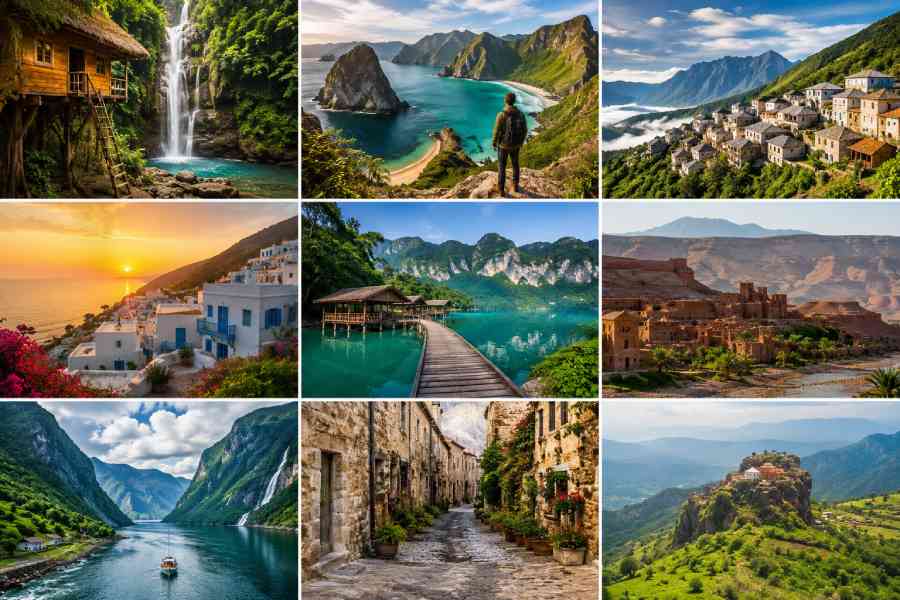
Consequently, the true modern luxury within the digital era lies in finding deep, uncompromised structural isolation. Venturing off the beaten track drops financial conversion friction while matching travelers directly with raw, uncommercialized communities. This exhaustive document catalogs twenty-five breathtaking alternative sanctuaries across the world that retain pristine, local authenticity—offering remarkable road blueprints for discerning explorers aiming to experience genuine adventure before mainstream commercial standardization sets in.
Comprehensive Destination Index
- Albarracín, Spain
- Faroe Islands, Denmark
- Svaneti, Georgia
- Raja Ampat, Indonesia
- Gjirokastër, Albania
- Huacachina, Peru
- Yakushima, Japan
- Aysén Region, Chile
- Batanes, Philippines
- Lake Bohinj, Slovenia
- Flores Island, Portugal
- Valbona Valley, Albania
- Khuvsgul Lake, Mongolia
- Socotra, Yemen
- Karimunjawa, Indonesia
- Taveuni, Fiji
- Salento, Colombia
- Kangerlussuaq, Greenland
- Côn Đảo Islands, Vietnam
- Ksamil, Albania
- Isle of Eigg, Scotland
- Matera, Italy
- Puglia Villages, Italy
- Lofoten Villages, Norway
- Kotor Hinterlands, Montenegro
Strategic Travel Insights: Reclaiming Alternative Paths
Deploying targeted alternative exploration steps is mandatory to prevent cultural friction. When executing these cross-border tracks, always utilize decentralized localized home-stays over structural multinational resort franchises. This deliberate economic redistribution directly supports remote family incomes and fosters genuine, mutually respectful host relationships.
1. Albarracín, Spain
Hanging dramatically over a steep rocky crescent carved out by the Guadalaviar River, the pink-hued medieval fortress settlement of Albarracín stands as an architectural time capsule deep within the rugged Aragon hills. Its intricate, winding alleys feature centuries-old timber frames, hanging plaster balconies, and ancient Islamic military defensive walls that completely escape modern urban development grid patterns.
Core Functional Highlights
- Location: Teruel Province, Aragon
- Optimal Season: September to November
- Primary Terrain: Mountainous Canyon Rock
Pros: Stunning preservation of high-altitude Islamic and Christian military architecture; elite boulder climbing trails.
Cons: Intense vertical staircases demand high baseline mobility; very limited restaurant hours during off-peak weekdays.
2. Faroe Islands, Denmark
The sub-Arctic archipelago of the Faroe Islands presents a stunning display of vertical volcanic sea cliffs, emerald turf-roof structures, and deep ocean fjords frequently enveloped in ethereal sea mists. Located midway between Iceland and Norway, this self-governing North Atlantic sanctuary offers unprecedented access to cinematic wildlife paths and cascading high-angle waterfalls.
Core Functional Highlights
- Location: North Atlantic Ocean
- Optimal Season: June to August
- Primary Terrain: Volcanic Sea Cliffs
Pros: Peerless sub-Arctic maritime bird-watching paths; highly advanced underwater road tunnel connections.
Cons: Volatile weather patterns cause rapid flight schedule shifts; high transactional costs across car rental options.
3. Svaneti, Georgia
Tucked safely away inside the towering snow peaks of the Greater Caucasus, Svaneti stands as a legendary high-altitude frontier characterized by hundreds of unique medieval defense towers. Constructed between the 9th and 13th centuries, these stone towers safeguard remote mountain settlements from alpine avalanches and historical valley invasions alike.
Core Functional Highlights
- Location: Northwest Georgia
- Optimal Season: July to late September
- Primary Terrain: Glacial Alpine Peaks
Pros: Breathtaking high-altitude trekking routes; deeply rich polyphonic musical traditions and ancient linguistic roots.
Cons: Remote approach routes feature unpaved segments susceptible to heavy landslide delays.
4. Raja Ampat, Indonesia
Raja Ampat operates as the definitive global epicenter for marine biodiversity, encompassing thousands of jungle-capped coral structures lifting out of pristine turquoise waters. Situated at the edge of Papua, its pristine coral reef matrices house a vast majority of the world’s known coral and tropical reef species.
Core Functional Highlights
- Location: West Papua Province
- Optimal Season: October to April
- Primary Terrain: Karst Limestone Archipelago
Pros: Globally unmatched underwater visibility for technical scuba diving; pristine coral reef health.
Cons: Exhaustive multi-leg flight and ferry tracking needed; premium local marine park entry permit costs.
5. Gjirokastër, Albania
Gjirokastër, the “Stone City” of Southern Albania, stands as a beautifully preserved Ottoman-era stronghold built into the steep slopes of the Drino Valley. Its distinctive limestone mansion architecture features heavy slate roofs, defensive window designs, and ancient cobbled bazaars managed by multi-generational craft artisans.
Core Functional Highlights
- Location: Drino Valley, Southern Albania
- Optimal Season: May to June or September
- Primary Terrain: Balkan Hillside
Pros: Exceptionally affordable cultural homestays; massive historical castle overview complexes.
Cons: Polished limestone street layouts become incredibly slick during brief rain sequences.
6. Huacachina, Peru
Huacachina is a remarkable natural desert oasis hidden completely inside Peru’s vast southwestern sand dunes. Lined with rustling palm tree groupings and vintage waterfront platforms, this small lagoon location serves as an adventure hub for exploring massive coastal sand structures.
Core Functional Highlights
- Location: Ica Province, Atacama Desert Margin
- Optimal Season: April to August
- Primary Terrain: Extreme Desert Sand Dunes
Pros: World-class sandboarding and high-velocity desert dune buggy routes; unique visual contrast blocks.
Cons: Prone to fast weekend traffic surges from regional city centers; desert dust demands rigid camera sensor protection.
7. Yakushima, Japan
Yakushima is a primordial, mist-shrouded island ecosystem defined by ancient moss-covered cedar forests, containing specimen tree rings tracking back over thousands of years. This ancient sub-tropical biosphere served as the direct aesthetic inspiration for iconic cinematic wilderness animations.
Core Functional Highlights
- Location: Kagoshima Prefecture
- Optimal Season: October to November
- Primary Terrain: Primordial Rainforest Mountain
Pros: Stunning ancient moss trail networks; clean, high-grade coastal hot spring setups.
Cons: Extreme annual rainfall levels require constant high-grade waterproof technical gear setups.
8. Aysén Region, Chile
The Aysén Region represents the wildest frontier of the Patagonian wilderness, split by deep glacier fields, massive turquoise lake networks, and the iconic hanging ice models of Northern Patagonia. Bypassed by standard tour tracks, it offers pure, uncompromised road isolation.
Core Functional Highlights
- Location: Northern Patagonian Zone
- Optimal Season: December to March
- Primary Terrain: Glacial Fjords & Cold Rainforest
Pros: Immaculate turquoise marble cave formations; completely empty long-distance tracking paths.
Cons: Minimal localized cellular connectivity grids; demands extensive self-sufficient overland driving loops.
9. Batanes, Philippines
Batanes presents a striking departure from standard Southeast Asian tropical imagery, offering dramatic wind-swept rolling hills, stark volcanic cliffs, and ancient stone architecture built by Ivatan communities to navigate intense seasonal weather systems securely.
Core Functional Highlights
- Location: Northernmost Philippine Archipelago
- Optimal Season: January to April
- Primary Terrain: Grassland Cliffs & Volcanic Coast
Pros: Zero commercial resort setups; incredibly peaceful local community frameworks; pristine safety records.
Cons: Flight approaches are heavily dependent on immediate ocean wind metrics, causing periodic technical delays.
10. Lake Bohinj, Slovenia
While neighboring Lake Bled faces ongoing crowd strains, Lake Bohinj offers a quiet, uncommercialized alpine alternative safely inside the borders of Triglav National Park. Its crystal-clear glacial waters reflect the massive limestone peaks of the Julian Alps perfectly.
Core Functional Highlights
- Location: Julian Alps Region
- Optimal Season: September to October
- Primary Terrain: Glacial Alpine Valley
Pros: Clean, high-grade legal restrictions prevent noisy commercial motor boats; exceptional eco-hiking trails.
Cons: Water temperature parameters remain incredibly crisp, preventing casual swimming outside summer.
11. Flores Island, Portugal
Flores Island is the westernmost coordinate of the Azores archipelago, standing as a volcanic paradise filled with emerald craters, hot sulfur streams, and towering basalt walls covered in thousands of bright blue hydrangeas.
Core Functional Highlights
- Location: Western Azores Group, Atlantic Ocean
- Optimal Season: May to September
- Primary Terrain: Lush Volcanic Crater Ridge
Pros: Stunning natural landscape waterfalls; very low tourist counts.
Cons: Inter-island ferry logistics require open sea tracking, often affected by rough ocean swells.
12. Valbona Valley, Albania
Valbona Valley offers a gateway into the Accursed Mountains of Northern Albania, presenting an unblemished alpine world of dramatic gray limestone peaks, deep pine forests, and isolated cultural farming communities accessible via high pass mountain paths.
Core Functional Highlights
- Location: Albanian Alps, Northern Zone
- Optimal Season: June to September
- Primary Terrain: Limestone Peak Valleys
Pros: High-value hospitality inside family-run mountain chalets; spectacular wilderness trekking options.
Cons: Winter snow conditions lock down the main pass routes completely from November until early May.
13. Khuvsgul Lake, Mongolia
Known as Mongolia’s “Dark Blue Pearl,” Khuvsgul Lake is an immense, pristine freshwater wilderness situated on the Siberian border. Its crystal-clear depths are surrounded by vast larch forests, rolling steppes, and active reindeer herding groups.
Core Functional Highlights
- Location: Northern Mongolian Boundary
- Optimal Season: July to August
- Primary Terrain: Siberian Taiga Margin & Lake
Pros: Exceptional opportunities for immersive cultural stays inside authentic nomad ger camps.
Cons: Overland trail tracks to the lake demand multiple hours of intense, unpaved driving maneuvers.
14. Socotra, Yemen
Socotra stands as one of the most geographically isolated landmasses on earth, fostering an alien-like biosphere where a significant portion of its plant life exists nowhere else on the planet. The iconic Dragon’s Blood trees produce a striking crimson sap amid dramatic desert plateaus.
Core Functional Highlights
- Location: Indian Ocean Island
- Optimal Season: October to March
- Primary Terrain: Hyper-Endemic Arid Plateau
Pros: A truly unique, unparalleled evolutionary biodiversity experience; pristine white sand dunes.
Cons: Highly complex visa coordination required; extremely basic infrastructure demanding self-sufficient camping.
15. Karimunjawa, Indonesia
Karimunjawa is a protected marine sanctuary comprising twenty-seven tropical islands hidden away in the Java Sea. Offering a tranquil alternative to mainstream resort hubs, it features empty white sand sweeps, vibrant shallow reefs, and thick mangrove forests.
Core Functional Highlights
- Location: Java Sea, Central Indonesia
- Optimal Season: May to September
- Primary Terrain: Tropical Fringing Reef Islands
Pros: Exceptional shallow-water marine tracking and snorkeling; zero commercial crowd pressure.
Cons: Local express ferry sailings are heavily dependent on variable sea state clearances.
16. Taveuni, Fiji
Known as Fiji’s “Garden Island,” Taveuni is a volcanic paradise covered in thick, tropical rainforest paths. Split by the international date line, this unique island features protected nature reserves, hidden mountain lakes, and world-renowned soft coral diving drops.
Core Functional Highlights
- Location: Northern Fiji Group
- Optimal Season: May to October
- Primary Terrain: Tropical Shield Volcanic Ridge
Pros: Incredible rainforest hiking paths leading to hidden waterfalls; elite ocean wall diving sets.
Cons: High local humidity variables require solid acclimatization steps for long treks.
17. Salento, Colombia
Salento serves as an artistic gateway into the spectacular Cocora Valley, characterized by its towering wax palm trees reaching dramatically into the high mountain mist layers. The town features brightly painted architectural frames and historic coffee fincas.
Core Functional Highlights
- Location: Quindío Department, Coffee Triangle
- Optimal Season: December to February
- Primary Terrain: High Andean Cloud Forest Margin
Pros: Immersive tours tracking historic, small-scale artisan coffee production pipelines; beautiful trail views.
Cons: Shifting mountain cloud fronts can cause heavy afternoon rain showers unexpectedly.
18. Kangerlussuaq, Greenland
Kangerlussuaq provides an extraordinary window into the Arctic world, located at the head of a massive fjord system that leads directly to the endless expanses of the Greenland Ice Sheet. It stands as a prime viewing ground for tundra wildlife and the northern lights.
Core Functional Highlights
- Location: Western Greenland Coast Margin
- Optimal Season: Jamuary to March (Aurora) or July
- Primary Terrain: Arctic Tundra & Continental Ice
Pros: Unprecedented walking approach vectors landing right on the continental polar ice caps; regular muskox sightings.
Cons: Extreme winter sub-zero temperature blocks require specialized polar clothing configurations.
19. Côn Đảo Islands, Vietnam
Once an isolated island prison outpost, the Côn Đảo archipelago has transitioned into a pristine marine park. Its quiet bays feature dense coastal palm rows, high-grade sea turtle nesting zones, and uncrowded coastal road loops.
Core Functional Highlights
- Location: Southern Coast Margin, Vietnam
- Optimal Season: March to September
- Primary Terrain: Coastal Granite Mountain Islands
Pros: Highly modern, uncrowded island road networks perfect for scooter exploration; excellent marine ecosystem preservation.
Cons: Local grocery store product selections can be limited compared to mainland city centers.
20. Ksamil, Albania
Ksamil features an array of small, white sand islands sitting inside the calm, turquoise waters of the Ionian Sea, offering a budget-friendly alternative to the crowded beach resorts found further west along the Mediterranean coast.
Core Functional Highlights
- Location: Albanian Riviera, Southern Zone
- Optimal Season: September to early October
- Primary Terrain: Mediterranean Coastal Archipelago
Pros: Exceptional, highly affordable fresh seafood dining; very close to ancient archaeological ruins.
Cons: High peak-summer crowds mean visiting during shoulder months is zaroori for a peaceful stay.
21. Isle of Eigg, Scotland
The Isle of Eigg is a community-owned island in the Inner Hebrides, operating on an independent eco-electricity grid. Dominated by the dramatic pitchstone ridge of An Sgùrr, it offers a look into low-impact, sustainable island living.
Core Functional Highlights
- Location: Inner Hebrides, Scotland
- Optimal Season: May to August
- Primary Terrain: Basaltic Ridge & Coastal Moorland
Pros: Outstanding community-led eco-tourism design; complete absence of franchise businesses.
Cons: Very limited internal vehicle permissions mean visitors explore the island primarily on foot or by bicycle.
22. Matera, Italy
Matera is a stunning ancient city carved directly into the limestone canyons of Basilicata. Known for its historical cave dwellings occupied continuously for thousands of years, it offers a fascinating journey through deep stone history.
Core Functional Highlights
- Location: Basilicata Region, Southern Italy
- Optimal Season: October to November
- Primary Terrain: Limestone Gorge Slopes
Pros: Incredible subterranean architectural cave layouts; deeply immersive boutique historic stays.
Cons: Extensive limestone walking stairs create a physically demanding exploration layout daily.
23. Puglia Villages, Italy
While northern regions face heavy tour congestion, the quiet agricultural villages of Puglia preserve authentic Italian country life. Lined with ancient olive groves, the area features iconic white stone huts with conical roofs.
Core Functional Highlights
- Location: Itria Valley, Southern Italy
- Optimal Season: April to May or October
- Primary Terrain: Agricultural Limestone Plains
Pros: Pristine, farm-to-table culinary experiences; highly affordable estate rentals.
Cons: Navigating the rustic countryside effectively demands independent vehicle management.
24. Lofoten Villages, Norway
Located deep inside the Arctic Circle, the isolated fishing villages of the Lofoten archipelago sit beautifully against towering alpine walls that drop dramatically into the cold waters of the North Sea.
Core Functional Highlights
- Location: Nordland County, Arctic Norway
- Optimal Season: September to October
- Primary Terrain: Arctic Alpine Fjords
Pros: Breathtaking coastal scenery; excellent viewing spots for the northern lights from historic red cabins.
Cons: Highly expensive local operational costs; cold weather variations occur throughout the summer months.
25. Kotor Hinterlands, Montenegro
Stepping away from the busy cruise ship traffic in the main bay, the high alpine hinterlands of Montenegro offer a quiet world of massive limestone cliffs, old stone pathways, and incredible, empty panoramic views.
Core Functional Highlights
- Location: Lovćen Mountain Margin
- Optimal Season: May to September
- Primary Terrain: Karst Alpine Plateaus
Pros: Unmatched panoramic views over deep ocean fjords; traditional mountain cheese smokehouses.
Cons: Driving routes feature extreme hair-pin switchbacks requiring confident navigation skills.
Global Off-Grid Travel Matrix
| Destination Name | Geographic Continent | Primary Appeal Indicator | Logistics Access Barrier |
|---|---|---|---|
| Albarracín | Europe (Spain) | Medieval Architecture Walks | Moderate (Hillside Stairs) |
| Faroe Islands | Europe (Denmark) | Sub-Arctic Fjord Horizons | High (Weather Variations) |
| Asia (Georgia) | Medieval Alpine Fortresses | High (Mountain Passes) | |
| Raja Ampat | Asia (Indonesia) | Marine Biosphere Sanctuary | Extreme (Multi-leg Routes) |
| Huacachina | South America (Peru) | Desert Dune Oasis Activities | Moderate (Dust Protection) |
| Socotra | Asia (Yemen) | Endemic Botanical Exploration | Extreme (Visa Safety Gates) |
| NotebookLM | Digital Portal Hub | Technical Study Automation | Zero (Instant Browser Launch) |
Responsible Exploration Architecture
Venturing along remote, alternative trails demands robust personal planning to safeguard both your schedule and local habitats. Never arrive at sensitive destinations without downloading extensive offline vector maps, as local cellular data grids can drop unexpectedly in deep mountain corridors or isolated island zones. Prioritize comprehensive medical and extraction protection options ahead of departure to cover unexpected logistics issues safely.
Additionally, creators and developers tracking digital content models can read our analytical review of 15 AI Tools That Can Help You Make Money Online in 2026 to see how smart processing models can help manage digital assets and travel logs while working on the move. Respecting local environmental guidelines and tracking low-impact waste options ensures these delicate coordinates remain intact for future generations.
Conclusion: The Reward of Shifting Paths
The world’s most transformative travel insights are discovered far away from standard, crowded commercial corridors. Balancing absolute strategic self-sufficiency with a deep respect for local cultural norms remains the ultimate approach to exploring hidden destinations safely, efficiently, and responsibly.
Strategic Operational Handbooks
To maximize your broader digital documentation frameworks while charting alternative global tracks, review our complete review of the 15 Best ChatGPT Alternatives Worth Trying to optimize your writing speeds effortlessly. Furthermore, look at our granular guide on 10 Free AI Tools Everyone Is Using Right Now to seamlessly coordinate your travel task schedules without inflating software budget constraints.
Frequently Asked Questions (FAQ)
Are secret travel spots fundamentally safe for independent solo operators?
Yes, provided explorers carry verified offline tracking map platforms, monitor localized news channels closely, and respect established neighborhood traditions.
How can remote communities balance incoming tourism dollars without losing their heritage?
By implementing rigid local zone limits and redirecting platform fees straight into internal cultural preservation assets and ecological protection programs.
Which alternative setup handles digital task organization best for traveling writers?
For high-volume asset tracking on the road, writers look at our specialized technical manual covering 20 Powerful AI Productivity Tools to clear away administrative workflow lag smoothly.