
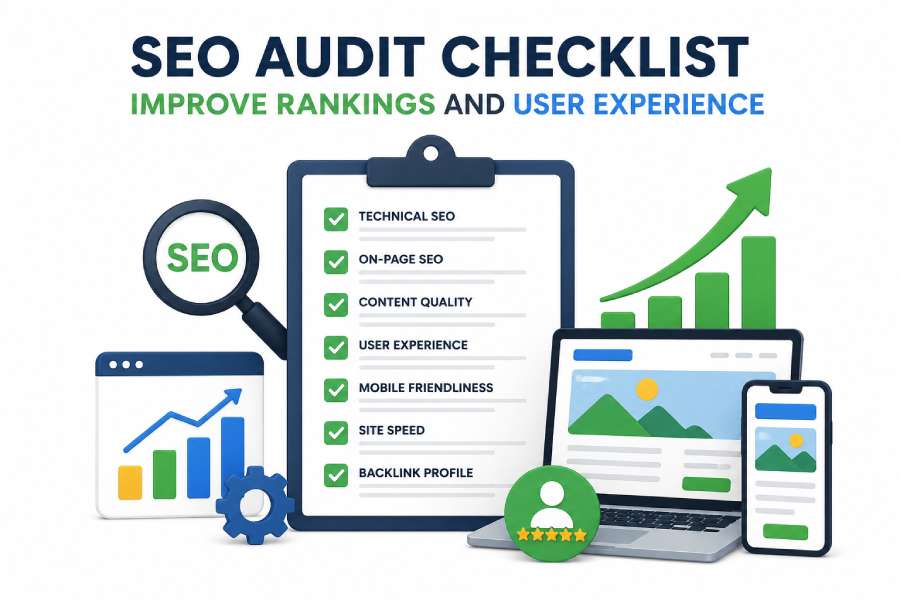
 Successful SEO requires more than adding keywords to content. Websites need strong technical foundations, helpful content, fast performance, mobile optimization, secure browsing, and excellent user experience.
This complete SEO audit checklist by Lots Diary Team explains every important area you should review to improve Google rankings and create a better website experience.
Table of Contents
- What Is an SEO Audit?
- Why Perform an SEO Audit in 2026?
- 1. Technical SEO Audit Checklist
- 2. Website Crawlability Audit
- 3. XML Sitemap SEO Audit
- 4. On-Page SEO Audit Checklist for 2026
- Meta Description Optimization
- Heading Structure Audit (H1-H6)
- Keyword Research and Keyword Mapping Audit
- Content Quality Audit for Better Google Rankings
- E-E-A-T SEO Audit Checklist
- Internal Linking SEO Audit
- Image SEO Audit Checklist
- Core Web Vitals SEO Audit for 2026
- Mobile SEO Audit Checklist
- Advanced Technical SEO Audit Checklist (2026)
- Schema Markup SEO Audit
- Backlink Profile SEO Audit
- Google Search Console & Analytics SEO Audit
- SEO Audit Tools for 2026
- Complete SEO Audit Action Plan for Ranking Improvement
- Common SEO Audit Mistakes to Avoid
- Frequently Asked Questions
What Is an SEO Audit?
An SEO audit is a detailed evaluation of a website’s search engine optimization health. It examines technical elements, content quality, website structure, performance, and user experience factors that influence organic visibility.
A complete SEO audit helps discover problems such as:
- Pages not indexed by Google
- Slow website speed
- Broken links
- Poor mobile experience
- Duplicate content
- Missing metadata
- Weak internal linking
- Low-quality content
- Security issues
Fixing these issues improves website accessibility for search engines and creates a smoother experience for visitors.
Why Perform an SEO Audit in 2026?
Google ranking systems now focus heavily on quality, usefulness, experience, and technical performance. Regular SEO audits help websites stay competitive in search results.
Benefits of Regular SEO Audits
- Improve organic search rankings
- Find hidden technical problems
- Increase website speed
- Improve user engagement
- Recover lost traffic
- Identify content opportunities
- Improve conversion performance
1. Technical SEO Audit Checklist
Technical SEO ensures search engines can properly crawl, understand, and index your website.
Check Website Indexing Status
The first step of an SEO audit is checking whether Google has correctly indexed your important pages.
Use: Google Search Console ? Pages Report
Review:
- Indexed pages
- Excluded pages
- Crawling errors
- Blocked URLs
- Duplicate pages
Common Indexing Problems
- Crawled but currently not indexed
- Discovered but not indexed
- Blocked by robots.txt
- Incorrect canonical URLs
- Server response errors
How to Fix Indexing Issues
- Improve thin content pages
- Add internal links
- Fix technical errors
- Submit updated URLs for indexing
- Remove unnecessary duplicate pages
2. Website Crawlability Audit
Search engines use crawlers to discover and understand website pages. If crawling problems exist, important pages may not appear in search results.
Crawlability Checklist
- Check robots.txt file
- Review XML sitemap
- Fix broken links
- Remove unnecessary redirects
- Check crawl errors
Robots.txt SEO Check
The robots.txt file tells search engines which pages they can or cannot access.
Common mistakes include:
- Blocking important pages
- Blocking CSS or JavaScript files
- Incorrect disallow rules
Example Robots.txt File
User-agent: *
Allow: /
Sitemap: https://lotsdiary.com/sitemap.xml
3. XML Sitemap SEO Audit
An XML sitemap helps Google discover important pages faster and understand website structure.
Sitemap Checklist
- Submit sitemap in Google Search Console
- Include only important URLs
- Remove deleted pages
- Avoid duplicate URLs
- Keep sitemap updated
Common Sitemap Errors
- Invalid XML format
- Blocked URLs
- Incorrect URL versions
- Non-indexable pages included
4. On-Page SEO Audit Checklist for 2026
On-page SEO focuses on optimizing individual webpages so search engines and users can better understand the content. In 2026, successful on-page optimization requires clear structure, helpful information, search intent matching, and excellent user experience.
Title Tag Optimization
The title tag is one of the most important on-page SEO elements because it helps Google understand the topic of a page and influences click-through rate from search results.
Title Tag SEO Checklist
- Include the main target keyword naturally
- Keep titles clear and descriptive
- Create unique titles for every page
- Avoid keyword stuffing
- Write titles that encourage clicks
Example:
Bad:
SEO Audit
Good:
SEO Audit Checklist for 2026: Improve Rankings and User Experience
Meta Description Optimization
A meta description does not directly determine rankings, but it can improve organic click-through rate when written correctly.
Meta Description Checklist
- Explain the page benefit clearly
- Include the main keyword naturally
- Use action-oriented language
- Avoid duplicate descriptions
- Keep descriptions relevant to search intent
Example:
Complete SEO audit checklist for 2026 covering technical SEO, content optimization, Core Web Vitals, and ranking improvements.
Heading Structure Audit (H1-H6)
Proper heading structure improves readability and helps search engines understand content organization.
Heading Optimization Rules
- Use only one H1 tag per page
- Include important topics in H2 headings
- Use H3 headings for supporting sections
- Keep headings descriptive
- Avoid using headings only for styling
A well-structured page helps both Google crawlers and visitors quickly understand important information.
Keyword Research and Keyword Mapping Audit
Keyword optimization in 2026 is about understanding user intent instead of simply repeating keywords.
Search engines now analyze topics, context, and meaning to determine whether content satisfies user needs.
Keyword Audit Checklist
- Identify primary keywords
- Find related semantic keywords
- Analyze search intent
- Review competitor content gaps
- Optimize existing pages for better opportunities
Types of Search Intent
| Intent Type | Example |
|---|---|
| Informational | How to perform SEO audit |
| Commercial | Best SEO audit tools |
| Transactional | Buy SEO services |
| Navigational | Google Search Console login |
Content Quality Audit for Better Google Rankings
Content quality has become one of the most important ranking factors. Websites need helpful, accurate, and experience-based content that answers user questions completely.
Content Audit Checklist
- Does the content solve the user’s problem?
- Is the information accurate and updated?
- Does it provide original insights?
- Does it answer common questions?
- Is the content easy to read?
- Does it include useful examples?
Identify Thin Content Pages
Thin content pages provide little value and may struggle to rank.
Common examples:
- Short pages without useful information
- Duplicate articles
- Automatically generated low-quality content
- Pages created only for keywords
How to Improve Thin Content
- Add detailed explanations
- Include examples and statistics
- Improve formatting
- Add original research
- Update outdated information
E-E-A-T SEO Audit Checklist
Google evaluates content quality using experience, expertise, authoritativeness, and trustworthiness signals.
Experience Optimization
- Share practical examples
- Include real-world solutions
- Demonstrate hands-on knowledge
Expertise Signals
- Add author information
- Create detailed guides
- Provide accurate information
Trust Signals
- Add contact information
- Use secure HTTPS
- Create privacy policy pages
- Show transparent authorship
Internal Linking SEO Audit
Internal links help search engines discover pages and distribute authority throughout your website.
Internal Linking Checklist
- Link related articles together
- Use descriptive anchor text
- Fix broken internal links
- Avoid orphan pages
- Link important pages from high-authority content
Benefits of Strong Internal Linking
- Improves crawling
- Increases page views
- Helps rankings
- Improves user navigation
Image SEO Audit Checklist
Images affect website speed, accessibility, and search visibility. Proper image optimization improves both SEO and user experience.
Image Optimization Checklist
- Use descriptive file names
- Add accurate ALT text
- Compress large images
- Use modern formats like WebP
- Set proper image dimensions
Example:
Bad: IMG001.jpg
Good: seo-audit-checklist-2026.jpg
Core Web Vitals SEO Audit for 2026
Website performance directly affects user experience. Google evaluates page experience signals through Core Web Vitals.
Important Core Web Vitals Metrics
| Metric | Purpose |
|---|---|
| Largest Contentful Paint (LCP) | Measures loading speed |
| Interaction to Next Paint (INP) | Measures page responsiveness |
| Cumulative Layout Shift (CLS) | Measures visual stability |
Core Web Vitals Improvement Checklist
- Optimize large images
- Reduce unnecessary scripts
- Improve server response time
- Use browser caching
- Remove unused code
- Optimize fonts
Mobile SEO Audit Checklist
Mobile optimization is essential because Google primarily uses the mobile version of websites for indexing and ranking.
Mobile SEO Checks
- Responsive design
- Readable text size
- Easy navigation
- Fast mobile loading speed
- Proper button spacing
- No intrusive popups
Advanced Technical SEO Audit Checklist (2026)
Technical SEO ensures that search engines can properly crawl, render, and index your website without errors. Even if your content is strong, technical issues can prevent your pages from ranking.
Server & Hosting Performance Audit
- Check server response time (TTFB)
- Ensure stable uptime (99.9% or higher)
- Use fast hosting infrastructure
- Enable CDN (Content Delivery Network)
- Monitor server errors (5xx issues)
HTTPS & Security Audit
- Ensure full HTTPS implementation
- Fix mixed content issues (HTTP + HTTPS)
- Install valid SSL certificate
- Redirect all HTTP pages to HTTPS
Secure websites build trust and are preferred by search engines.
Schema Markup SEO Audit
Schema markup helps search engines understand your content better and improves search visibility with rich results.
Important Schema Types for SEO Audit
- Article Schema
- FAQ Schema
- Breadcrumb Schema
- Organization Schema
- WebPage Schema
Common Schema Issues
- Missing structured data
- Invalid JSON-LD format
- Incorrect schema type usage
- Missing required fields
Backlink Profile SEO Audit
Backlinks remain an important ranking signal. A healthy backlink profile improves domain authority and search visibility.
Backlink Audit Checklist
- Analyze referring domains
- Check toxic/spam backlinks
- Identify lost backlinks
- Monitor anchor text distribution
- Build high-quality backlinks
Good vs Bad Backlinks
| Good Backlinks | Bad Backlinks |
|---|---|
| Relevant niche websites | Spam directories |
| High authority domains | Low-quality link farms |
| Editorial links | Paid spam links |
Google Search Console & Analytics SEO Audit
Google Search Console and Google Analytics provide essential data for SEO performance tracking and optimization decisions.
Search Console Audit Checklist
- Monitor indexing coverage
- Check performance report (clicks & impressions)
- Fix mobile usability issues
- Resolve Core Web Vitals errors
- Inspect URL performance issues
Analytics Audit Checklist
- Analyze bounce rate
- Track user engagement
- Review top landing pages
- Check traffic sources
- Monitor conversion performance
SEO Audit Tools for 2026
Using the right tools makes SEO audits faster and more accurate.
- Google Search Console
- Google Analytics
- Ahrefs
- SEMrush
- Screaming Frog SEO Spider
- PageSpeed Insights
- GTmetrix
Complete SEO Audit Action Plan for Ranking Improvement
After completing your SEO audit, you should follow a structured action plan to fix issues and improve rankings.
Step-by-Step SEO Action Plan
- Fix indexing and crawl errors
- Improve page speed and Core Web Vitals
- Optimize on-page SEO elements
- Update and improve content quality
- Strengthen internal linking structure
- Build high-quality backlinks
- Fix mobile usability issues
- Submit updated sitemap to Google
Common SEO Audit Mistakes to Avoid
- Ignoring technical SEO issues
- Over-optimizing keywords
- Skipping mobile optimization
- Not updating old content
- Ignoring user experience signals
Conclusion: Improve Rankings with Regular SEO Audits
A complete SEO audit is essential for maintaining strong search visibility in 2026. Websites that regularly analyze technical SEO, content quality, user experience, and backlink profiles consistently outperform competitors in Google rankings.
By following this SEO audit checklist from Lots Diary Team, website owners can identify hidden issues, fix performance problems, and improve both rankings and user experience.
SEO is not a one-time process. Continuous optimization is the key to long-term success in organic search.