
When implemented correctly, Programmatic SEO can become one of the most effective organic traffic growth strategies available.
This guide explains how Programmatic SEO works, why it is becoming more important in 2026, and how businesses can use it to scale organic visibility.
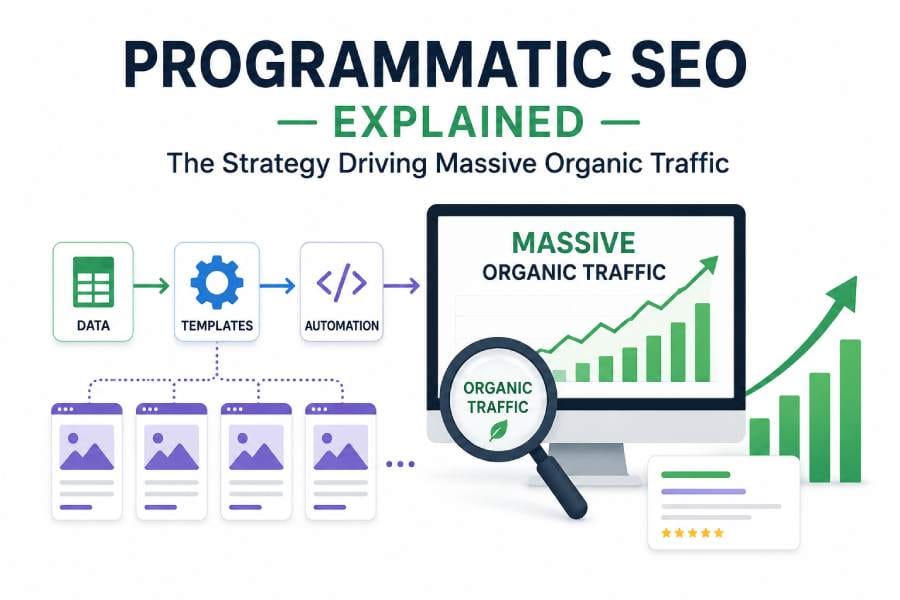
Table of Contents
What Is Programmatic SEO?
Programmatic SEO is the process of creating large numbers of search-optimized pages using databases, templates, automation, and structured content.
Instead of manually writing every page, businesses build scalable systems that automatically generate pages targeting specific keyword combinations.
Simple Definition
Programmatic SEO combines data and templates to create many SEO pages efficiently.
Why Programmatic SEO Is Growing in 2026
Search behavior continues expanding across millions of long-tail keywords.
Many users search for highly specific information that traditional content strategies struggle to cover individually.
Examples
- Best hotels in Miami Beach.
- Best hotels in Orlando.
- Best hotels in Chicago.
- Best hotels in Dallas.
- Best hotels in Austin.
Creating thousands of pages manually would be expensive and time-consuming.
Programmatic SEO solves this scalability challenge.
How Programmatic SEO Works
The strategy typically combines three core components.
1. Data Source
A database contains information that can populate pages automatically.
Examples
- Locations.
- Products.
- Services.
- Businesses.
- Statistics.
- Reviews.
2. Page Template
A page template determines how information appears on each page.
The same structure can be reused across thousands of URLs.
Template Components
- Title.
- Introduction.
- Data sections.
- FAQs.
- Internal links.
- Schema markup.
3. Automation Layer
Automation combines database information with templates to create pages at scale.
Modern CMS platforms, databases, APIs, and automation tools make this process increasingly accessible.
Examples of Programmatic SEO Websites
Many successful websites use programmatic SEO models.
Common Categories
- Travel websites.
- Job boards.
- Real estate platforms.
- Directory websites.
- Software comparison sites.
- Review platforms.
- Marketplaces.
These websites often target thousands of keyword variations through structured page generation.
Programmatic SEO vs Traditional SEO
| Programmatic SEO | Traditional SEO |
|---|---|
| Scalable | Manual Creation |
| Thousands of Pages | Limited Content Volume |
| Database Driven | Writer Driven |
| Automation Focused | Individual Content Focused |
| Long-Tail Keywords | Broad Topics |
Benefits of Programmatic SEO
Massive Keyword Coverage
Programmatic SEO allows websites to target thousands of long-tail search terms simultaneously.
Scalable Growth
Traffic can increase significantly without requiring proportional content creation resources.
Faster Expansion
New pages can be generated rapidly when new data becomes available.
Improved Topic Coverage
Users can find highly specific pages matching their search intent.
Types of Keywords Ideal for Programmatic SEO
- [Product] in [City]
- Best [Service] for [Industry]
- [Software] Alternatives
- [City] Population Data
- [Location] Travel Guide
- [Tool] Pricing Comparison
These keyword structures can scale efficiently through templated page generation.
Why Long-Tail Keywords Matter
Long-tail keywords often have lower competition and stronger search intent.
While individual pages may receive modest traffic, thousands of pages combined can generate substantial organic growth.
Building a Programmatic SEO Architecture
A successful Programmatic SEO project starts with a scalable website architecture.
Without proper organization, search engines may struggle to crawl, index, and understand thousands of generated pages.
Core Architecture Components
- Keyword research database.
- Structured content templates.
- Internal linking system.
- Category pages.
- Data sources.
- Schema markup.
The goal is to create a structure that remains organized even as thousands of pages are added.
Step 1: Build a Data Foundation
Data is the engine behind Programmatic SEO.
The quality of your pages depends heavily on the quality of your database.
Possible Data Sources
- Internal business data.
- Public datasets.
- Government databases.
- Industry reports.
- APIs.
- User-generated content.
Accurate and regularly updated data improves both rankings and user experience.
Step 2: Identify Scalable Keyword Patterns
Programmatic SEO works best when targeting repeatable search patterns.
Examples of Keyword Structures
- Best restaurants in [City]
- Top schools in [Location]
- [Software] alternatives
- [Product] reviews
- Cost of living in [City]
- [Industry] statistics
Each pattern can potentially generate hundreds or thousands of unique pages.
Step 3: Design High-Quality Templates
Templates are critical because they determine the structure of every generated page.
Essential Template Sections
- SEO title.
- Meta description.
- Introduction.
- Main content blocks.
- Data tables.
- FAQs.
- Internal links.
- Schema markup.
Templates should provide genuine value rather than simply inserting keywords into empty layouts.
Avoid Thin Content Problems
One of the biggest Programmatic SEO mistakes is creating pages with little useful information.
Google increasingly evaluates content quality and usefulness.
Common Thin Content Issues
- Duplicate paragraphs.
- Minimal unique value.
- Keyword stuffing.
- Poor user experience.
- Low-quality automation.
Every generated page should answer a specific user need.
Programmatic SEO and E-E-A-T
Experience, Expertise, Authoritativeness, and Trustworthiness remain important even when pages are generated programmatically.
How to Improve E-E-A-T
- Use trustworthy data sources.
- Include expert insights.
- Add author information.
- Provide transparent methodology.
- Update content regularly.
High-quality programmatic pages combine automation with credibility.
Technical SEO Requirements
Large-scale websites require strong technical foundations.
Important Technical Elements
- XML sitemaps.
- Canonical tags.
- Structured data.
- Fast page speed.
- Mobile optimization.
- Clean URL structures.
Internal Linking Strategy
Internal links help search engines discover and understand large collections of pages.
Best Practices
- Link related pages.
- Create category hubs.
- Use descriptive anchor text.
- Connect similar entities.
- Build topic clusters.
Strong internal linking distributes authority throughout the website.
Schema Markup for Programmatic SEO
Structured data helps search engines understand content more effectively.
Useful Schema Types
- Article Schema.
- FAQ Schema.
- Product Schema.
- Review Schema.
- Local Business Schema.
- Organization Schema.
Schema can improve visibility in rich results and AI-powered search experiences.
How AI Is Improving Programmatic SEO
Artificial intelligence is making programmatic content creation more sophisticated.
AI Applications
- Content generation.
- Data summarization.
- Keyword clustering.
- Entity extraction.
- Template optimization.
- Content personalization.
AI can help scale content production, but human oversight remains essential.
Programmatic SEO for Different Industries
Travel Websites
- Destination guides.
- Hotel pages.
- Flight routes.
Real Estate
- Neighborhood pages.
- Property listings.
- Market reports.
SaaS Companies
- Integration pages.
- Comparison pages.
- Alternative pages.
Directories
- Business listings.
- Service providers.
- Industry databases.
Common Programmatic SEO Mistakes
- Publishing thin pages.
- Ignoring search intent.
- Weak internal linking.
- Duplicate content.
- Poor-quality data.
- Technical SEO issues.
- Over-automation.
Successful Programmatic SEO focuses on quality, usefulness, and scalability.
Programmatic SEO Implementation Checklist
Before launching a large-scale Programmatic SEO project, ensure every critical component is in place.
- Identify scalable keyword opportunities.
- Build a reliable data source.
- Create high-quality page templates.
- Map search intent for every page type.
- Implement clean URL structures.
- Add unique content elements.
- Optimize title tags.
- Write custom meta descriptions.
- Implement schema markup.
- Create XML sitemaps.
- Optimize page speed.
- Ensure mobile responsiveness.
- Build internal linking systems.
- Monitor indexing status.
- Track keyword performance.
- Review content quality regularly.
- Update data automatically.
- Improve E-E-A-T signals.
- Monitor user engagement.
- Scale gradually.
Advanced Programmatic SEO Optimization Techniques
After launching a successful framework, advanced optimization can significantly improve rankings and traffic.
Entity-Based SEO
Search engines increasingly rely on entities rather than exact-match keywords.
Include related entities, concepts, and contextual information within templates.
Dynamic Internal Linking
Automatically generate contextual links between related pages.
This improves crawlability and topical relevance.
Content Personalization
Customize page sections based on user intent, location, or category data.
Automated Content Refreshing
Update data-driven content automatically whenever source information changes.
How to Measure Programmatic SEO Success
Tracking performance is essential when managing thousands of pages.
Key Metrics
- Indexed pages.
- Organic traffic.
- Keyword rankings.
- Click-through rate (CTR).
- Conversion rate.
- Bounce rate.
- Time on page.
- Revenue generated.
Monitor trends over time rather than focusing on short-term fluctuations.
Programmatic SEO and AI Search
AI-powered search engines increasingly summarize information and generate direct answers.
Programmatic SEO pages should be designed to support AI understanding.
AI Optimization Tips
- Use structured headings.
- Provide concise answers.
- Add FAQ sections.
- Include structured data.
- Use trusted sources.
- Demonstrate expertise.
Well-structured pages have greater potential to appear in AI-generated search results.
Who Should Use Programmatic SEO?
Programmatic SEO is not necessary for every website.
Best Fit Businesses
- Travel websites.
- Directory websites.
- Job platforms.
- Real estate portals.
- SaaS companies.
- Marketplaces.
- Data-driven businesses.
- Comparison websites.
Businesses with large datasets generally benefit the most from Programmatic SEO.
When Programmatic SEO Is Not the Best Choice
Some websites achieve better results through traditional content strategies.
Examples
- Personal blogs.
- Small local businesses.
- Niche authority sites.
- Creative portfolios.
- Brand storytelling websites.
If a site lacks scalable data, traditional content marketing may be more effective.
Future of Programmatic SEO in 2026 and Beyond
The future of Programmatic SEO will likely combine automation, AI, structured data, and human expertise.
Emerging Trends
- AI-assisted content generation.
- Real-time content updates.
- Entity-based optimization.
- Improved personalization.
- Advanced schema usage.
- Search intent clustering.
- AI search optimization.
Businesses that balance automation with quality will have the greatest opportunity for long-term organic growth.
Frequently Asked Questions
What is Programmatic SEO?
Programmatic SEO is a strategy that uses templates, databases, and automation to create large numbers of SEO-optimized pages.
Does Programmatic SEO work in 2026?
Yes. When pages provide useful information, strong user experiences, and unique value, Programmatic SEO can generate significant organic traffic.
Can AI replace Programmatic SEO?
No. AI can enhance Programmatic SEO processes, but structured data, search intent optimization, and technical implementation remain critical.
How many pages can Programmatic SEO create?
Depending on the dataset, websites can generate hundreds, thousands, or even millions of pages.
What is the biggest Programmatic SEO mistake?
Publishing thin, low-quality, or duplicate pages that fail to provide genuine value to users.
Google Discover Optimization Tips
- Publish original insights.
- Use high-quality visuals.
- Update data frequently.
- Create authoritative content.
- Strengthen topical authority.
- Improve mobile experience.
- Build trust signals.
- Focus on user value.
Although Programmatic SEO focuses on scale, content quality remains essential for Discover visibility.
Final Thoughts
Programmatic SEO is one of the most powerful growth strategies available for websites with scalable datasets and repeatable search patterns.
By combining structured data, automation, technical SEO, and high-quality templates, businesses can build thousands of pages that target long-tail keywords and attract valuable organic traffic.
However, success depends on more than automation. Search engines increasingly reward usefulness, expertise, trustworthiness, and strong user experiences.
The most successful Programmatic SEO projects balance scale with quality, creating pages that genuinely help users while supporting long-term search visibility.
As AI search and entity-based optimization continue evolving, Programmatic SEO will remain a major strategy for businesses seeking sustainable organic growth in 2026 and beyond.