
This comprehensive guide highlights the most important SEO statistics every digital marketer should know in 2026 and explains what these numbers mean for future growth.
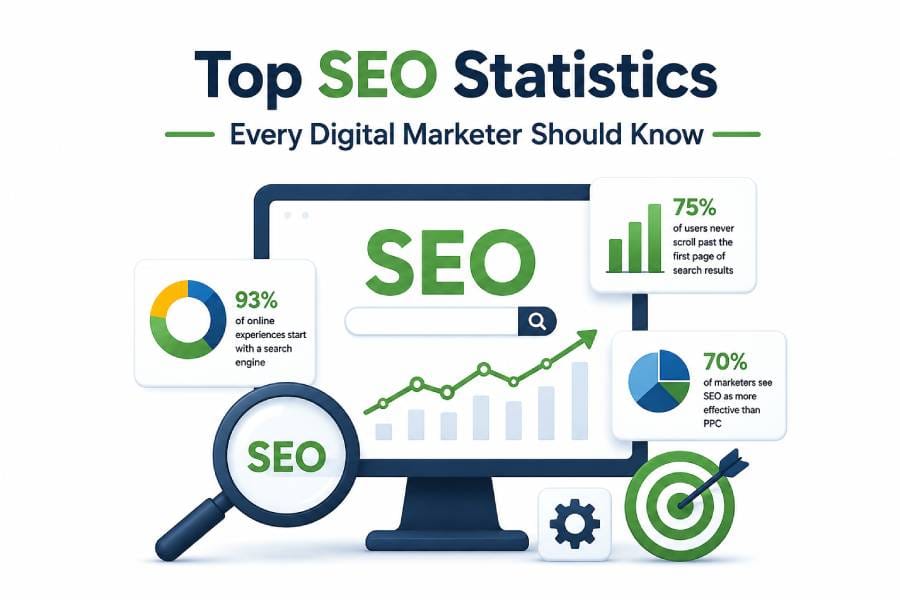
Table of Contents
- Why SEO Statistics Matter
- Organic Search Statistics
- Google Search Market Statistics
- Keyword Research Statistics
- Content Marketing Statistics
- User Behavior Statistics
- Backlink Statistics
- Mobile SEO Statistics
- AI Search Statistics
- Voice Search Statistics
- Local SEO Statistics
- Featured Snippet Statistics
- Core Web Vitals Statistics
- Click-Through Rate (CTR) Statistics
- E-E-A-T Statistics
- Video SEO Statistics
- SEO Conversion Statistics
- Technical SEO Statistics
- Important SEO Benchmarks to Monitor
- Frequently Asked Questions
Why SEO Statistics Matter
SEO statistics help marketers identify trends, prioritize opportunities, and allocate resources effectively.
Benefits of Data-Driven SEO
- Better strategic decision-making.
- Improved bottom-line marketing ROI.
- Higher long-term ranking visibility potential.
- Smarter content clustering roadmaps.
- More accurate traffic forecasting trends.
- Sustainable competitive brand advantages.
Organic Search Statistics
Statistic #1
Organic search remains one of the largest sources of web traffic for operational businesses globally.
Statistic #2
SEO investments continue delivering cumulative, compounding traffic returns over long horizons compared to paid platforms.
Statistic #3
Websites investing systematically in custom content architectures generate growing conversion patterns over successive quarters.
Why It Matters
Organic web acquisition tracks steady long-term expansion paths, rendering search optimization a premier strategic investment for digital publishers.
Google Search Market Statistics
Statistic #4
Google maintains its massive market share globally, processing billions of individual query configurations across every timezone daily.
Statistic #5
The vast majority of end-user commerce behaviors commence immediately via standard search engine navigation boxes.
Statistic #6
Google’s first page layout surfaces and receives the overwhelmingly dense share of net organic user click-through interactions.
Marketing Insight
Failing to establish visibility on screen page one significantly cuts your brand off from target demographic visibility loops.
Keyword Research Statistics
Statistic #7
Long-tail keywords produce excellent post-click conversions because they match granular, high-intent consumer intent paths perfectly.
Statistic #8
Conversational, question-framed searches see year-over-year volume growth as users look for definitive semantic direct solutions.
Statistic #9
Strict user search intent structural alignment matches up as a leading, major determinant of target ranking trajectories.
Actionable Takeaway
Structure your primary analysis targets around detailed thematic search intents instead of prioritizing basic, high-volume metric counts blindly.
Content Marketing Statistics
Statistic #10
Deep, comprehensive long-form content nodes attract an increased density of organic editorial backlinks compared to superficial text blurbs.
Statistic #11
Content items subject to systematic verification updates retain historically-held high rank positions far more effectively over successive cycles.
Statistic #12
Web properties displaying clear signs of actual expertise and verified background experience secure top positions within highly competitive search categories.
User Behavior Statistics
Statistic #13
Online audiences routinely skim contextual page modules before deciding to read paragraph text modules closely.
Statistic #14
Descriptive structural heading setups help lower visual fatigue while dramatically increasing total on-page reading sessions.
Statistic #15
Web page assets that score clean rendering load times consistently show a high drop in user interaction abandonment rates.
Backlink Statistics
Statistic #16
Inbound reference backlinks persist as an essential off-page validation criterion inside modern search ranking algorithms.
Statistic #17
The explicit trust weight of incoming links matters far more to your domain equity profile than arbitrary link quantities.
Statistic #18
High-quality hub resource nodes pick up authoritative backlinks organically due to their distinct technical and editorial values.
Mobile SEO Statistics
Statistic #19
Cellular and mobile device layouts generate the primary absolute baseline volume of global search request volumes.
Statistic #20
Google’s crawling infrastructure evaluates domains using strict mobile-first viewport verification engines.
Statistic #21
Intermittent rendering rendering errors or poor mobile usability paths trigger negative signals across organic search evaluation layers.
AI Search Statistics
Artificial Intelligence continues transforming how users discover information online. Search engines are increasingly integrating AI-generated summaries and conversational search experiences.
Statistic #22
AI-driven answer blocks reshape direct search interface interaction patterns, changing traditional informational query lifecycles.
Statistic #23
An increasing percentage of performance agencies actively shape content assets specifically to feed internal AI engine extraction models.
Statistic #24
Content pieces anchored by clear, transparent E-E-A-T reference notes show increased mention ratios within automated AI search answer arrays.
Voice Search Statistics
Statistic #25
Hands-free voice matching behaviors maintain long-term adoption growth as smart consumer peripheral ecosystems multiply.
Statistic #26
Voice interactions display long, casual linguistic formulations compared to condensed desktop search phrase patterns.
Statistic #27
The vast majority of everyday voice command queries point towards clear question-based long-tail string inputs.
Local SEO Statistics
Statistic #28
Geographic-centric query inputs return direct, high-value foot traffic metrics for operations maintaining brick-and-mortar installations.
Statistic #29
Consumers triggering local informational searches display clear intentions to complete a business purchase choice inside narrow time boundaries.
Statistic #30
Meticulously configured localized business listings remain the single biggest source of regional map inclusion wins.
Featured Snippet Statistics
Statistic #31
Featured snippet cards absorb strong attention blocks by appearing right above traditional position-one organic listings.
Statistic #32
Configuring clean data summary definitions directly maximizes the opportunity to secure position zero snippet placements.
Statistic #33
Deploying structured schema-validated FAQ content pathways supports rapid, predictable featured snippet algorithmic selection.
Core Web Vitals Statistics
Statistic #34
Real-world webpage responsiveness metrics function as key technical performance check barriers across indexing algorithms.
Statistic #35
Optimizing for Core Web Vitals targets scales down dwell bounce rates while extending systemic page view counts.
Statistic #36
Frictionless layout presentation trends generate stable long-term user acquisition checkouts and high subscriber conversions.
Click-Through Rate (CTR) Statistics
Statistic #37
The highest three positions inside search results claim a massive, outsized share of total net page clicks.
Statistic #38
Deploying highly descriptive title meta elements triggers a notable lift in organic click-through trends.
Statistic #39
Polished snippet summaries provide immediate clarity, supporting strong competitive click acquisition rates across the SERP.
E-E-A-T Statistics
Statistic #40
Google’s evaluation processes focus heavily on Experience, Expertise, Authoritativeness, and Trustworthiness markers to audit digital assets.
Statistic #41
Fully verifiable author experience descriptions insulate web publishers from broad algorithmic helpful content adjustments.
Statistic #42
Fostering explicit, clear site safety disclosures underpins consistent domain trust gains and strong user confidence metrics.
Video SEO Statistics
Statistic #43
Online audiences favor visual, video-driven educational materials over dense, continuous blocks of flat copy text.
Statistic #44
Embedding highly engaging video clips effectively holds user interaction times, signaling solid on-page content value.
Statistic #45
Modern search layout features continue expanding multimedia presentation blocks within main search index modules.
SEO Conversion Statistics
Statistic #46
Organic web acquisition pathways register exceptional lead-to-sale performance due to clear inbound intent configurations.
Statistic #47
Search engines drop prospects into landing zones exactly when their target transactional purchase intent metrics peak.
Statistic #48
Fusing clear user experience flows with high-value technical information optimizes ultimate conversion checklist performances.
Technical SEO Statistics
Statistic #49
Unresolved backend indexing flaws can tank top search placement efforts regardless of actual content copywriting brilliance.
Statistic #50
Enforcing clean, warning-free web crawl architecture routes remains absolute prerequisite for normal search query index indexing.
Statistic #51
Adding structured semantic data arrays enables automated bot crawlers to analyze underlying webpage intents with zero error.
Important SEO Benchmarks to Monitor
Tracking the right metrics helps marketers evaluate progress and identify improvement opportunities.
Traffic Metrics
- Organic search acquisition sessions.
- New unique user discovery paths.
- Returning reader loyalty metrics.
- Domain visibility compounding growth rates.
Ranking Metrics
- Target keyword distribution curves.
- Top 3 keyword index positions.
- Featured snippet position-zero occurrences.
- Net search impression visibility factors.
Engagement Metrics
- Average session dwell duration profiles.
- Core bounce and exit rate variables.
- Internal page-depth discovery journeys.
- Interactive call-to-action click rates.
Business Metrics
- Total organic marketing inbound leads.
- Direct checkout conversion actions.
- Organic revenue pipeline values.
- Customer acquisition cost optimization levels.
Frequently Asked Questions (FAQ)
Why are SEO statistics important?
SEO statistics help marketers understand trends, measure performance, and make informed optimization decisions based on actual empirical industry findings.
Which SEO metric matters most?
No single metric operates in isolation. Organic acquisition trends, keyword paths, backend checkout actions, and visitor dwell metrics must all be verified together.
Is SEO still worth investing in during 2026?
Yes. Search optimization stays as one of the most cost-effective and enduring long-term digital growth engines available in modern marketing.
How often should SEO performance be reviewed?
Most commercial organizations check base search tracking positions weekly, running deep structural metadata and crawl diagnostics on a monthly schedule.
Will AI replace SEO?
No. AI is changing search interfaces, but web destinations still require technical crawling setups, rich structured data, and authentic brand authoritativeness to rank.
Google Discover Optimization Tips
- Publish timely, proprietary research angles and new statistical reports.
- Lead with explicit, verifiable author expert perspectives.
- Embed optimized, high-definition semantic hero image layouts.
- Maintain an un-interrupted, highly focused vertical niche publishing routine.
- Optimize Core Web Vitals to satisfy mobile loading profiles.
Final Thoughts
SEO statistics provide valuable insights into how search engines, users, and websites interact. While algorithms continue evolving, several themes remain consistent: quality content, strong user experiences, technical excellence, and trustworthiness drive long-term success.
The future of search belongs to digital marketers who gracefully combine hard statistical insight variables with authentic reader value creation loops.