
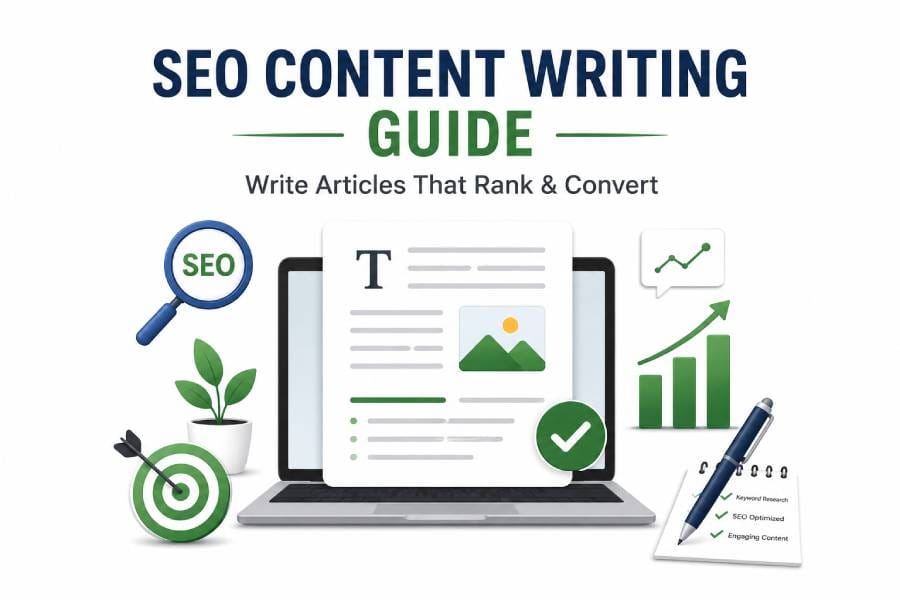
 This complete guide explains how to create SEO-friendly articles that rank higher, engage readers, and generate measurable results.
Table of Contents
- What Is SEO Content Writing?
- Why SEO Content Is Important in 2026
- Understand Search Intent Before Writing
- Start With Keyword Research
- Choose the Right Focus Keyword
- Analyze Top-Ranking Competitors
- Create a Comprehensive Content Outline
- Write Headlines That Attract Clicks
- Optimize the Introduction
- Focus on Readability
- Write Content That Fully Satisfies Search Intent
- Use Keywords Naturally
- Use Semantic SEO Principles
- Create Helpful Subheadings
- Add Original Examples
- Build E-E-A-T Into Every Article
- Optimize Images for SEO
- Use Internal Linking Strategically
- Add Conversion-Focused Elements
- Optimize for Featured Snippets
- The Complete SEO Content Writing Checklist
- How Long Should SEO Content Be?
- SEO Content and AI Search
- Frequently Asked Questions
What Is SEO Content Writing?
SEO content writing is the process of creating content that is optimized for search engines while remaining useful and engaging for readers.
The objective is to increase visibility in search results and encourage visitors to take meaningful actions.
Primary Goals
- Improve search rankings.
- Increase organic traffic.
- Build authority.
- Generate leads.
- Drive sales.
- Improve engagement.
Why SEO Content Is Important in 2026
Search engines continue prioritizing content that demonstrates expertise, relevance, and user value. High-quality SEO content helps businesses attract targeted traffic without relying entirely on paid advertising.
Benefits of SEO Content
- Long-term traffic growth.
- Better brand visibility.
- Higher conversion potential.
- Improved trust.
- Increased authority.
- Lower customer acquisition costs.
Understand Search Intent Before Writing
Search intent is the reason behind a search query. Understanding intent is one of the most important aspects of successful SEO content creation.
Types of Search Intent
- Informational: Users seeking explanations or data-driven tutorials.
- Navigational: Users searching for a specific brand destination or web portal.
- Commercial: Users exploring various marketplace reviews before executing choice decisions.
- Transactional: Users fully prepared to execute a purchase lifecycle.
Content that aligns with search intent generally performs better in search results.
Start With Keyword Research
Keyword research helps identify topics users are actively searching for.
Keyword Categories
- Primary keywords.
- Secondary keywords.
- Long-tail keywords.
- Question-based keywords.
- Semantic keywords.
The goal is to understand the language your audience uses when searching for solutions.
Choose the Right Focus Keyword
Every article should target one primary keyword. This keyword should accurately represent the article’s main topic and search intent.
For this guide, our focus targeting cluster is: SEO Content Writing Guide
Supporting Target Keywords
- SEO content writing.
- SEO copywriting.
- Content that ranks.
- SEO blog writing.
- Content optimization.
Analyze Top-Ranking Competitors
Before writing, study the pages currently ranking on Google’s first page.
Analyze Factors Such As
- Content length.
- Content structure.
- Heading usage.
- Topic coverage.
- FAQ sections.
- User experience.
This analysis helps identify opportunities to create better content.
Create a Comprehensive Content Outline
A detailed outline improves organization and ensures complete topic coverage.
Typical SEO Article Structure
- Introduction.
- Problem definition.
- Main concepts.
- Step-by-step instructions.
- Examples.
- FAQs.
- Conclusion.
Well-structured content improves readability and user engagement.
Write Headlines That Attract Clicks
Your headline influences both rankings and click-through rates (CTR).
Characteristics of Strong Headlines
- Clear.
- Specific.
- Benefit-driven.
- Keyword-focused.
- Easy to understand.
Optimize the Introduction
The introduction should quickly explain what readers will learn and why it matters.
Strong Introduction Formula
- Identify a problem.
- Explain the solution.
- Highlight benefits.
- Set expectations.
Engaging introductions encourage readers to continue reading.
Focus on Readability
Search engines increasingly reward content that provides excellent user experiences.
Readability Tips
- Use short paragraphs.
- Write simple sentences.
- Use headings frequently.
- Add bullet points.
- Break up large text blocks.
Write Content That Fully Satisfies Search Intent
One of the biggest reasons content fails to rank is because it does not completely answer the user’s query. Google rewards pages that provide the most useful and comprehensive solution to a searcher’s problem.
How to Satisfy Search Intent
- Answer primary questions directly in early paragraphs.
- Address peripheral, related long-tail questions.
- Provide clear, actionable advice.
- Include distinct, visual style examples.
- Cover beginner setup foundations alongside advanced strategies.
- Remove unnecessary fluff and filler paragraphs.
Use Keywords Naturally
Keyword stuffing is outdated and can negatively impact user experience. Modern SEO focuses on relevance and context rather than excessive keyword repetition.
Keyword Placement Areas
- Title tag.
- H1 heading.
- Introduction.
- Subheadings.
- Image alt text.
- Meta description.
- Conclusion.
Always prioritize readability over exact-match keyword density parameters.
Use Semantic SEO Principles
Google understands topics rather than individual keywords alone. Semantic SEO involves covering related concepts that help search engines understand content depth.
For an article about SEO content writing, related semantic concepts include:
- Keyword research workflows.
- User intent mapping.
- On-page content optimization.
- Internal link distribution.
- HTML header metadata tags.
- E-E-A-T trust signals.
Create Helpful Subheadings
Subheadings improve readability and help search engines understand content structure.
Best Practices
- Use H2 for major modular structural sections.
- Use H3 for granular supporting breakdowns.
- Include semantic keywords naturally inside headers.
- Keep headings descriptive and punchy.
Add Original Examples
Examples improve comprehension and demonstrate experience. Original examples can strengthen E-E-A-T signals and help content stand out from automated AI drafts.
Example Types
- In-house case studies.
- Personal workflow narratives.
- Targeted niche industry examples.
- Proprietary data metrics analysis.
- Practical visual demonstrations.
Build E-E-A-T Into Every Article
Experience, Expertise, Authoritativeness, and Trustworthiness are increasingly important for sustainable search visibility.
EEAT Implementation Checklist
- Inject expert quotes and interview snippets.
- Provide objectively accurate, cross-checked data points.
- Reference reputable outbound resources.
- Include transparent, linked author info boxes.
- Demonstrate real-world hands-on project experience.
Optimize Images for SEO
Images improve engagement and can generate additional traffic through vertical image searches.
Image Optimization Checklist
- Use descriptive keyword-focused filenames.
- Add natural contextual alt text tags.
- Compress image sizes to accelerate rendering speeds.
- Deploy modern formats like WebP or AVIF.
- Match image placements closely to relevant content sections.
Use Internal Linking Strategically
Internal links help users discover related content assets while allowing bots to spread PageRank efficiently across your structure.
Benefits of Internal Linking
- Improved crawling efficiency.
- Accelerated topical authority clustering.
- Increased organic page views per session.
- Reduced user bounce metrics.
- Effective internal link equity distribution.
Add Conversion-Focused Elements
Ranking content is valuable, but conversions ultimately drive true business results. Every informational page should guide readers toward a logical conversion action checkpoint.
High-Converting Elements
- Contextual in-content calls to action (CTAs).
- Targeted email subscription boxes.
- Native product recommendation widgets.
- Clean, un-obstructive contact capture forms.
- Free downloadable training resources.
Write Effective Calls to Action
A strong CTA encourages readers to take action after consuming your content. Examples include subscribing to newsletters, downloading specialized blueprints, or scheduling expert discovery calls.
Optimize for Featured Snippets
Featured snippets can significantly increase your baseline organic click-through rates by positioning your brand at position zero.
Snippet Optimization Tips
- Answer definitions directly using structured paragraphs.
- Use clean HTML ordered formats (`
- `) for lists.
- Deploy markdown-style list structures for process guidelines.
- Create brief, high-level summary boxes.
Improve User Engagement Metrics
Engagement metrics indicate whether real humans find your information satisfying. To optimize these patterns, incorporate high-resolution visuals, build tight narrative introductions, and minimize structural reading friction.
Update Existing Content
Refreshing content regularly helps protect historical index positions against newer competing articles.
Content Update Checklist
- Swap out expired statistics with updated research numbers.
- Introduce updated workflow case study files.
- Add newly discovered sub-topic coverage blocks.
- Replace older outdated screenshots.
- Re-verify your underlying targeted keyword trends.
Measure Content Performance
Track post-launch performance indicators using analytics setups. Keep a close eye on absolute organic traffic counts, keyword positions, conversion ratios, average dwell duration, and SERP click-through metrics.
The Complete SEO Content Writing Checklist
Use this tracking framework before hitting publish to ensure your target content satisfies technical ranking checklist criteria:
- Map your distinct target audience profile.
- Audit intent metrics for primary keywords.
- Define your focus keyword tag.
- Group relevant secondary keyword paths.
- Perform competitive gap analysis on rival URLs.
- Draft a comprehensive structural content map.
- Formulate an eye-catching title headline.
- Hook users with a targeted problem-solving introduction.
- Enforce strict structural header tags nesting (`H2`, `H3`).
- Place primary keyword clusters naturally in early text blocks.
- Incorporate contextual semantic keyword concepts.
- Provide actionable examples throughout the article body.
- Validate author credentials to showcase E-E-A-T properties.
- Optimize image attributes (Alt text, compression).
- Interlink back to relevant cluster categories.
- Cite authoritative primary external resources.
- Position clear conversion goal paths (CTAs).
- Configure schema-validated meta values.
- Verify copy readability flows.
- Set target tracking views inside configuration consoles.
Common SEO Content Writing Mistakes
Avoid these major conversion pitfalls to ensure clean editorial optimization profiles:
- Mismatiching core user search intent.
- Over-optimizing text via keyword stuffing techniques.
- Deploying thin, low-value generic landing blocks.
- Ignoring simple text block spacing break rules.
- Failing to link outward or inward structurally.
- Writing weak, uninspiring title tags.
- Failing to outline a distinct path to lead conversion.
- Leaving data metrics outdated over successive years.
- Lacking distinct programmatic E-E-A-T attributes.
How Long Should SEO Content Be?
There is no single magic word count metric. Ideal copy length depends directly upon topic complexity, competitive density, and search intent targets.
| Content Type | Recommended Length |
|---|---|
| Standard Blog Post | 1,000–2,000 Words |
| Competitive SEO Guide | 2,000–4,000 Words |
| Product Showcase Page | 500–1,500 Words |
| Lead Generation Landing Page | 800–2,000 Words |
| Deep Pillar Hub Asset | 3,000+ Words |
Focus your engineering cycles on exhausting the subject comprehensively rather than artifically chasing specific word length thresholds.
SEO Content and AI Search
AI-driven search experiences continue to reshape discovery patterns. Content built for optimal extraction by AI agents must prioritize raw data clarity, semantic structure precision, and authoritative value parameters.
AI Engine Discovery Optimization
- Deliver exact definitions directly underneath structured headers.
- Use clean, highly predictable markup nesting layouts.
- Highlight original data points and conclusions.
- Incorporate structured FAQ schemas.
- Fulfill transactional or informational loops efficiently.
Frequently Asked Questions (FAQ)
What is SEO content writing?
SEO content writing is the process of planning, creating, and optimizing digital content to rank high within search engine result loops while providing immense value to human readers.
How many keywords should I use?
Focus on targeting one primary keyword per asset, while supporting it naturally with a cluster of secondary and semantic keyword variations based on user search context.
Does long-form content rank better?
Long-form content often outperforms basic setups because it covers search intents deeply, though programmatic value remains significantly more critical than arbitrary text length.
Can AI-generated content rank on Google?
Yes. Google’s ranking systems look for high-quality, reliable information that displays E-E-A-T attributes, regardless of whether it was created by humans or automated workflows.
How often should content be updated?
Core informational and competitive marketing landing pages should be audited at regular intervals, or whenever underlying statistics shift within your niche market.
Google Discover Optimization Tips
- Publish timely, highly original interest angles.
- Craft highly magnetic, non-clickbait titles.
- Embed crystal-clear high-definition original graphic blocks.
- Maintain a highly predictable, consistent niche publishing cadence.
- Build verified, domain-wide topical authority markers.
Final Thoughts
SEO content writing is no longer simply about inserting keywords into articles. Modern SEO success depends on understanding search intent, providing exceptional value, building trust, and guiding readers toward meaningful actions.
By marrying meticulous formatting with robust user utility metrics, your search properties remain fully prepared to scale high search performance across modern web layouts.