

The global capital marketplace in 2026 requires asset allocation engines that can confidently balance competitive performance optimization with absolute transparency. Simply screening out specific carbon-heavy industries is no longer enough to build an effective portfolio. True modern sustainability mapping centers on evaluating corporate supply chain durability, regulatory safety margins, employee equity metrics, and transparent ethical leadership frameworks.
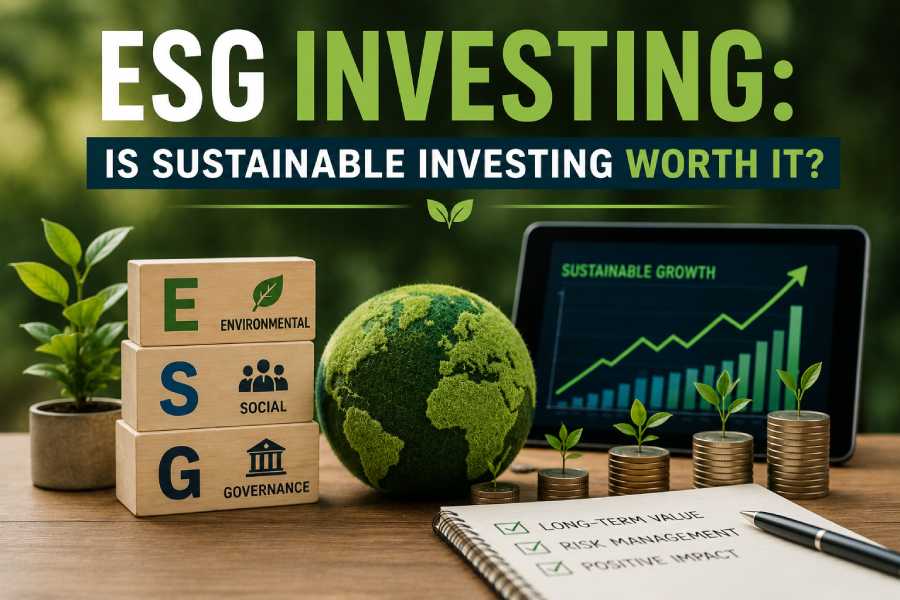
As macro changes continue to redefine target sectors, investors routinely ask whether sustainable investment tranches consistently deliver true economic performance or merely serve as expensive branding mechanisms. This comprehensive master guide breaks down the true mechanics of ESG asset parameters, analyzes long-term market trends, delivers specialized fintech planning blueprints, maps out verified data metrics, and presents an actionable review blueprint for strategic execution.
Defining Environmental, Social, and Governance Asset Parameters
ESG investing is a structured corporate evaluation framework that measures how effectively a business manages its environmental footprint, stakeholder relationships, and leadership accountability. Rather than replacing classic balance-sheet metrics, these parameters expand your analytical scope, identifying non-financial risks and systemic vulnerabilities that traditional accounting tools frequently overlook.
- Environmental Infrastructure: Measures carbon lifecycle emissions, operational renewable adoption, clean tech optimization, waste logistics, and direct resource management.
- Social Stakeholder Dynamics: Evaluates labor safety track records, consumer data privacy compliance, supply chain human rights protections, and inclusive team frameworks.
- Governance Leadership Standards: Audits board independence, transparent executive compensation targets, regular shareholder voting rights, and anti-corruption policies.
[Internal Link Placeholder: Link here to an exhaustive analysis on update compliance frameworks and global ESG reporting requirements in 2026]
Modern ESG Integration: Screening and Selection Methodologies
Asset management groups deploy diverse mathematical screening approaches to inject sustainability parameters directly into custom portfolio configurations:
- Negative Exclusion Screening: Completely removes specific controversial industries—such as firearms, fossil energy, or tobacco assets—from the investable universe.
- Positive Best-in-Class Selection: Focuses allocations on companies within any sector that outperform their direct industry peers on verified sustainability metrics.
- Targeted Thematic Growth: Directs capital explicitly into clean-technology infrastructure, water treatment networks, green hydrogen pipelines, or micro-grid networks.
Deep-Dive Performance Realities vs. Conventional Portfolios
The core debate surrounding sustainable finance centers on whether adding non-financial screens hurts overall performance yields over long horizons.
The Operational Risk Shield: Companies that maintain high governance marks and clean environmental pipelines are naturally insulated against sudden regulatory clampdowns, carbon penalties, and expensive climate lawsuits, helping them preserve long-term shareholder value during volatile periods.
However, investors must recognize that performance curves can fluctuate significantly across economic cycles. For instance, during near-term macro shocks where traditional energy sectors surge rapidly, portfolios that exclude fossil producers can temporarily trail standard indices, making broad cross-asset diversification essential.
[Internal Link Placeholder: Link here to a complete guide on balancing low-cost index ETFs with specialized thematic clean tech tranches]
Navigating the Boundaries of Corporate Greenwashing
As sustainable investing attracts massive capital inflows, the risk of marketing greenwashing—where companies exaggerate their environmental records through clever branding—has increased significantly. Relying on promotional corporate brochures is a major operational error.
To find true value, analytical wealth managers ignore vague PR announcements and focus on verified, auditable data metrics. This requires checking third-party sustainability certifications, reviewing raw scope emissions data, and analyzing direct regulatory filings to confirm real impact.
Optimized Sustainable Portfolio Diversification Allocation Ratios
Building a resilient sustainable asset engine requires balancing your equity growth tranches with defensive, liquid capital buffers to handle shifting market conditions smoothly.
The table below provides a balanced template for structuring sustainable portfolios based on target asset classes and personal timelines:
| Asset Allocation Category | Conservative Safeguard Ratio | Balanced Allocation Model | Aggressive Growth Target |
|---|---|---|---|
| Broad ESG Equity Funds | 35% | 50% | 55% |
| Certified Institutional Green Bonds | 50% | 25% | 10% |
| Sustainable Agri / Infrastructure Trusts | 10% | 15% | 15% |
| Liquid Cash Buffers / High-Yield HYSAs | 5% | 10% | 20% |
Green Platform Engineering: Business Plan Templates & Pitching
As institutional demand for verifiable sustainability data intensifies, financial technology startups are scaling custom ESG analytics engines, automated carbon-accounting platforms, and compliant advisory tools. Launching a venture in this highly technical space requires a rigorous, structured business framework to navigate data audits and win institutional venture backing.
The Sustainability Analytics Platform Business Plan Template
Before writing code for an automated sustainability screening platform, ensure your core internal business plan follows this structured five-part blueprint:
- Executive Market Strategy: Define the exact friction your platform addresses—such as giving asset managers a real-time tool to screen out corporate greenwashing through automated supply chain audits.
- Data Aggregation & Architecture Compliance: Detail your integrations with independent data clearings pipelines, verified carbon indexing APIs, and international data-compliance frameworks.
- Technology Architecture & Security Layer: Document your real-time cloud scaling architecture, data security standards, and processing loops to guarantee safe record management.
- Client Acquisition Funnel: Map out your strategy for driving qualified enterprise traffic through high-quality financial literacy content and transparent data audits, lowering long-term acquisition costs (CAC).
- Platform Monetization Framework: Outline your software revenue streams—including transparent corporate API subscription tiers, monthly platform access levels, or enterprise licensing models.
Structuring an Institutional Venture Capital Pitch
Venture networks and fintech capital syndicates look past vague marketing goals to analyze your platform’s unit economics and data validation security. When pitching an automated ESG compliance application, your deck must clearly deliver three core metrics within the initial review slides:
- Data Accuracy & Proprietary Validation: Prove that your analytics engine uses independent, auditable data pipelines rather than relying on basic corporate PR sheets, ensuring high asset safety.
- User Engagement & Platform Churn Trends: Show clear evidence demonstrating that your tracking tools keep enterprise clients active over long periods, maximizing customer lifetime value (LTV).
- Scalability of Cloud Infrastructure: Demonstrate that your cloud platform can process a high volume of concurrent data queries across global sectors without performance drops.
Sustainable Fintech Sizing: Real Platform Projections
A corporate financial platform’s economic models must always avoid arbitrary, top-down assumptions. Instead, your projections should be built directly from core operational expenses—such as data API licensing fees, secure server compute hosting costs, and verified client acquisition trends.
The table below breaks down a realistic three-year financial scaling model for an automated corporate ESG analytics application, showing the path from initial launch to high-efficiency enterprise scale:
| Platform Performance Metric | Year 1 (System Launch) | Year 2 (Market Acceleration) | Year 3 (Enterprise Dominance) |
|---|---|---|---|
| Gross Software Subscription Revenue | $280,000 | $1,250,000 | $3,900,000 |
| Data Pipeline & Carbon API Licensing | $45,000 | $95,000 | $220,000 |
| Regulatory Compliance & Audit Overhead | $65,000 | $130,000 | $280,000 |
| Organic Content & Search Marketing | $40,000 | $170,000 | $410,000 |
| Net Operating Profit Margin Percentage | 46.4% | 68.4% | 76.6% |
| Realized Net Annual Profits | $130,000 | $855,000 | $2,990,000 |
When presenting these projections to investment partners or corporate syndicates during funding rounds, always explicitly include your underlying core assumptions—such as targeted software price points, average client retention timelines, and organic conversion speeds.
Real-World Case Studies: Sustainable Asset Scaling
To see how disciplined sustainability mapping and automated analytics engines operate in practical environments, let’s analyze two realistic case studies.
Case Study 1: Rebalancing Corporate Treasury via Compliant Fixed Income
An executive managing an independent corporate endowment fund was struggling with an outdated asset strategy that was heavily exposed to fossil energy sectors facing increasing regulatory penalties. By designing an asset optimization blueprint using a structured Business Plan Template, they decided to pivot away from high-risk holdings toward a balanced ESG index model. They automated allocations—routing 70% of capital into certified institutional green bonds and 30% into best-in-class sustainable equities.
This systematic adjustment completely removed speculative guesswork from their treasury deployment. When the sector faced unexpected regulatory carbon penalties a year later, the fund’s sustainable asset insulation limited the firm’s overall drawdowns, maintaining steady institutional liquidity and proving the defensive benefits of systematic risk screening.
Case Study 2: Scaling an Automated Carbon Auditing Engine
Let’s look at an investment advisory platform that wanted to offer automated greenwashing verification to retail users but faced high manual audit costs and strict regulatory disclosure rules. By building their platform structure using a validated business template, they automated core processes like cross-sector data scraping, carbon footprint modeling, and real-time compliance logging.
The company used their early transaction data to secure a $550,000 institutional seed investment from an enterprise venture firm. By utilizing automated data analysis models to run their operations efficiently, the software platform scaled its net annual subscription revenue from $45,000 to over $2.9 million within 24 months, showing that well-structured financial tech products can scale rapidly while maintaining absolute data integrity.
Critical Sustainability Strategy Mistakes to Avoid Completely
Building a resilient sustainable asset engine requires maintaining lean cost structures and avoiding emotional execution traps. Watch out for these common portfolio management mistakes:
- Relying Entirely on General Promotional Sheets: Allocating capital based on vague corporate sustainability slogans instead of analyzing audited emissions metrics and verified regulatory filings.
- Over-Concentrating Capital in a Single Clean Sector: Funneling your entire investment pool into a single niche technology theme like solar panels, exposing your portfolio to massive sector volatility.
- Ignoring the Drag of Inflated Fund Fees: Subscribing to high-fee actively managed sustainability funds whose internal expenses quietly erode your long-term compounding returns.
- Operating Without Clear Financial Targets: Prioritizing ethical alignment so completely that you neglect baseline liquidity needs and core balance-sheet validation.
Actionable Sustainable Asset Allocation Review Checklist
Use this comprehensive operational checklist once every quarter to ensure your investment portfolios remain perfectly balanced, highly cost-efficient, and aligned with your long-term goals:
- Audit the total management fees and expense ratios across all your current sustainable fund holdings.
- Verify that your underlying corporate equity tranches hold strong leadership independence and transparent audit records.
- Check your portfolio’s exact current diversification split across equities, green bonds, and defensive liquid cash buffers.
- Cross-examine your thematic investments against verified independent data pipelines to protect against greenwashing.
- Rebalance your portfolio assets back to your target allocation ratios if market movements have skewed your risk profile.
- Dedicate at least 3 hours to analyzing updated international carbon compliance laws and regional disclosure standards.
Conclusion
Environmental, Social, and Governance criteria serve as highly practical frameworks for building resilient portfolios in our modern financial ecosystem. Whether you approach the market through diversified ESG mutual funds or low-cost exchange-traded clean tech baskets, the core rules of long-term success remain exactly the same: maintain absolute execution consistency, keep your platform costs minimal, and stay focused on your long-term plans.
Building a secure financial future requires moving past surface-level branding trends and focusing instead on deep, systemic risk engineering. By setting realistic protection milestones, automating your monthly savings contributions, and using structured corporate planning templates, you can navigate changing market cycles with complete confidence.
Don’t wait for a major economic shift to expose vulnerabilities in your plan. Audit your asset allocations today, cut out hidden transaction fee overhead, and commit to the disciplined habits that protect your long-term financial freedom.