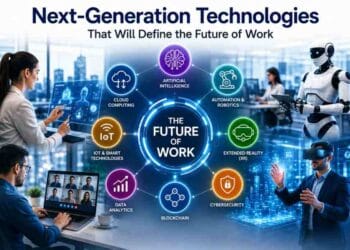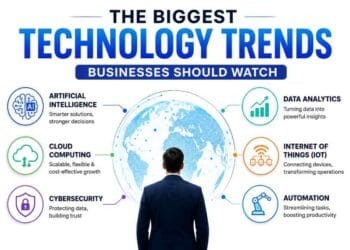

Artificial intelligence can now generate content, analyze medical images, and automate customer support. Robots assist in manufacturing and surgery. Smart devices communicate through the Internet of Things, while cloud platforms enable global collaboration. Quantum computing promises to solve problems that traditional computers cannot handle efficiently.
 Understanding these trends helps individuals, professionals, entrepreneurs, and organizations prepare for the opportunities and challenges of tomorrow’s digital economy.
Table of Contents
- Why Technology Is Evolving Faster Than Ever
- Artificial Intelligence (AI)
- Machine Learning & Deep Learning
- Robotics and Intelligent Automation
- Internet of Things (IoT)
- Quantum Computing
- Blockchain Technology
- Cloud Computing
- Edge Computing & 5G
- Extended Reality (AR, VR & MR)
- Digital Twins
- Green Technology
- Biotechnology and Healthcare Innovation
- Smart Cities and Connected Infrastructure
- Technology Predictions Beyond 2030
- Frequently Asked Questions
1. Why Technology Is Evolving Faster Than Ever
Several factors are accelerating technological innovation, including increased computing power, faster internet connectivity, cloud infrastructure, artificial intelligence, and global collaboration among researchers and businesses.
Organizations now generate enormous amounts of digital data every day. Advanced analytics and AI convert this information into insights that improve productivity, reduce costs, and enable faster decision-making.
Major Drivers of Innovation
- Artificial Intelligence
- Cloud Computing
- High-Speed Internet
- Open Source Software
- Big Data Analytics
- Automation
- Global Digital Collaboration
| Innovation Driver | Impact |
|---|---|
| Artificial Intelligence | Smarter decision-making |
| Cloud Computing | Global scalability |
| Data Analytics | Business intelligence |
| Automation | Higher productivity |
2. Artificial Intelligence (AI)
Artificial Intelligence is one of the most transformative technologies of the modern era. AI systems can analyze information, recognize patterns, generate text and images, understand natural language, and assist humans in solving complex problems.
Businesses increasingly rely on AI to automate repetitive tasks, improve customer experiences, detect fraud, forecast demand, and optimize supply chains.
Popular AI Applications
- Virtual assistants
- Generative AI content creation
- Medical diagnosis support
- Fraud detection systems
- Recommendation engines
- Predictive analytics
| Industry | AI Use Case |
|---|---|
| Healthcare | Disease diagnosis |
| Retail | Product recommendations |
| Finance | Fraud prevention |
| Education | Personalized learning |
3. Machine Learning & Deep Learning
Machine Learning is a branch of AI that enables computer systems to learn from historical data without explicit programming. Deep Learning extends this capability by using complex neural networks capable of recognizing highly sophisticated patterns.
These technologies power voice assistants, image recognition, language translation, recommendation systems, autonomous vehicles, and predictive business analytics.
Common Machine Learning Applications
- Speech recognition
- Spam filtering
- Demand forecasting
- Medical image analysis
- Customer behavior prediction
- Financial risk assessment
| Technology | Main Capability |
|---|---|
| Machine Learning | Pattern recognition |
| Deep Learning | Complex image and language understanding |
| Neural Networks | Large-scale data learning |
4. Robotics and Intelligent Automation
Modern robotics combines engineering, sensors, artificial intelligence, and automation to perform physical tasks with speed and precision. Intelligent robots work alongside humans in manufacturing, logistics, agriculture, healthcare, and service industries.
Advantages of Robotics
- Improved productivity
- Higher precision
- Enhanced workplace safety
- Continuous operation
- Reduced repetitive labor
- Better quality control
| Robot Type | Primary Use |
|---|---|
| Industrial Robots | Manufacturing |
| Medical Robots | Robot-assisted surgery |
| Warehouse Robots | Inventory automation |
| Service Robots | Customer support |
5. Internet of Things (IoT)
The Internet of Things connects billions of physical devices through sensors and internet connectivity, enabling them to collect and exchange real-time information. IoT supports smarter homes, connected vehicles, industrial automation, precision agriculture, and smart healthcare.
Examples of IoT Applications
- Smart home automation
- Wearable health devices
- Industrial equipment monitoring
- Fleet tracking systems
- Environmental monitoring
- Precision farming
| Industry | IoT Example |
|---|---|
| Healthcare | Remote patient monitoring |
| Agriculture | Smart irrigation systems |
| Manufacturing | Equipment performance monitoring |
| Transportation | Connected fleet management |
IoT continues to expand as more devices become connected, enabling real-time monitoring, predictive maintenance, and improved operational efficiency across industries.
6. Quantum Computing
Quantum computing represents one of the most exciting breakthroughs in modern technology. Unlike traditional computers that process information using binary bits (0 and 1), quantum computers use qubits, which can exist in multiple states simultaneously. This capability allows quantum systems to solve highly complex calculations far more efficiently than today’s classical computers.
Although commercial quantum computing is still developing, researchers and technology companies are making rapid progress. Future applications are expected to revolutionize pharmaceutical research, financial modeling, logistics optimization, weather forecasting, and cybersecurity.
Potential Applications
- Drug discovery and medical research
- Financial portfolio optimization
- Supply chain optimization
- Climate and weather simulations
- Cryptography research
- Artificial intelligence acceleration
| Feature | Classical Computing | Quantum Computing |
|---|---|---|
| Processing | Binary bits | Quantum bits (Qubits) |
| Complex Calculations | Time consuming | Extremely fast for selected problems |
| Best Use Cases | General computing | Scientific and optimization problems |
7. Blockchain Technology
Blockchain is much more than cryptocurrency. It is a decentralized digital ledger that securely records transactions across multiple computers, making data transparent, traceable, and resistant to unauthorized modification.
Businesses are increasingly adopting blockchain technology to improve trust, reduce fraud, simplify record management, and automate agreements using smart contracts.
Business Applications
- Supply chain transparency
- Digital identity verification
- Healthcare records
- Property ownership records
- Financial settlements
- Smart contracts
| Industry | Blockchain Benefit |
|---|---|
| Finance | Secure digital payments |
| Healthcare | Protected patient records |
| Retail | Supply chain tracking |
| Government | Identity verification |
8. Cloud Computing
Cloud computing has become the foundation of digital transformation. Instead of maintaining expensive on-site servers, organizations can access computing resources, storage, databases, and applications over the internet.
Cloud platforms enable businesses to scale quickly, improve collaboration, strengthen disaster recovery, and reduce infrastructure costs while supporting hybrid and remote work environments.
Major Benefits
- Scalable infrastructure
- Lower hardware costs
- Remote accessibility
- Business continuity
- Automatic software updates
- Improved collaboration
| Cloud Model | Purpose |
|---|---|
| Public Cloud | Flexible shared infrastructure |
| Private Cloud | Enhanced security and control |
| Hybrid Cloud | Combines public and private environments |
| Multi-Cloud | Uses multiple cloud providers |
9. Edge Computing and 5G Connectivity
As billions of connected devices generate enormous amounts of information, sending every piece of data to centralized cloud servers is not always practical. Edge computing processes information closer to where it is created, significantly reducing latency and improving response times.
The rollout of 5G networks complements edge computing by providing faster wireless communication, higher bandwidth, and lower network delays.
Advantages
- Real-time data processing
- Lower latency
- Reduced bandwidth usage
- Improved IoT performance
- Enhanced reliability
- Better customer experiences
| Technology | Primary Benefit |
|---|---|
| Edge Computing | Processes data locally |
| 5G Networks | Ultra-fast wireless communication |
| Edge AI | Real-time intelligent decision making |
10. Extended Reality (AR, VR, and MR)
Extended Reality (XR) combines Augmented Reality (AR), Virtual Reality (VR), and Mixed Reality (MR) into immersive digital experiences that transform learning, healthcare, entertainment, engineering, retail, and manufacturing.
These technologies enable organizations to visualize products, train employees safely, improve remote collaboration, and enhance customer engagement through interactive experiences.
Real-World Applications
- Medical simulations
- Virtual employee training
- Interactive education
- Retail product visualization
- Architecture and construction planning
- Gaming and entertainment
| Technology | Main Use |
|---|---|
| Augmented Reality | Digital overlays in the real world |
| Virtual Reality | Fully immersive environments |
| Mixed Reality | Interactive digital and physical integration |
Technology Comparison Overview
| Technology | Main Purpose | Industries Using It |
|---|---|---|
| Artificial Intelligence | Decision-making and automation | All industries |
| Robotics | Physical automation | Manufacturing, Healthcare |
| Quantum Computing | Complex scientific computation | Research, Finance |
| Blockchain | Secure digital transactions | Finance, Supply Chain |
| Cloud Computing | Scalable digital infrastructure | Enterprise, Education, Healthcare |
| Edge Computing | Real-time local processing | IoT, Manufacturing, Smart Cities |
| Extended Reality | Immersive experiences | Education, Healthcare, Retail |
11. Digital Twins
Digital twin technology creates a virtual representation of a physical object, machine, building, factory, or even an entire city. These virtual models continuously receive real-time information from sensors and connected systems, allowing organizations to monitor performance, predict failures, and optimize operations before problems occur.
Industries such as manufacturing, healthcare, aerospace, construction, logistics, and energy increasingly use digital twins to reduce costs, improve efficiency, and support better decision-making.
Benefits of Digital Twins
- Predictive maintenance
- Reduced downtime
- Improved product design
- Real-time monitoring
- Lower operational costs
- Better resource management
| Industry | Digital Twin Application |
|---|---|
| Manufacturing | Production line optimization |
| Healthcare | Hospital equipment monitoring |
| Construction | Building lifecycle management |
| Energy | Power grid optimization |
12. Green Technology and Sustainable Innovation
Sustainability is becoming one of the most important priorities for governments, businesses, and consumers. Green technology focuses on reducing environmental impact while improving efficiency through renewable energy, energy-efficient computing, electric transportation, and intelligent resource management.
Organizations are investing in environmentally responsible technologies that reduce carbon emissions while maintaining business growth.
Examples of Green Technology
- Solar and wind energy
- Electric vehicles
- Energy-efficient data centers
- Smart power grids
- Carbon monitoring platforms
- Recycling automation
| Technology | Primary Benefit |
|---|---|
| Renewable Energy | Lower carbon emissions |
| Smart Grid | Improved energy distribution |
| Electric Vehicles | Reduced fossil fuel usage |
| Green Data Centers | Lower electricity consumption |
13. Biotechnology and Healthcare Innovation
Biotechnology combines biology, medicine, genetics, and information technology to develop advanced healthcare solutions. Artificial intelligence and genomic research are accelerating drug discovery, disease diagnosis, and personalized treatments.
Healthcare Innovations
- Precision medicine
- Gene editing research
- AI-assisted diagnostics
- Wearable health devices
- Remote patient monitoring
- Telemedicine platforms
| Innovation | Healthcare Benefit |
|---|---|
| AI Diagnostics | Earlier disease detection |
| Wearable Devices | Continuous health monitoring |
| Telemedicine | Remote medical consultations |
| Genomics | Personalized treatment plans |
14. Smart Cities and Connected Infrastructure
Smart cities integrate artificial intelligence, IoT, cloud computing, digital twins, and advanced communications to improve urban services, transportation, environmental monitoring, and public safety.
Connected infrastructure enables governments to make data-driven decisions while improving the quality of life for citizens.
Smart City Technologies
- Intelligent traffic management
- Smart street lighting
- Connected public transportation
- Waste management automation
- Water management systems
- Public safety monitoring
| Smart City Solution | Benefit |
|---|---|
| Traffic Analytics | Reduced congestion |
| Smart Lighting | Energy savings |
| Environmental Sensors | Improved air quality monitoring |
| Connected Utilities | Efficient resource management |
15. Technology Predictions Beyond 2030
Technology will continue evolving rapidly throughout the next decade. Artificial intelligence will become more integrated into everyday applications, robotics will become increasingly autonomous, and quantum computing will solve scientific problems that are currently impossible for classical computers.
Future Trends
- AI-powered personal assistants for every industry
- Commercial quantum computing services
- Advanced humanoid robots
- Fully autonomous transportation systems
- Highly connected smart cities
- Personalized healthcare powered by AI
- Greater adoption of sustainable technology
Advantages of Emerging Technologies
| Advantage | Business and Society Impact |
|---|---|
| Higher Productivity | Automates repetitive work and improves efficiency |
| Better Decision-Making | Uses AI and analytics for informed choices |
| Improved Healthcare | Enhances diagnosis, treatment, and patient care |
| Economic Growth | Creates new industries and employment opportunities |
| Global Connectivity | Strengthens communication and collaboration |
Challenges of Future Technologies
| Challenge | Possible Solution |
|---|---|
| Cybersecurity Risks | Implement Zero Trust security and continuous monitoring |
| Privacy Concerns | Strengthen data governance and compliance |
| Skills Gap | Invest in workforce education and reskilling |
| High Adoption Costs | Adopt phased implementation strategies |
| Ethical AI | Develop transparent governance frameworks |
Frequently Asked Questions
1. What are the most important technology trends shaping our future?
Artificial intelligence, machine learning, robotics, quantum computing, cloud computing, IoT, blockchain, biotechnology, green technology, and smart cities are among the most influential trends.
2. Why is artificial intelligence important?
AI improves automation, productivity, customer experiences, and decision-making across industries.
3. What is quantum computing?
Quantum computing uses qubits to solve certain complex calculations much faster than traditional computers.
4. How does IoT improve daily life?
IoT connects devices to enable real-time monitoring, automation, and smarter resource management.
5. What industries benefit from robotics?
Manufacturing, healthcare, logistics, agriculture, construction, and retail all benefit from robotics.
6. Why is cloud computing essential?
Cloud computing provides scalable infrastructure, secure data storage, and supports remote collaboration.
7. What are digital twins?
Digital twins are virtual models of physical systems used for monitoring, simulation, and predictive maintenance.
8. How does green technology support sustainability?
Green technology reduces energy consumption, lowers emissions, and improves environmental performance.
9. What skills will become more valuable in the future?
Artificial intelligence, cybersecurity, cloud computing, data analytics, programming, communication, and adaptability will remain highly valuable.
10. How can businesses prepare for future technologies?
Organizations should invest in digital transformation, employee training, cybersecurity, cloud infrastructure, AI adoption, and continuous innovation.
Conclusion
Technology continues to evolve at an extraordinary pace, influencing every industry and nearly every aspect of modern life. Artificial intelligence, robotics, quantum computing, blockchain, cloud computing, biotechnology, IoT, and sustainable innovations are no longer distant concepts—they are becoming practical solutions that improve efficiency, productivity, and quality of life.
Individuals who continuously learn new digital skills and businesses that embrace responsible innovation will be better prepared for tomorrow’s opportunities. Organizations should focus on strategic technology adoption, cybersecurity, workforce development, and ethical implementation to remain competitive in an increasingly connected world.