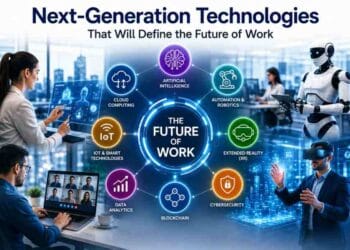

Smart technologies are changing the way people live, work, learn, and access essential services. Advanced innovations such as artificial intelligence, Internet of Things (IoT), cloud computing, automation, and data analytics are creating smarter systems across major industries.
Healthcare, education, and finance are among the industries experiencing the biggest transformation. Organizations are adopting digital solutions to improve efficiency, provide personalized experiences, and solve complex challenges.
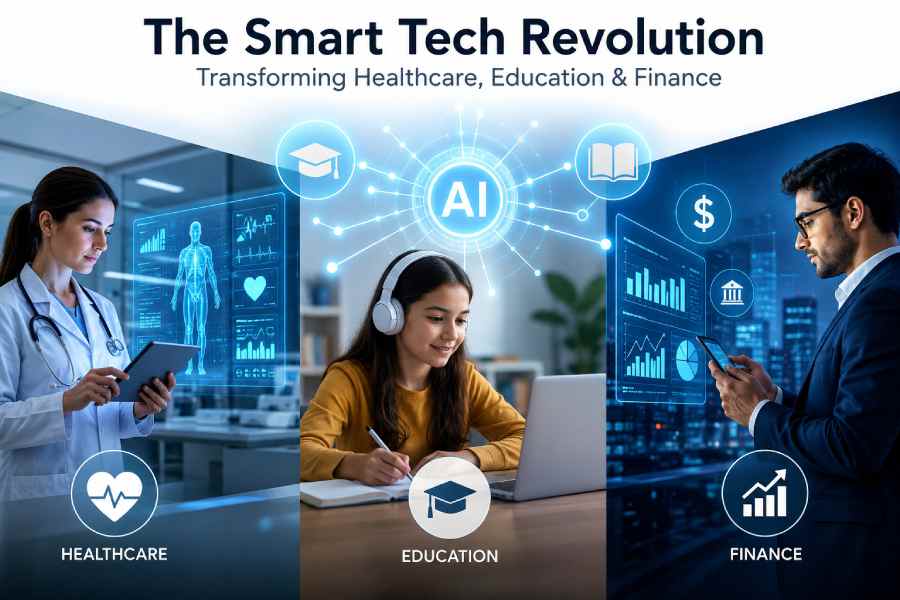 Smart technologies are not only replacing traditional processes. They are creating new opportunities by combining human expertise with intelligent digital systems.
From AI-powered medical diagnosis and personalized learning platforms to automated financial services, technology is building a more connected and efficient future.
Table of Contents
- What Are Smart Technologies?
- Artificial Intelligence Transforming Modern Industries
- Smart Technologies Reshaping Healthcare
- AI, IoT, and Digital Healthcare Solutions
- Smart Technologies Transforming Education
- AI-Powered Learning Systems
- Virtual Classrooms and Digital Learning Platforms
- Smart Technologies Revolutionizing Finance
- AI, Blockchain, and FinTech Innovation
- Comparing Smart Technology Across Industries
- Cloud Computing and Data-Driven Innovation
- Cybersecurity and Digital Trust
- Future Technology Trends Across Industries
- Challenges of Smart Technology Adoption
- Future Predictions: A Smarter Connected World
- Frequently Asked Questions
1. What Are Smart Technologies?
Smart technologies are advanced digital systems that can collect information, analyze data, learn from patterns, and make intelligent decisions. These technologies use artificial intelligence, sensors, automation, and connectivity to improve human experiences.
Unlike traditional technologies that simply perform programmed tasks, smart technologies can adapt and respond to changing conditions.
Examples of Smart Technologies
- Artificial Intelligence (AI)
- Machine Learning
- Internet of Things (IoT)
- Cloud Computing
- Robotics
- Blockchain
- Big Data Analytics
- Automation Systems
| Technology | Main Purpose |
|---|---|
| Artificial Intelligence | Creates intelligent decision-making systems |
| IoT | Connects devices and collects real-time data |
| Cloud Computing | Provides flexible digital infrastructure |
| Automation | Improves efficiency and reduces manual work |
These technologies are becoming essential tools for businesses, governments, educational institutions, and healthcare organizations.
2. Artificial Intelligence Transforming Modern Industries
Artificial Intelligence is one of the most influential smart technologies reshaping industries worldwide. AI enables computers to analyze information, recognize patterns, predict outcomes, and support decision-making.
Organizations are using AI to improve customer experiences, automate processes, and create innovative services.
AI Applications Across Industries
- Healthcare diagnosis and medical research
- Personalized education systems
- Fraud detection in financial services
- Customer service automation
- Business forecasting
- Smart recommendation systems
| Industry | AI Transformation Example |
|---|---|
| Healthcare | AI-powered diagnosis and patient monitoring |
| Education | Personalized learning assistants |
| Finance | Automated analysis and fraud prevention |
| Business | Intelligent decision support |
AI is becoming a powerful partner that helps professionals make faster decisions and deliver better services.
3. Smart Technologies Reshaping Healthcare
Healthcare is one of the industries experiencing the greatest impact from smart technologies. Digital innovation is improving diagnosis, treatment, patient monitoring, and healthcare accessibility.
Modern healthcare systems are combining artificial intelligence, connected devices, robotics, and data analytics to provide more accurate and personalized care.
Major Smart Healthcare Technologies
- AI-powered medical diagnosis
- Smart wearable health devices
- Remote patient monitoring
- Electronic health records
- Robotic surgery systems
- Telemedicine platforms
| Healthcare Technology | Patient Benefit |
|---|---|
| Artificial Intelligence | Faster disease detection and analysis |
| Wearable Devices | Continuous health monitoring |
| Telemedicine | Remote access to healthcare services |
| Robotics | Improved surgical precision |
Smart healthcare technologies are helping medical professionals provide better treatment while allowing patients to take greater control of their health.
4. AI, IoT, and Digital Healthcare Solutions
Artificial intelligence and IoT are creating a new generation of connected healthcare systems. These technologies allow hospitals and healthcare providers to collect real-time information and improve patient outcomes.
AI in Healthcare Applications
- Medical image analysis
- Early disease prediction
- Drug discovery research
- Personalized treatment recommendations
- Healthcare workflow automation
IoT Healthcare Applications
- Smart wearable devices
- Remote monitoring systems
- Connected medical equipment
- Real-time patient data collection
- Smart hospital management
| Smart Healthcare Solution | Impact |
|---|---|
| Wearable Technology | Tracks health conditions continuously |
| AI Diagnosis | Supports faster medical decisions |
| Connected Devices | Improves healthcare monitoring |
| Digital Records | Provides better information management |
The future of healthcare will continue moving toward intelligent, connected, and patient-focused systems.
5. Smart Technologies Transforming Education
Education is undergoing a major digital transformation as schools, universities, and training organizations adopt smart technologies. Digital learning platforms, artificial intelligence, cloud computing, and interactive tools are making education more accessible, flexible, and personalized.
Instead of relying only on traditional classroom methods, educators can now use intelligent systems to monitor student progress, customize learning paths, and improve engagement.
Benefits of Smart Education
- Personalized learning experiences
- Flexible online education
- Improved student engagement
- Better learning analytics
- Global access to educational resources
- More efficient classroom management
| Technology | Educational Benefit |
|---|---|
| Artificial Intelligence | Personalized learning recommendations |
| Cloud Computing | Anywhere access to learning materials |
| Learning Analytics | Tracks student performance and progress |
| Interactive Platforms | Improves collaboration and engagement |
Smart education empowers both students and teachers by making learning more adaptive and data-driven.
6. AI-Powered Learning Systems
Artificial Intelligence is changing education by helping students learn at their own pace while assisting teachers with grading, lesson planning, and student support.
AI systems analyze learning behavior to recommend study materials, identify knowledge gaps, and provide personalized feedback.
Applications of AI in Education
- Intelligent tutoring systems
- Automated assessments
- AI-powered language learning
- Personalized study plans
- Learning performance prediction
- Virtual teaching assistants
| AI Tool | Learning Impact |
|---|---|
| Virtual Tutors | Provides personalized guidance |
| AI Assessments | Speeds up grading and feedback |
| Learning Analytics | Identifies strengths and weaknesses |
| Recommendation Engines | Suggests relevant learning resources |
AI-powered education helps create individualized learning experiences that improve knowledge retention and academic performance.
7. Virtual Classrooms and Digital Learning Platforms
Cloud technology and high-speed internet have enabled virtual classrooms where students and educators can collaborate regardless of location.
Digital learning platforms support live classes, recorded lessons, interactive assignments, discussion forums, and collaborative projects.
Features of Modern Digital Learning
- Live online classes
- Interactive learning resources
- Cloud-based document sharing
- Video conferencing
- Mobile learning applications
- Digital certifications
| Platform Feature | Student Benefit |
|---|---|
| Video Learning | Flexible access to lessons |
| Cloud Storage | Easy access to study materials |
| Collaboration Tools | Supports teamwork and communication |
| Mobile Apps | Learning anytime and anywhere |
Digital education platforms are helping institutions expand access to quality education while supporting lifelong learning.
8. Smart Technologies Revolutionizing Finance
The financial industry has rapidly adopted smart technologies to improve customer experiences, increase security, and automate complex financial processes.
Banks, insurance companies, investment firms, and payment providers use artificial intelligence, cloud computing, automation, and advanced analytics to deliver faster and more personalized services.
Smart Technologies Used in Finance
- Digital banking platforms
- AI-powered customer support
- Automated investment services
- Fraud detection systems
- Real-time payment processing
- Financial data analytics
| Financial Technology | Business Benefit |
|---|---|
| Digital Banking | Convenient online financial services |
| Artificial Intelligence | Improves customer support and risk analysis |
| Automation | Reduces operational costs |
| Analytics | Supports better financial decisions |
Financial organizations continue investing in digital transformation to meet growing customer expectations and improve operational efficiency.
9. AI, Blockchain, and FinTech Innovation
Financial technology (FinTech) combines smart technologies to create secure, fast, and user-friendly financial services. Artificial intelligence, blockchain, automation, and cloud computing are driving continuous innovation.
These technologies improve payment systems, lending, insurance, investment management, and fraud prevention while reducing manual processes.
AI Applications in Finance
- Fraud detection
- Credit risk analysis
- Customer service chatbots
- Investment recommendations
- Financial forecasting
- Portfolio management
Blockchain Applications in Finance
- Secure digital payments
- Smart contracts
- Identity verification
- Cross-border transactions
- Transaction transparency
- Fraud prevention
| Technology | Financial Impact |
|---|---|
| Artificial Intelligence | Automates financial analysis and customer support |
| Blockchain | Improves transaction security and transparency |
| Cloud Computing | Supports scalable financial platforms |
| Automation | Speeds up banking and payment processes |
Comparing Smart Technology Across Industries
| Industry | Primary Technologies | Main Benefits |
|---|---|---|
| Healthcare | AI, IoT, Robotics, Telemedicine | Better diagnosis and patient care |
| Education | AI, Cloud Computing, Learning Platforms | Personalized and accessible learning |
| Finance | AI, Blockchain, Automation, Analytics | Secure, faster, and smarter financial services |
Although healthcare, education, and finance have unique requirements, they share a common goal: using smart technologies to improve efficiency, deliver better services, and support informed decision-making.
10. Cloud Computing and Data-Driven Innovation
Cloud computing has become the backbone of digital transformation across healthcare, education, and finance. It allows organizations to securely store information, access applications from anywhere, and scale services without investing heavily in physical infrastructure.
Combined with big data analytics, cloud platforms help organizations process large volumes of information, discover patterns, and make faster, evidence-based decisions.
Benefits of Cloud Computing
- Secure data storage and backup
- Remote access to applications
- Scalable digital infrastructure
- Lower operational costs
- Real-time collaboration
- Business continuity and disaster recovery
| Cloud Solution | Industry Benefit |
|---|---|
| Cloud Storage | Secure access to important files |
| Software as a Service (SaaS) | Easy deployment of business applications |
| Data Analytics Platforms | Supports faster decision-making |
| Cloud Infrastructure | Improves flexibility and scalability |
As organizations continue generating more digital information, cloud computing will remain essential for innovation and growth.
11. Cybersecurity and Digital Trust
The expansion of smart technologies also increases the importance of cybersecurity. Healthcare providers, educational institutions, and financial organizations manage sensitive personal and business information that must be protected from cyber threats.
Modern cybersecurity combines artificial intelligence, encryption, multi-factor authentication, and continuous monitoring to safeguard digital systems.
Essential Cybersecurity Technologies
- Artificial intelligence threat detection
- Multi-factor authentication
- End-to-end encryption
- Zero Trust security architecture
- Cloud security solutions
- Identity and access management
| Security Challenge | Technology Solution |
|---|---|
| Data Breaches | Encryption and secure authentication |
| Identity Theft | Biometric verification |
| Cyber Attacks | AI-powered threat detection |
| Cloud Security Risks | Continuous monitoring and access controls |
Building digital trust is essential for encouraging the safe adoption of smart technologies across every industry.
12. Future Technology Trends Across Industries
Emerging technologies will continue transforming healthcare, education, finance, manufacturing, retail, and government services. Businesses that embrace innovation will be better prepared to compete in an increasingly digital economy.
Technology Trends to Watch
- More advanced Artificial Intelligence
- Expansion of Internet of Things ecosystems
- Growth of automation and robotics
- Greater use of digital twins
- Wider adoption of blockchain solutions
- Smart city development
- Predictive analytics powered by AI
- Sustainable technology initiatives
| Trend | Expected Impact |
|---|---|
| Artificial Intelligence | Improves decision-making and automation |
| IoT Expansion | Creates connected intelligent environments |
| Automation | Increases productivity and efficiency |
| Big Data Analytics | Provides actionable business insights |
The integration of these technologies will create more efficient, intelligent, and personalized services across industries.
13. Challenges of Smart Technology Adoption
Although smart technologies offer significant benefits, organizations must overcome several challenges to achieve successful implementation.
Common Challenges
- High implementation costs
- Cybersecurity threats
- Employee skill gaps
- Privacy and regulatory compliance
- Legacy system integration
- Resistance to organizational change
| Challenge | Recommended Solution |
|---|---|
| Technology Costs | Adopt phased implementation strategies |
| Skills Gap | Invest in employee training and reskilling |
| Cybersecurity Risks | Deploy advanced security frameworks |
| Data Privacy | Follow strong governance and compliance policies |
| Change Management | Encourage innovation and communication |
Organizations that address these challenges strategically will achieve better long-term digital transformation outcomes.
14. Future Predictions: A Smarter Connected World
The next decade will be defined by deeper integration between humans and intelligent technologies. Smart systems will become more autonomous, predictive, and personalized, improving experiences across healthcare, education, finance, transportation, and everyday life.
Future Predictions
- AI assistants becoming common in every industry
- Personalized healthcare powered by predictive analytics
- Adaptive learning systems for every student
- Fully digital financial ecosystems
- Smarter cities supported by IoT networks
- More sustainable technology infrastructure
- Greater collaboration between humans and intelligent machines
Advantages of Smart Technologies
| Advantage | Benefit |
|---|---|
| Higher Efficiency | Automates repetitive work and improves productivity |
| Better Decision-Making | Uses real-time data and analytics |
| Improved Customer Experience | Delivers personalized services |
| Greater Accessibility | Expands access to healthcare, education, and finance |
| Innovation | Creates new products, services, and business models |
Frequently Asked Questions
1. What are smart technologies?
Smart technologies combine AI, IoT, cloud computing, automation, and analytics to improve decision-making and efficiency.
2. How is AI improving healthcare?
AI supports disease detection, medical imaging, treatment planning, and patient monitoring.
3. How do smart technologies improve education?
They enable personalized learning, virtual classrooms, intelligent tutoring, and better student performance tracking.
4. What is FinTech?
FinTech refers to technology-driven financial services such as digital banking, online payments, AI-powered investing, and blockchain applications.
5. Why is cloud computing important?
Cloud computing provides flexible infrastructure, secure storage, collaboration, and scalable digital services.
6. How does IoT support smart industries?
IoT connects devices that collect and exchange real-time information, improving monitoring and automation.
7. Why is cybersecurity essential?
Cybersecurity protects sensitive information, digital systems, and users from cyber threats.
8. What industries benefit most from smart technologies?
Healthcare, education, finance, manufacturing, retail, logistics, and government services all benefit significantly.
9. What are the biggest challenges of digital transformation?
Organizations commonly face cybersecurity risks, implementation costs, skills shortages, and integration with existing systems.
10. What is the future of smart technologies?
Future innovations will focus on AI, automation, connected devices, sustainability, and intelligent decision-making across industries.
Conclusion
Smart technologies are reshaping healthcare, education, and finance by improving efficiency, personalization, security, and accessibility. Artificial intelligence, cloud computing, IoT, blockchain, automation, and advanced analytics are driving innovation and helping organizations deliver higher-quality services.
As digital transformation accelerates, businesses and institutions that invest in emerging technologies and workforce development will be better positioned to adapt, innovate, and succeed in a rapidly evolving world.