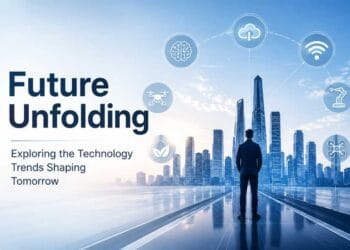

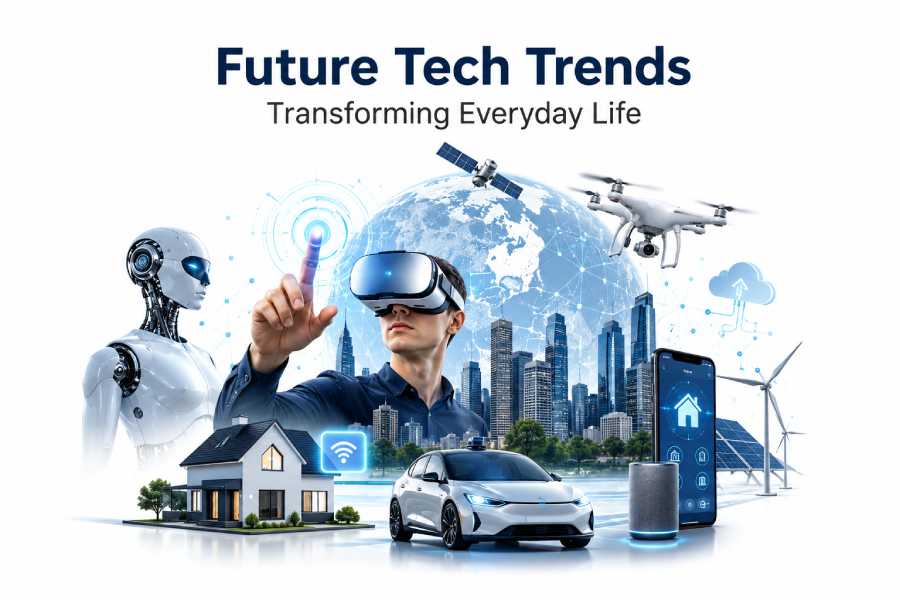
Artificial intelligence, connected devices, robotics, immersive experiences, advanced healthcare solutions, and sustainable innovations are creating a future where technology works more naturally alongside humans.
These developments are not only affecting large companies and industries. Everyday consumers are already experiencing the impact through smart assistants, wearable devices, online services, automated recommendations, and digital platforms.
Understanding emerging technology trends helps individuals and businesses prepare for future opportunities and make better decisions in a rapidly changing digital environment.
Key Focus: This guide explores the most important emerging technologies that will transform everyday life and influence the way people interact with the digital world.
Table of Contents
- Artificial Intelligence Everywhere
- Smart Homes and Connected Devices
- Wearable Technology and Digital Health
- Robotics and Personal Automation
- Extended Reality (AR, VR, and MR)
- Internet of Things
- Autonomous Transportation
- Green Technology
- Advanced Cybersecurity
- Next-Generation Connectivity
- Digital Payments and Blockchain
- Personalized Education Technology
- Quantum Computing
- Space Technology
- Edge Computing
- Frequently Asked Questions
1. Artificial Intelligence Is Becoming Part of Everyday Life
Artificial Intelligence (AI) is one of the most influential technologies transforming modern society. AI systems can analyze information, recognize patterns, understand language, generate content, and support decision-making across many industries.
In everyday life, AI powers voice assistants, search engines, recommendation systems, navigation apps, online shopping suggestions, and personalized digital experiences.
Businesses are also using AI to automate customer service, analyze data, improve marketing campaigns, detect fraud, and optimize operations.
How AI Is Changing Daily Activities
- Personal digital assistants
- AI-powered search experiences
- Automated customer support
- Personalized shopping recommendations
- Smart healthcare analysis
- Intelligent productivity tools
The future of AI will focus on creating more helpful, reliable, and human-centered systems that support creativity and problem-solving.
2. Smart Homes and Connected Devices Are Creating Intelligent Living Spaces
Smart home technology is transforming traditional houses into connected environments that can automatically respond to user preferences.
Modern smart devices use sensors, artificial intelligence, and internet connectivity to improve comfort, security, and energy efficiency.
Homeowners can now control lighting, temperature, entertainment systems, security cameras, and appliances through mobile apps or voice commands.
Examples of Smart Home Technology
- Smart thermostats
- Connected security systems
- Voice-controlled assistants
- Smart kitchen appliances
- Automated lighting systems
- Energy monitoring devices
Future smart homes will become more predictive by learning user habits and automatically adjusting environments based on personal preferences.
3. Wearable Technology and Digital Health Are Improving Personal Wellness
Wearable technology has changed how people monitor their health and fitness. Smartwatches, fitness trackers, and medical wearables provide real-time information about physical activity, sleep patterns, heart rate, and other health indicators.
Healthcare providers are increasingly using connected devices to monitor patients remotely and identify potential health concerns earlier.
Benefits of Digital Health Technology
- Continuous health monitoring
- Remote patient care
- Personal fitness tracking
- Early health risk detection
- Personalized wellness recommendations
As sensors become smaller and more accurate, wearable technology will continue becoming an important part of preventive healthcare.
4. Robotics and Personal Automation Are Redefining Daily Tasks
Robotics is no longer limited to factories. Advanced robots are becoming part of homes, healthcare facilities, warehouses, and service industries.
Personal automation tools help people complete repetitive tasks faster while allowing more time for creative and meaningful activities.
Real-World Robotics Applications
- Household cleaning robots
- Medical assistance robots
- Delivery robots
- Industrial automation
- Agricultural robots
Future robots will become more intelligent, adaptable, and capable of working safely alongside humans.
5. Extended Reality (AR, VR, and MR) Will Change Digital Experiences
Extended Reality combines Augmented Reality (AR), Virtual Reality (VR), and Mixed Reality (MR) to create immersive digital experiences.
These technologies are changing entertainment, education, healthcare, design, and professional training by blending physical and digital environments.
Applications of Extended Reality
- Virtual classrooms
- Immersive gaming experiences
- Medical simulations
- Virtual shopping experiences
- Architectural visualization
- Remote collaboration
As devices become lighter and more affordable, immersive technology will become increasingly common in everyday activities.
6. Internet of Things (IoT) Is Creating a More Connected World
The Internet of Things (IoT) is one of the most important emerging technology trends that will transform everyday life. IoT connects physical devices through the internet, allowing them to collect, exchange, and analyze data automatically.
From smart refrigerators and fitness trackers to connected vehicles and industrial sensors, IoT technology is creating a world where devices can communicate with each other and provide intelligent services.
In the future, IoT devices will become even more integrated into homes, workplaces, transportation systems, and healthcare environments.
How IoT Will Improve Everyday Life
- Smart appliances that automatically adjust settings
- Connected healthcare devices for remote monitoring
- Smart farming systems for efficient agriculture
- Real-time traffic and transportation management
- Energy-saving smart grid solutions
- Automated workplace environments
| IoT Area | Future Impact |
|---|---|
| Smart Homes | More comfortable, secure, and energy-efficient living spaces |
| Healthcare | Better monitoring and personalized medical support |
| Agriculture | Improved crop management and resource efficiency |
| Transportation | Safer and smarter mobility solutions |
7. Autonomous Transportation Will Change How People Travel
Transportation is entering a new era with the development of autonomous vehicles, intelligent navigation systems, and AI-powered mobility solutions.
Self-driving technology combines artificial intelligence, cameras, sensors, machine learning, and advanced mapping systems to help vehicles understand their surroundings and make safer decisions.
Although fully autonomous transportation is still developing, many vehicles already include advanced driver assistance features such as automatic emergency braking, lane assistance, and adaptive cruise control.
Future Transportation Innovations
- Self-driving cars
- Autonomous delivery vehicles
- Smart public transportation
- AI traffic management
- Electric mobility solutions
- Connected vehicle networks
Autonomous transportation could reduce traffic accidents, improve accessibility, and make travel more efficient in future smart cities.
8. Green Technology Is Building a Sustainable Future
Climate challenges are increasing the demand for sustainable technology solutions. Green technology focuses on reducing environmental impact while improving energy efficiency and resource management.
Renewable energy, electric vehicles, smart energy systems, and advanced battery technologies are helping create a cleaner and more sustainable future.
Important Green Technology Trends
- Solar energy innovations
- Advanced battery storage
- Electric transportation
- Smart energy management
- Carbon reduction technologies
- Eco-friendly manufacturing
Smart technology will allow homes and businesses to monitor energy usage, reduce waste, and make environmentally responsible decisions.
| Technology | Environmental Benefit |
|---|---|
| Electric Vehicles | Lower transportation emissions |
| Renewable Energy | Reduced dependence on fossil fuels |
| Smart Grids | Improved energy efficiency |
| Energy Storage | Better renewable energy management |
9. Advanced Cybersecurity Will Protect the Digital Future
As more devices, businesses, and personal services move online, cybersecurity has become a critical part of everyday technology.
Cybercriminals are developing more advanced attacks, making organizations and individuals rely on stronger security solutions powered by artificial intelligence, automation, and real-time monitoring.
Future Cybersecurity Technologies
- AI-powered threat detection
- Biometric authentication
- Passwordless security systems
- Zero-trust security models
- Automated security monitoring
- Advanced data encryption
Future cybersecurity solutions will focus on preventing attacks before they happen rather than only responding after damage occurs.
10. Next-Generation Internet Connectivity Will Enable New Experiences
Fast and reliable internet connectivity is the foundation of modern digital transformation. Advanced networks are enabling smarter devices, cloud applications, artificial intelligence services, and immersive digital experiences.
The expansion of high-speed networks will improve communication, remote work, online education, healthcare access, and smart city development.
Impact of Future Connectivity
- Faster communication
- Improved remote collaboration
- Better cloud performance
- Enhanced online experiences
- Support for connected devices
- Real-time digital services
| Connectivity Technology | Main Advantage |
|---|---|
| Advanced 5G Networks | High speed and low delay communication |
| Future 6G Networks | Higher capacity and intelligent connectivity |
11. Digital Payments and Blockchain Are Transforming Financial Services
The financial industry is experiencing major changes through digital payment systems, blockchain technology, and decentralized solutions.
Consumers increasingly use mobile payments, digital wallets, and online banking services because they provide faster and more convenient financial experiences.
Blockchain technology is expanding beyond cryptocurrency by supporting secure transactions, digital identity systems, supply chain tracking, and transparent record management.
Blockchain Applications Beyond Cryptocurrency
- Secure digital identities
- Supply chain transparency
- Smart contracts
- Healthcare record management
- Digital asset ownership
- Fraud prevention systems
Future financial technology will focus on improving security, accessibility, and personalized digital experiences.
12. Personalized Education Technology Is Changing Learning
Education technology is becoming more intelligent by using artificial intelligence, data analytics, and interactive digital platforms to create personalized learning experiences.
Traditional education models are evolving as students gain access to online courses, virtual classrooms, AI tutors, and adaptive learning platforms.
Future Education Technology Trends
- AI-powered learning assistants
- Virtual classrooms
- Personalized study programs
- Interactive digital textbooks
- Skill-based online learning
- Virtual reality education
Technology will help learners study at their own pace while providing teachers with better tools to support individual student needs.
How These Technologies Will Work Together
The biggest transformation will not come from one single invention. The future will be shaped by multiple technologies working together.
For example, artificial intelligence can analyze data collected by IoT devices, robotics can use AI systems for automation, and smart cities can combine connectivity, sensors, and sustainable technology to improve urban living.
| Technology Combination | Possible Future Result |
|---|---|
| AI + IoT | Smarter homes and intelligent automation |
| AI + Healthcare | Faster diagnosis and personalized treatment |
| Robotics + AI | Advanced personal and industrial assistants |
| Connectivity + Smart Cities | Efficient urban management |
13. Quantum Computing Will Unlock New Possibilities
Quantum computing is one of the most advanced emerging technologies with the potential to solve complex problems beyond the capabilities of traditional computers. Unlike conventional computers that use binary bits, quantum computers use quantum bits to process information in unique ways.
Although quantum computing is still developing, researchers and technology companies are exploring its potential applications in medicine, climate research, financial modeling, cybersecurity, and scientific discovery.
Potential Applications of Quantum Computing
- Advanced drug discovery
- Climate simulation
- Complex financial analysis
- Optimization of transportation systems
- Scientific research acceleration
- Next-generation encryption methods
In the future, quantum computing may work alongside artificial intelligence and cloud computing to solve challenges that require massive amounts of processing power.
14. Space Technology Will Create New Digital Opportunities
Space technology is no longer limited to government exploration programs. Private companies and research organizations are developing new solutions involving satellites, space communication, Earth monitoring, and commercial space services.
Advanced satellite technology is improving global communication, weather forecasting, environmental monitoring, navigation systems, and disaster management.
Future Space Technology Applications
- Satellite internet connectivity
- Climate and environmental monitoring
- Advanced navigation systems
- Space-based research
- Earth observation services
- Commercial space transportation
As space technology becomes more accessible, it may create new opportunities for communication, research, and global digital infrastructure.
15. Edge Computing Will Make Digital Services Faster
Edge computing is changing how data is processed by bringing computing power closer to the location where data is created. Instead of sending all information to distant cloud servers, edge systems process important data locally.
This approach reduces delays, improves performance, and supports technologies that require instant responses, including autonomous vehicles, smart factories, healthcare systems, and connected devices.
Benefits of Edge Computing
- Faster data processing
- Lower network delays
- Improved reliability
- Reduced bandwidth usage
- Better privacy protection
- Support for real-time applications
Emerging Technology Trends Comparison
| Technology | Main Purpose | Future Impact |
|---|---|---|
| Artificial Intelligence | Intelligent automation and decision support | Improves productivity across industries |
| Internet of Things | Connecting physical devices | Creates smarter environments |
| Robotics | Automating physical tasks | Improves efficiency and safety |
| Quantum Computing | Advanced problem solving | Enables scientific breakthroughs |
| Blockchain | Secure digital transactions | Improves transparency and trust |
| Edge Computing | Local data processing | Creates faster digital experiences |
| Green Technology | Sustainable innovation | Supports environmental protection |
Advantages of Emerging Technologies
- Improved Efficiency: Automation and intelligent systems help people complete tasks faster and more accurately.
- Better Healthcare: Digital tools enable faster diagnosis, remote monitoring, and personalized treatment.
- Enhanced Communication: Advanced connectivity makes global collaboration easier.
- Greater Convenience: Smart devices simplify everyday activities.
- New Career Opportunities: Emerging technologies create demand for new digital skills.
Challenges of Future Technology Adoption
| Challenge | Possible Solution |
|---|---|
| Data Privacy Risks | Stronger regulations and security practices |
| Cybersecurity Threats | AI-powered protection systems |
| Technology Skills Gap | Digital education and training programs |
| High Implementation Costs | Affordable and scalable solutions |
| Ethical Concerns | Responsible technology development |
Future Predictions: How Technology Will Transform Everyday Life
The next decade will bring deeper integration between humans and technology. Digital systems will become more personalized, intelligent, and connected.
Homes will become more automated, healthcare will become more predictive, transportation will become smarter, and workplaces will rely more on collaboration between humans and intelligent machines.
Expected Future Changes
- AI assistants managing more daily activities
- Smart homes becoming standard
- More personalized healthcare solutions
- Increased use of automation
- More sustainable technology solutions
- Faster and more reliable digital communication
Frequently Asked Questions About Emerging Technology Trends
1. What are emerging technology trends?
Emerging technology trends are new innovations and advancements that have the potential to significantly change industries, lifestyles, and the way people interact with digital systems.
2. Which technology will have the biggest impact in the future?
Artificial intelligence is expected to have one of the biggest impacts because it supports automation, data analysis, healthcare innovation, education, and business transformation.
3. How will technology change everyday life?
Technology will make everyday activities more convenient through smart devices, automated services, personalized experiences, and connected digital systems.
4. Is artificial intelligence the future of technology?
AI is a major part of future technology because it enables machines to learn, analyze information, and support human decision-making.
5. What role will robotics play in daily life?
Robotics will support household tasks, healthcare services, manufacturing, transportation, and personal assistance.
6. Why is cybersecurity important for future technology?
As more devices become connected, cybersecurity helps protect personal information, business data, and digital infrastructure from threats.
7. How will smart homes improve living experiences?
Smart homes will improve comfort, security, and energy efficiency by automatically adjusting systems according to user preferences.
8. What is the future of healthcare technology?
Healthcare technology will focus on remote monitoring, AI-assisted diagnosis, personalized medicine, and connected health devices.
9. Will technology create new jobs?
Yes. While automation may change some roles, new careers will grow in areas such as artificial intelligence, cybersecurity, robotics, data science, and digital innovation.
10. How can people prepare for future technology changes?
People can prepare by developing digital skills, learning about new technologies, and adapting to continuous innovation.
Conclusion:
Emerging technology trends are transforming the way people live, work, communicate, and solve problems. Artificial intelligence, smart devices, robotics, advanced connectivity, sustainable technology, and digital platforms are creating a more connected and intelligent world.
The future of technology will not depend on one single invention. Instead, multiple innovations will work together to create smarter homes, healthier communities, more efficient businesses, and improved everyday experiences.
Individuals and organizations that understand these changes and build digital skills will be better prepared for the opportunities created by future technology.
Final Thought: Technology is not only changing the future — it is actively creating it. The innovations developed today will define how people experience everyday life tomorrow.