
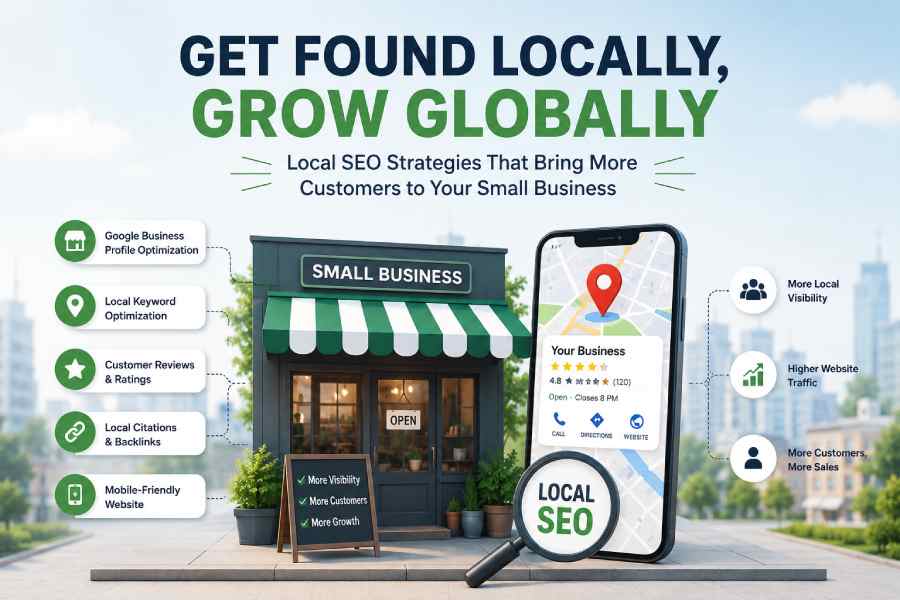
In 2026, consumers increasingly rely on Google Search, Google Maps, and mobile devices to find local businesses. When people search for services near them, businesses with strong local SEO often receive the majority of clicks, calls, and visits.
This comprehensive guide explains the most effective local SEO strategies that help small businesses improve rankings, increase visibility, and generate more customers.
Table of Contents
- What Is Local SEO?
- Why Local SEO Matters in 2026
- How Google’s Local Algorithm Works
- Strategy #1: Optimize Google Business Profile
- Strategy #2: Maintain NAP Consistency
- Strategy #3: Build Local Citations
- Strategy #4: Target Local Keywords
- Strategy #5: Create Location Pages
- Strategy #6: Generate More Customer Reviews
- Strategy #7: Respond to Every Review
- Strategy #8: Build Local Backlinks
- Strategy #9: Optimize for Mobile Users
- Strategy #10: Create Local Content
- Strategy #11: Use Local Business Schema Markup
- Strategy #12: Optimize Service Pages
- Strategy #13: Optimize for Voice Search
- Strategy #14: Improve Website Speed
- Strategy #15: Optimize for Google Maps Rankings
- Strategy #16: Build Topical Authority for Local Services
- Strategy #17: Strengthen EEAT Signals
- Strategy #18: Track and Measure Performance
What Is Local SEO?
Local SEO is the process of optimizing a business’s online presence to improve visibility in local search results.
Unlike traditional SEO, local SEO focuses on attracting customers within a specific geographic area.
Examples include searches such as:
- Best dentist near me.
- Pizza delivery in New York.
- Hair salon in Chicago.
- Electrician near me.
- Local coffee shop.
Businesses that appear prominently in local search results often receive more traffic, leads, and sales.
Why Local SEO Matters More Than Ever
Mobile usage continues to dominate local search behavior. Consumers frequently search for nearby products and services while actively looking to make purchasing decisions.
Benefits of Local SEO
- More qualified traffic.
- Higher conversion rates.
- Increased phone calls.
- More website visits.
- Improved foot traffic.
- Better brand visibility.
Local SEO often delivers some of the highest ROI among digital marketing channels.
How Google’s Local Ranking Algorithm Works
Google uses several primary factors when determining local search rankings.
Local Ranking Factors
- Relevance.
- Distance.
- Prominence.
Relevance measures how well a business matches a search query.
Distance considers proximity between the searcher and business.
Prominence evaluates business authority, reviews, citations, and online reputation.
Local SEO Strategy 1: Optimize Your Google Business Profile
Your Google Business Profile is one of the most important local SEO assets.
Optimized profiles often appear in Google Maps and local pack results.
Optimization Checklist
- Complete all profile information.
- Select accurate categories.
- Add business descriptions.
- Upload high-quality photos.
- Update business hours.
- Add products and services.
- Publish regular updates.
A fully optimized profile significantly improves local visibility.
Local SEO Strategy 2: Maintain NAP Consistency
NAP stands for Name, Address, and Phone Number.
Consistency across all online listings helps search engines trust your business information.
Common NAP Mistakes
- Different phone numbers.
- Different addresses.
- Business name variations.
- Outdated information.
Ensure identical NAP details across your website, social profiles, directories, and citation sources.
Local SEO Strategy 3: Build Local Citations
Citations are online mentions of your business information.
They help validate business legitimacy and improve local ranking signals.
Popular Citation Sources
- Google Business Profile.
- Yelp.
- Bing Places.
- Apple Maps.
- Industry directories.
- Local business directories.
Consistent citations strengthen local SEO authority.
Local SEO Strategy 4: Target Local Keywords
Keyword targeting remains essential for local SEO success.
Examples of Local Keywords
- Best plumber in Dallas.
- Family dentist in Miami.
- Car repair shop in Austin.
- Hair salon near downtown Seattle.
Include local keywords naturally within content, titles, headings, and meta descriptions.
Local SEO Strategy 5: Create Location-Specific Pages
Businesses serving multiple areas should create dedicated location pages.
Location Page Elements
- Unique local content.
- Service descriptions.
- Location-specific keywords.
- Customer testimonials.
- Maps and directions.
- Contact information.
Well-optimized location pages improve visibility across multiple service areas.
Local SEO Strategy 6: Generate More Customer Reviews
Online reviews are among the strongest local ranking signals. They influence both search engine visibility and customer trust.
Businesses with a higher number of positive reviews often receive more clicks, calls, and visits than competitors with weaker review profiles.
How to Get More Reviews
- Ask satisfied customers directly.
- Send follow-up emails.
- Use review request SMS messages.
- Add review links on your website.
- Train staff to request feedback.
Consistent review generation helps strengthen local SEO and conversion rates.
Local SEO Strategy 7: Respond to Every Review
Google encourages businesses to actively engage with customers through reviews.
Responding to reviews demonstrates professionalism and improves customer relationships.
Review Response Best Practices
- Thank customers for positive reviews.
- Address concerns professionally.
- Respond promptly.
- Use a friendly tone.
- Show appreciation.
Active engagement can strengthen your reputation and local search presence.
Local SEO Strategy 8: Build Local Backlinks
Backlinks remain an important ranking factor for both traditional and local SEO.
Local backlinks signal geographic relevance and community involvement.
Local Link Building Opportunities
- Local newspapers.
- Community organizations.
- Business associations.
- Chamber of commerce websites.
- Local blogs.
- Industry directories.
High-quality local links help improve authority and trust.
Local SEO Strategy 9: Optimize for Mobile Users
Most local searches now occur on mobile devices.
Mobile-friendly websites provide a better experience and support stronger local rankings.
Mobile SEO Checklist
- Responsive design.
- Fast loading pages.
- Readable text.
- Clickable phone numbers.
- Easy navigation.
- Mobile-friendly forms.
A positive mobile experience increases conversions from local traffic.
Local SEO Strategy 10: Create Local Content
Locally focused content helps businesses establish relevance within their service areas.
Content marketing can attract local audiences while building authority.
Local Content Ideas
- Local event coverage.
- Community news.
- Neighborhood guides.
- Local business partnerships.
- Area-specific service guides.
- Customer success stories.
Unique local content can help businesses stand out from competitors.
Local SEO Strategy 11: Use Local Business Schema Markup
Schema markup helps search engines better understand your business information.
Structured data can improve visibility and support enhanced search results.
Important Schema Elements
- Business name.
- Address.
- Phone number.
- Business hours.
- Services offered.
- Reviews.
Schema improves communication between your website and search engines.
Local SEO Strategy 12: Optimize Service Pages
Each service offered by your business should have a dedicated optimized page.
Service-specific pages increase opportunities to rank for targeted local searches.
Service Page Optimization Checklist
- Unique content.
- Location keywords.
- Clear service descriptions.
- Customer testimonials.
- Calls-to-action.
- Internal links.
Dedicated service pages improve relevance and conversion potential.
Local SEO Strategy 13: Optimize for Voice Search
Voice search continues growing as consumers use smartphones and smart speakers.
Voice searches are often longer and more conversational than traditional searches.
Voice Search Optimization Tips
- Answer common questions.
- Use conversational language.
- Create FAQ sections.
- Target long-tail keywords.
- Optimize local listings.
Voice search optimization supports future local SEO growth.
Local SEO Strategy 14: Improve Website Speed
Page speed directly affects user experience and local search performance.
Visitors often leave slow-loading websites before taking action.
Speed Optimization Techniques
- Compress images.
- Enable caching.
- Use fast hosting.
- Minify code.
- Reduce unnecessary scripts.
Faster websites typically achieve better engagement and conversion rates.
Local SEO Strategy 15: Optimize for Google Maps Rankings
Google Maps has become one of the most important customer acquisition channels for local businesses. Many consumers now discover businesses directly through map searches rather than traditional search results.
Ranking higher in Google Maps can significantly increase calls, direction requests, website visits, and in-store traffic.
Google Maps Optimization Checklist
- Complete your Google Business Profile.
- Maintain accurate NAP information.
- Collect customer reviews consistently.
- Add fresh photos regularly.
- Update business information.
- Publish Google Business Profile posts.
Businesses that actively manage their local presence often outperform competitors in map results.
Local SEO Strategy 16: Build Topical Authority for Local Services
Topical authority is becoming increasingly important for local SEO.
Instead of creating only service pages, businesses should publish supporting content related to their expertise.
Examples of Supporting Content
- How-to guides.
- Frequently asked questions.
- Industry tips.
- Case studies.
- Customer success stories.
- Educational resources.
Comprehensive content coverage helps search engines understand expertise and authority.
Local SEO Strategy 17: Strengthen EEAT Signals
Experience, Expertise, Authoritativeness, and Trustworthiness (EEAT) continue to influence visibility in search results.
Local businesses can improve EEAT by demonstrating real-world experience and credibility.
Ways to Improve EEAT
- Show author credentials.
- Display certifications.
- Highlight awards.
- Publish case studies.
- Show customer testimonials.
- Provide transparent contact information.
Strong EEAT signals build trust with both users and search engines.
Local SEO Strategy 18: Track and Measure Performance
Successful local SEO requires ongoing monitoring and optimization.
Tracking performance helps identify opportunities and solve problems before rankings decline.
Important Metrics to Monitor
- Google Business Profile views.
- Website traffic.
- Phone calls.
- Direction requests.
- Keyword rankings.
- Review growth.
- Conversion rates.
Data-driven decisions often produce better long-term results.
Common Local SEO Mistakes to Avoid
- Incomplete Google Business Profiles.
- Inconsistent NAP information.
- Ignoring customer reviews.
- Duplicate location pages.
- Weak mobile experiences.
- Poor website speed.
- Missing schema markup.
- No local content strategy.
Avoiding these mistakes can significantly improve local visibility.
The Ultimate Local SEO Checklist for 2026
- Optimize Google Business Profile.
- Maintain NAP consistency.
- Build local citations.
- Target local keywords.
- Create location pages.
- Generate customer reviews.
- Respond to reviews.
- Build local backlinks.
- Optimize for mobile devices.
- Create local content.
- Implement Local Business schema.
- Optimize service pages.
- Target voice search.
- Improve page speed.
- Optimize Google Maps presence.
- Build topical authority.
- Strengthen EEAT signals.
- Track performance metrics.
Frequently Asked Questions
What is local SEO?
Local SEO is the process of optimizing a business’s online presence to improve visibility in local search results and Google Maps.
Why is Google Business Profile important?
Google Business Profile helps businesses appear in local search results, Google Maps, and local packs, making it one of the most important local SEO assets.
How long does local SEO take?
Results vary depending on competition, location, and optimization efforts, but many businesses begin seeing improvements within a few months.
Do customer reviews affect rankings?
Yes. Reviews contribute to local trust, reputation, and ranking signals.
Is local SEO worth it for small businesses?
Yes. Local SEO can generate highly targeted traffic and often delivers strong returns on investment.
Google Discover Optimization Checklist
- Use original high-quality images.
- Create engaging headlines.
- Publish expert-driven content.
- Maintain strong EEAT signals.
- Improve mobile usability.
- Update content regularly.
- Focus on customer value.
- Build brand authority.
Although Google Discover is not location-specific, high-quality content can help businesses increase brand visibility and traffic.
Final Thoughts
Local SEO remains one of the most effective ways for small businesses to compete against larger brands.
Consumers increasingly depend on local search results to find products, services, and businesses near them. Companies that invest in local SEO gain a significant advantage by appearing when customers are actively searching.
Success requires more than simply creating a website. Businesses must optimize their Google Business Profile, maintain accurate information, collect reviews, create valuable content, earn local authority, and provide excellent user experiences.
By consistently applying the strategies outlined in this guide, small businesses can improve visibility, attract more qualified leads, and convert local searchers into loyal customers.