

However, setting up the technical website is rarely the hurdle that stops aspiring entrepreneurs. The true challenge lies in identifying a profitable, defensible e-commerce business idea that matches your available startup capital, technical skills, physical workspace, and lifestyle goals.
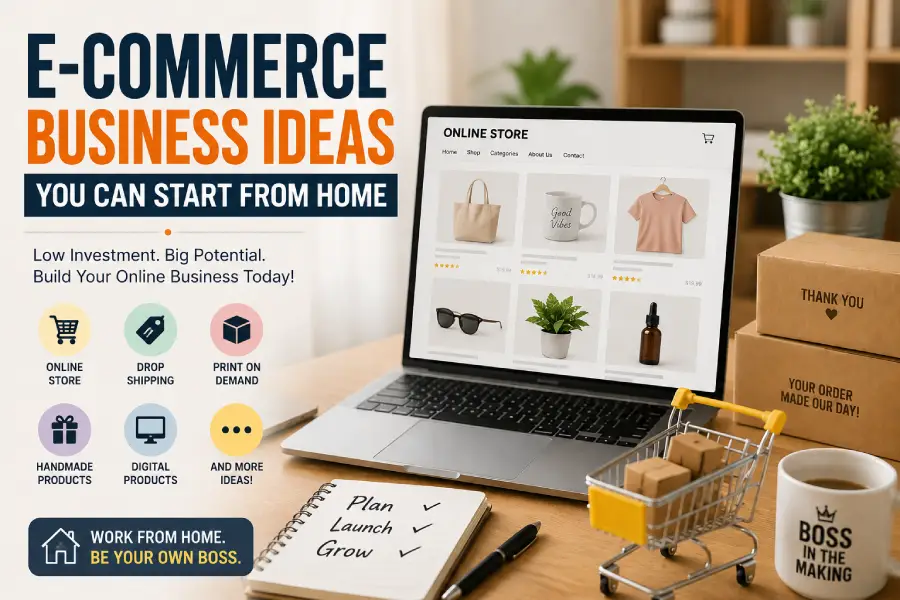 Some online business models require managing physical inventory, shipping materials, and quality control under your own roof. Others—such as digital downloads, print-on-demand apparel, software templates, and drop-shipped specialty goods—operate with zero physical inventory, allowing you to focus entirely on marketing, product curation, and customer experience.
This comprehensive guide provides an in-depth breakdown of 25 e-commerce business ideas you can start from home. Each profile breaks down the core business model, target demographics, equipment and inventory requirements, profit margin benchmarks, and step-by-step startup execution strategies.
Why Start an E-Commerce Business From Home?
The barriers to entry for launching an international commercial retail brand have effectively dissolved. In the past, selling products required negotiating retail shelf space, signing long commercial property leases, investing tens of thousands of dollars in bulk factory production runs, and establishing complex physical logistics chains.
A modern home-based e-commerce business provides distinct structural advantages:
- Minimal Fixed Overhead: Operating from home eliminates commercial lease payments, retail utility bills, commuter expenses, and facility maintenance fees, allowing you to maintain healthy cash flow even during slow seasonal months.
- Agile Product Experimentation: You can launch a targeted product line of five to ten items, gauge organic customer search interest and paid ad conversion rates, and iterate your catalog within days based on real sales data.
- Global Audience Reach: Instead of relying on local neighborhood foot traffic, an optimized digital storefront gives you direct access to millions of potential buyers across domestic and international markets.
- Modular Scalability: You can begin by fulfilling small batches of handmade products or digital downloads during evenings, gradually outsourcing storage and shipping to third-party logistics (3PL) warehouses as order volume scales.
However, running an online store is a competitive commercial endeavor. Sustainable profitability requires a clear understanding of product sourcing, unit economics, shipping logistics, search engine optimization, and customer retention.
How to Choose the Best E-Commerce Business Model for Your Skills
Before investing money into inventory or software subscriptions, evaluate your personal resources across four core criteria:
1. Physical Storage Space & Equipment
Be realistic about your home environment. Selling large home decor pieces, fitness gear, or ceramic pottery requires dedicated clean storage space, packing tables, and heavy-duty shipping supplies. If you live in a compact apartment, digital downloads, jewelry, or print-on-demand models are much more practical.
2. Available Working Capital
Inventory-based businesses (such as private-label pet products or custom apparel lines) require upfront cash to purchase raw materials or wholesale minimum order quantities (MOQs). If your budget is under $500, focus on digital templates, educational printables, or print-on-demand, where manufacturing costs occur only after a customer pays.
3. Production Time vs. Scalability
Handmade products (like wire-wrapped jewelry or hand-poured candles) yield high profit margins and distinct brand loyalty, but your output is limited by the physical hours you spend making each item. Sourced goods, dropshipping, and digital assets scale more easily because fulfilling 100 orders requires roughly the same personal labor as fulfilling one.
Physical Product & Handmade E-Commerce Businesses
1. Handmade & Personalized Artisan Jewelry
Business Overview: Handcrafted polymer clay earrings, wire-wrapped gemstone rings, stamped initial necklaces, beaded bracelets, and bespoke bridal jewelry produced from a dedicated home workbench.
Jewelry remains one of the most profitable, high-demand categories in online retail. Because handmade jewelry pieces are lightweight and compact, shipping costs are minimal, and raw material storage takes up very little room.
The key to building a successful jewelry brand is establishing a distinct aesthetic rather than assembling generic craft beads. Focus on specific niches: minimalist 14k gold-filled everyday wear, personalized birthstone jewelry for mothers, gothic stainless steel accessories, or bohemian bridal headpieces. Offering custom name stamping, anniversary date engravings, or custom stone selections turns standard jewelry into meaningful gifts.
- Startup Capital: $300 to $1,500 (pliers, wire, findings, stones, custom jewelry cards, branded gift boxes).
- Target Audience: Gift buyers, brides, fashion-conscious women, and milestone anniversary shoppers.
- Average Profit Margin: 65% to 80%.
- Primary Sales Channels: Etsy, Shopify, Instagram Shopping, and TikTok Shop.
2. Hand-Poured Soy & Beeswax Scented Candles
Business Overview: Small-batch, eco-friendly scented candles made with clean-burning soy, coconut, or beeswax, natural cotton wicks, and phthalate-free fragrance oils in glass jars or ceramic vessels.
The home fragrance industry has seen steady growth as consumers seek non-toxic, aesthetically pleasing alternatives to mass-produced paraffin candles. A home-based candle business allows you to experiment with custom scent blending, wood wicks that crackle like a fireplace, and reusable artisan containers.
To build a sustainable brand, craft collections around specific moods or themes: literary-inspired scents for book lovers, seasonal autumn and winter holiday scents, meditative spa aromatherapy blends with essential oils, or humorous label candles designed for gift occasions.
- Startup Capital: $400 to $2,000 (wax melter, pouring pitchers, thermometers, natural wax, fragrance oils, jars, safety labels).
- Target Audience: Home decor enthusiasts, self-care shoppers, realtors looking for closing gifts, and holiday shoppers.
- Average Profit Margin: 60% to 75%.
- Regulatory Note: Every candle sold must include a compliant fire safety warning label on the base detailing proper burning instructions.
3. Custom Curated Gift Boxes & Care Packages
Business Overview: Assembling and shipping themed gift boxes containing complementary artisan goods, gourmet snacks, self-care items, and handwritten cards for birthdays, corporate appreciation, and life milestones.
Consumers and corporate HR managers are constantly looking for convenient, beautifully packaged gift solutions. A curated gift box business sources high-quality products from independent makers at wholesale prices, pairs them with aesthetic crinkle paper and branded boxes, and ships them directly to recipients with personalized message notes.
Popular niches include “New Mom Recovery Boxes,” “Work-From-Home Care Packages,” “Bridesmaid Proposal Kits,” and corporate client onboarding boxes. Offering a “Build-Your-Own Box” feature on your website increases average order values significantly.
- Startup Capital: $500 to $2,500 (rigid gift boxes, custom ribbon, tissue paper, wholesale gift inventory, label printer).
- Target Audience: Long-distance friends/family, corporate executives, bridal parties, and real estate professionals.
- Average Profit Margin: 45% to 60%.
- Primary Sales Channels: Dedicated Shopify store, corporate LinkedIn outreach, and Instagram.
4. Niche Home Decor & Functional Organization
Business Overview: Sourcing and retailing specialized home accents: ceramic vases, textured linen pillow covers, bamboo drawer organizers, macramé wall hangings, and aesthetic desk trays.
Rather than creating a broad, unfocused home goods store, zero in on a distinct interior design movement: Japandi minimalism, modern farmhouse, mid-century modern, or urban apartment small-space organization.
High-quality photography is essential for selling home decor. Showcasing products in styled, realistic room settings with natural lighting helps customers visualize scale, color harmony, and texture within their own living rooms.
- Startup Capital: $1,000 to $3,500 (initial wholesale inventory, heavy-duty protective bubble wrap, branded shipping tape).
- Target Audience: New homeowners, interior design hobbyists, apartment renters, and home stagers.
- Average Profit Margin: 50% to 65%.
- Logistics Tip: Avoid overly fragile, oversized glass items when starting out to minimize shipping breakage rates.
5. Organic & Specialized Pet Products
Business Overview: Retailing natural dog treats, personalized leather collars, orthopedic pet beds, slow-feeder bowls, and waterproof adventure leashes.
Pet parents spend consistently on the health, safety, and comfort of their animals. A home-based pet boutique can focus on handcrafted biothane leashes that are mud-proof and odor-resistant, single-ingredient dehydrated meat treats, or customized embroidered pet bandanas and harnesses.
Build trust by highlighting safe, durable materials and providing clear sizing guides with breed-specific measurement charts to keep return rates low.
- Startup Capital: $400 to $2,000 (biothane webbing, heavy-duty sewing machine or treat packaging, food dehydrator, hardware).
- Target Audience: Dog and cat owners, puppy trainers, outdoor adventure pet lovers, and gift givers.
- Average Profit Margin: 55% to 70%.
- Marketing Strategy: Partner with pet influencers on Instagram and TikTok using engaging pet-testing videos.
6. Eco-Friendly & Zero-Waste Household Goods
Business Overview: Online store specializing in sustainable daily alternatives: beeswax food wraps, solid shampoo bars, bamboo dish brushes, unpaper towels, and stainless steel bento lunch boxes.
Environmentally conscious shoppers actively seek plastic-free alternatives for everyday kitchen, cleaning, and bathroom routines. A zero-waste online shop curates durable, biodegradable, and refillable products from ethical manufacturers.
Use 100% plastic-free, compostable shipping materials (water-activated paper tape, cardboard shredding, compostable mailers) to reinforce your brand’s environmental values.
- Startup Capital: $800 to $3,000 (wholesale sustainable goods inventory, eco-packaging supplies).
- Target Audience: Eco-conscious consumers, zero-waste lifestyle advocates, and sustainability-minded families.
- Average Profit Margin: 45% to 60%.
- Content Strategy: Publish educational blog guides and TikTok demonstrations showing easy plastic-free household swaps.
7. Small-Batch Artisan Gourmet Foods & Dry Mixes
Business Overview: Producing and selling shelf-stable specialty foods: infused hot honeys, artisanal spice rubs, loose-leaf tea blends, gourmet popcorn seasonings, or organic cookie baking mixes in jars.
Specialty food e-commerce allows food lovers to commercialize unique family recipes or innovative flavor pairings. Starting with shelf-stable, dry goods minimizes refrigeration needs and simplifies shipping logistics.
Ensure your business complies with local Cottage Food Laws or utilizes an approved commercial commissary kitchen space for production. Clear ingredient labels, allergen disclosures, and tamper-evident jar seals are mandatory.
- Startup Capital: $500 to $2,500 (commercial food-grade packaging, heat sealers, raw ingredients, nutrition testing, labels).
- Target Audience: Home cooks, barbecue enthusiasts, tea connoisseurs, and holiday gift shoppers.
- Average Profit Margin: 60% to 75%.
- Packaging Tip: Use vacuum-sealed stand-up barrier pouches to protect spices and teas from moisture and oxygen during transit.
Low-Inventory, POD & Sourced Products
8. Print-on-Demand (POD) Apparel & Accessories
Business Overview: Uploading custom graphic designs to print-on-demand fulfillment partners (such as Printify or Gelato) who print, pack, and drop-ship T-shirts, hoodies, canvas totes, and embroidered hats as orders come in.
Print-on-demand eliminates the biggest financial risk of launching an apparel brand: buying hundreds of garments in varying sizes that may not sell. When a customer orders a T-shirt on your website, the order is automatically routed to a regional print provider, who prints your graphic onto the blank garment and ships it directly to the customer with your custom packing slip.
To succeed, avoid broad generic designs. Target tightly defined, passionate subcultures: vintage botanical illustrations, hyper-specific engineering humor, niche dog breed artwork, or regional outdoor trail designs. Always order physical samples to verify print color fidelity, placement, and fabric feel.
- Startup Capital: $100 to $500 (sample orders, graphic design software, e-commerce hosting).
- Target Audience: Passionate hobbyists, humor lovers, outdoor enthusiasts, and specific professional groups.
- Average Profit Margin: 25% to 45% (Net profit of $8 to $18 per garment).
- Tech Integration: Shopify or Etsy integrated directly with Printify, Gelato, or Printful APIs.
9. Custom Stationery, Planners & Paper Goods
Business Overview: Designing and selling custom spiral-bound daily planners, luxury gold-foil notebooks, personalized wedding invitations, and greeting card sets using localized print partners.
Stationery lovers appreciate high-quality tactile paper products: thick 120gsm bleed-proof paper, elegant linen covers, and thoughtful layout design. You can design specialized functional planners—such as “ADHD Daily Focus Planners,” “Teacher Lesson Planners,” or “Fitness & Nutrition Logbooks”—and fulfill them using short-run local commercial printers or specialized POD book manufacturers.
- Startup Capital: $300 to $1,500 (design software, small batch inventory or POD book setup, mailers).
- Target Audience: Students, corporate professionals, productivity enthusiasts, and brides.
- Average Profit Margin: 50% to 65%.
- Marketing Angle: Showcase practical planner walk-throughs and organization tips on Pinterest and YouTube Shorts.
10. Niche Subscription Box Service
Business Overview: Curating and delivering monthly or quarterly themed boxes containing 4 to 6 specialized products around a specific interest: cozy mystery books, specialty hot sauces, rare seeds, or mindful self-care rituals.
Subscription commerce turns a one-time customer into recurring monthly revenue, providing predictable cash flow. You partner with artisan suppliers to purchase products in bulk at a discount, pack them into branded subscription boxes, and ship them on a set date each month (e.g., the 1st of every month).
Managing customer retention (minimizing monthly churn) is critical. Keep subscribers engaged with surprise product reveals, exclusive community perks, and flexible skip-a-month options.
- Startup Capital: $1,000 to $4,000 (custom mailer boxes, product inventory for first 50 subscribers, packing supplies).
- Target Audience: Passionate hobbyists, avid readers, gourmet food lovers, and self-care enthusiasts.
- Average Profit Margin: 35% to 50%.
- Tech Stack: Shopify utilizing Subbly, Recharge, or Bold Subscriptions apps.
11. Curated Online Vintage & Secondhand Boutique
Business Overview: Sourcing high-quality vintage clothing, retro sportswear, antique brass home accents, or mid-century glassware from local estate sales, styling them, and selling them online.
Sustainable fashion and vintage decor are booming as shoppers seek unique, historical pieces with character. A vintage curator does the hard work of hunting, inspecting, cleaning, measuring, and photographing one-of-a-kind vintage treasures.
Accurate condition grading and detailed physical measurements (chest width, waist, length) are vital for vintage clothing to avoid customer returns.
- Startup Capital: $300 to $1,200 (thrift sourcing capital, garment steamer, measuring tape, photography lighting).
- Target Audience: Sustainable fashionistas, vintage collectors, and retro interior enthusiasts.
- Average Profit Margin: 65% to 85%.
- Sales Channels: Depop, Poshmark, Instagram live sales, and an independent Shopify boutique.
12. Specialized Hobby & Craft Starter Kits
Business Overview: Assembling complete, all-in-one DIY project kits: beginner embroidery hoops, linocut block-printing kits, sourdough starter kits, or leathercrafting sets with materials and video tutorials.
Beginners who want to try a new craft often feel overwhelmed trying to figure out which tools and materials to buy separately. A hobby kit solves this problem by bundling the exact tools, raw materials, printed patterns, and step-by-step QR-code video links into a single box.
- Startup Capital: $500 to $2,000 (bulk craft tools, instruction printing, packaging boxes).
- Target Audience: DIY crafters, parents seeking screen-free kids’ activities, and holiday gift shoppers.
- Average Profit Margin: 55% to 70%.
- Value Add: Include a link to an exclusive, unlisted video tutorial teaching the customer how to complete the project from start to finish.
13. Balcony & Indoor Gardening Supply Store
Business Overview: Retailing compact gardening products: organic seed collections, terracotta self-watering spikes, grow lights, plant propagation stations, and organic potting mixes.
Urban apartment residents and suburban homeowners continue to invest in indoor houseplants, windowsill herbs, and balcony vegetable gardens. An e-commerce store dedicated to small-space gardening provides specialized, aesthetic tools designed for compact living.
- Startup Capital: $600 to $2,500 (seed stock, propagation glass, packaging, moisture meters).
- Target Audience: Urban apartment dwellers, plant collectors, and culinary herb gardeners.
- Average Profit Margin: 50% to 65%.
- Content Marketing: Publish plant-care guides and propagation troubleshooting tips to drive organic SEO traffic.
14. Dropshipping Specialty High-Ticket Niche Products
Business Overview: Partnering with domestic, verified suppliers to sell high-ticket home and outdoor products (such as electric standing desks, infrared saunas, pizza ovens, or paddleboards) without holding inventory.
Unlike low-cost dropshipping from overseas that suffers from slow shipping and poor quality, high-ticket dropshipping partners with domestic manufacturers and distributors. You act as an authorized online dealer for products priced between $500 and $3,000+, earning a 20% to 35% margin on each sale.
High-ticket sales require responsive customer support (live chat, phone assistance) and detailed product specs to help buyers make informed decisions.
- Startup Capital: $500 to $1,500 (professional website build, business phone line, merchant account fees).
- Target Audience: Homeowners, remote workers, and outdoor enthusiasts looking for premium equipment.
- Average Profit Margin: 20% to 35% (Net profit of $150 to $600+ per sale).
- Supplier Model: Apply as an authorized dealer directly with domestic wholesalers and brand manufacturers.
Digital Products, Templates & Subscriptions
15. Printable Wall Art & Graphic Design Downloads
Business Overview: Designing high-resolution (300 DPI) downloadable digital artwork: modern gallery wall sets, vintage oil painting reproductions, minimalist line drawings, and nursery decor prints.
Digital art is a clean, automated e-commerce model. You create digital art files formatted in standard frame aspect ratios (2:3, 3:4, 4:5, ISO), package them into a compressed ZIP folder, and upload them to your online store. When a customer purchases, the file is delivered automatically via an instant download link.
The customer prints the file at home or through a local print shop, eliminating inventory storage, packaging supplies, and physical shipping entirely.
- Startup Capital: $50 to $300 (graphic design software like Adobe Illustrator or Procreate, high-end design mockups).
- Target Audience: Budget-conscious home decorators, new parents decorating nurseries, and renters.
- Average Profit Margin: 95% to 98% (minus payment processing fees).
- Customer Support Tip: Include a clear PDF printing guide explaining which file size matches specific picture frames.
16. Business & Productivity Digital Spreadsheet Templates
Business Overview: Building and selling functional, automated Google Sheets and Excel spreadsheet templates: bookkeeping dashboards, debt payoff trackers, real estate ROI calculators, and client management systems.
Small business owners, freelancers, and everyday consumers often need powerful spreadsheet tools but lack the time to build formulas, conditional formatting, and visual charts from scratch.
A digital template shop creates clean, user-friendly spreadsheets with automated calculation tabs, visual progress bars, and clear instruction tabs, selling them for instant download.
- Startup Capital: $50 to $200 (Google Sheets / Excel access, screen recording software for video tutorials).
- Target Audience: Freelancers, small business owners, real estate investors, and personal finance trackers.
- Average Profit Margin: 95%+.
- Conversion Booster: Include a 3-minute video tutorial walking customers through setup and daily use.
17. Social Media Canva Templates & Digital Brand Kits
Business Overview: Designing editable Canva template bundles: Instagram carousel posts, Pinterest pins, YouTube thumbnails, client onboarding welcome packets, and media kits for coaches and creators.
Service providers, real estate agents, wellness coaches, and influencers must publish social media content daily to attract clients, but few have the graphic design skills or time to create fresh layouts.
You design cohesive 50- to 100-template bundles in Canva, generate a shareable template link, and sell the access link as a digital download. Customers open the link, easily swap in their brand colors and text, and export ready-to-post graphics in minutes.
- Startup Capital: $50 to $150 (Canva Pro subscription, digital storefront hosting).
- Target Audience: Coaches, course creators, realtors, digital marketers, and podcasters.
- Average Profit Margin: 95%+.
- Sales Strategy: Show dramatic before-and-after template transformations using short video reels.
18. Online Video Courses & Skill-Building Academies
Business Overview: Packaging your specialized professional expertise into a structured, self-paced video masterclass with downloadable worksheets, checklists, and community support.
E-learning allows professionals to monetize their practical skills on an international scale. Focus on solving a specific, high-value problem: “How to Master Smartphone Product Photography,” “Bookkeeping for Solopreneurs,” or “Beginner Watercolor Painting.”
Structure your course into clear, bite-sized 5- to 10-minute video modules accompanied by practical homework assignments and downloadable PDF cheatsheets.
- Startup Capital: $200 to $1,000 (USB microphone, screen recording software, video editing tools, course platform fees).
- Target Audience: Career switchers, hobbyists, small business owners, and creative beginners.
- Average Profit Margin: 85% to 95%.
- Hosting Platforms: Teachable, Kajabi, Skool, or a custom Shopify store using digital course apps.
19. Educational Printables & Teacher Curriculum Resources
Business Overview: Creating downloadable educational materials: preschool phonics flashcards, kindergarten math worksheets, homeschool unit studies, and classroom decor charts.
Parents, homeschool educators, and school teachers regularly search for engaging, ready-to-print learning activities. You design themed educational packs aligned with standard curriculum milestones (e.g., fine-motor scissor cutting skills, cursive handwriting practice, or solar system science packs).
- Startup Capital: $50 to $250 (illustration software, graphic design assets, PDF compiler).
- Target Audience: Homeschooling parents, elementary teachers, and early childhood educators.
- Average Profit Margin: 95%+.
- Sales Channels: Teachers Pay Teachers (TpT), Etsy, and a dedicated Shopify digital store.
20. Digital Memberships & Content Subscription Vaults
Business Overview: Building a private digital library where members pay a monthly recurring fee ($10 to $40/month) to access fresh templates, stock photos, sewing patterns, or research reports.
A digital membership site creates stable, recurring monthly income with zero physical shipping logistics. For example, a “Stock Photo Membership for Food Bloggers” could release 30 fresh lifestyle food photos every month, while a “Pattern Club” could release two new knitting patterns each month.
- Startup Capital: $150 to $600 (membership site plugins, cloud storage, content creation software).
- Target Audience: Small business owners, designers, content creators, and dedicated hobbyists.
- Average Profit Margin: 90%+.
- Retention Strategy: Maintain an active community forum or monthly live Q&A sessions to keep churn low.
Specialty Niche & B2B E-Commerce Concepts
21. Mobile & Desktop Lightroom Photography Presets
Business Overview: Developing and selling one-click photo editing filter presets for the free and paid Adobe Lightroom apps, helping content creators achieve cohesive photo aesthetics.
Influencers, bloggers, and small business owners want their product photos and travel images to look professional without spending hours manually tweaking color curves and exposure settings. You create specialized .DNG and .XMP preset files (e.g., “Warm Moody Autumn,” “Clean Minimalist Interior,” or “Vibrant Tropical Beach”) that apply polished color grading in one click.
- Startup Capital: $50 to $200 (Adobe Lightroom subscription, mock-up image licenses).
- Target Audience: Social media creators, amateur photographers, and lifestyle bloggers.
- Average Profit Margin: 95%+.
- Visual Marketing: Use interactive before-and-after sliders on your product pages to demonstrate preset effects clearly.
22. Ergonomic Home Office & Desk Setup Accessories
Business Overview: Retailing specialized desktop accessories: felt desk pads, solid wood laptop risers, magnetic cable management clips, and ergonomic wrist rests.
With millions of knowledge workers operating remotely, demand for aesthetic, posture-supporting workspace products remains strong. You can curate or private-label minimal, solid oak or walnut desk risers, wool-felt desk mats, and cable organizers designed to keep home desks clean and comfortable.
- Startup Capital: $800 to $3,000 (inventory sourcing, branded packaging boxes).
- Target Audience: Remote tech workers, digital freelancers, gamers, and corporate executives.
- Average Profit Margin: 50% to 65%.
- Marketing Angle: Share “Desk Setup Tour” videos and productivity workspace transformations on TikTok and YouTube.
23. Niche Fitness & Home Gym Accessories
Business Overview: Selling specialized, compact fitness tools: fabric resistance bands, non-slip yoga mats, massage recovery foam rollers, and weighted jump ropes.
Home fitness enthusiasts appreciate high-quality, durable accessories that fit into small spaces. Differentiate your brand by focusing on aesthetics and material durability: heavy-duty woven fabric bands that don’t roll or pinch, or biodegradable cork yoga mats with alignment guides.
- Startup Capital: $1,000 to $3,500 (manufacturing custom samples, initial inventory, branded carry bags).
- Target Audience: Home fitness enthusiasts, yoga practitioners, and personal trainers.
- Average Profit Margin: 55% to 70%.
- Content Asset: Include a free downloadable 4-week workout guide with every equipment purchase.
24. Personalized Wedding & Event Decor Essentials
Business Overview: Designing and manufacturing custom acrylic welcome signs, laser-cut wooden name place cards, customized cake toppers, and wedding favors.
Weddings and milestone celebrations are high-priority spending events. Couples actively look for custom decor pieces that display their names, wedding dates, and custom seating arrangements.
Using a desktop craft cutter (like a Cricut) or a compact desktop laser engraver (like a Glowforge or xTool), you can produce custom signage and place settings from a spare room on a made-to-order basis.
- Startup Capital: $600 to $2,500 (desktop cutter/laser engraver, acrylic sheets, wood blanks, vinyl).
- Target Audience: Engaged couples, event planners, and party hosts.
- Average Profit Margin: 65% to 80%.
- Operations Tip: Clearly communicate custom production lead times (e.g., 2–3 weeks) to manage customer expectations.
25. B2B Commercial Packaging & Custom Thank-You Collateral
Business Overview: Designing and printing custom packaging supplies for other small businesses: branded thank-you cards, custom logo packing tape, poly-mailer stickers, and branded tissue paper.
Thousands of new e-commerce brands and boutique makers launch every month, and all of them need professional packaging to delight their customers. By offering low-minimum custom printing (e.g., orders of 50 to 250 custom cards), you solve a major pain point for micro-businesses that cannot afford large factory minimums.
- Startup Capital: $500 to $2,000 (high-resolution commercial color printer, heavy cardstock, guillotine paper cutter, shipping boxes).
- Target Audience: Small e-commerce shops, Etsy sellers, boutique makers, and crafters.
- Average Profit Margin: 55% to 70%.
- B2B Strategy: Offer subscription refill packs so makers automatically receive fresh cards and stickers each month.
Master Comparison Matrix: Models, Margins & Inventory Complexity
The table below summarizes the 25 e-commerce ideas by fulfillment model, startup capital tier, profit margins, and storage requirements:
| # | E-Commerce Business Idea | Fulfillment Model | Estimated Startup Cost | Avg. Profit Margin | Home Space Needed |
|---|---|---|---|---|---|
| 1 | Handmade Artisan Jewelry | Crafted / Stocked | $300 – $1,500 | 65% – 80% | Small Desk / Workbench |
| 2 | Scented Soy & Beeswax Candles | Small-Batch Crafted | $400 – $2,000 | 60% – 75% | Kitchen / Table Space |
| 3 | Curated Custom Gift Boxes | Curated / Assembled | $500 – $2,500 | 45% – 60% | Spare Room / Closet |
| 4 | Niche Home Decor Store | Wholesale / Stocked | $1,000 – $3,500 | 50% – 65% | Garage / Spare Room |
| 5 | Organic & Custom Pet Products | Crafted / Sourced | $400 – $2,000 | 55% – 70% | Small Storage Area |
| 6 | Zero-Waste Eco Home Goods | Wholesale / Stocked | $800 – $3,000 | 45% – 60% | Closet / Shelving Unit |
| 7 | Artisan Specialty Foods | Packaged / Sourced | $500 – $2,500 | 60% – 75% | Pantry / Clean Prep Area |
| 8 | Print-on-Demand Apparel | POD Third-Party | $100 – $500 | 25% – 45% | Zero (Computer Only) |
| 9 | Custom Stationery & Planners | POD / Short-Run Print | $300 – $1,500 | 50% – 65% | Small Shelf |
| 10 | Niche Monthly Subscription Box | Curated Assembly | $1,000 – $4,000 | 35% – 50% | Spare Room |
| 11 | Curated Vintage Clothing Store | Thrifted / Sourced | $300 – $1,200 | 65% – 85% | Garment Rack |
| 12 | Specialized DIY Hobby Kits | Assembled Bundles | $500 – $2,000 | 55% – 70% | Shelving Unit |
| 13 | Indoor Gardening Supplies | Wholesale / Stocked | $600 – $2,500 | 50% – 65% | Small Storage Rack |
| 14 | High-Ticket Dropshipping | Domestic Supplier | $500 – $1,500 | 20% – 35% | Zero (Computer Only) |
| 15 | Printable Digital Wall Art | Instant Download | $50 – $300 | 95% – 98% | Zero (Digital) |
| 16 | Business Spreadsheet Templates | Instant Download | $50 – $200 | 95%+ | Zero (Digital) |
| 17 | Social Media Canva Templates | Instant Download | $50 – $150 | 95%+ | Zero (Digital) |
| 18 | Online Video Courses | Hosted Video / LMS | $200 – $1,000 | 85% – 95% | Zero (Digital) |
| 19 | Educational Printables | Instant Download | $50 – $250 | 95%+ | Zero (Digital) |
| 20 | Digital Membership Vaults | Recurring Access | $150 – $600 | 90%+ | Zero (Digital) |
| 21 | Lightroom Photo Presets | Instant Download | $50 – $200 | 95%+ | Zero (Digital) |
| 22 | Ergonomic Desk Accessories | Private Label / Sourced | $800 – $3,000 | 50% – 65% | Closet / Storage Unit |
| 23 | Niche Fitness Accessories | Private Label / Sourced | $1,000 – $3,500 | 55% – 70% | Spare Room Corner |
| 24 | Custom Wedding & Event Decor | Made-to-Order Laser | $600 – $2,500 | 65% – 80% | Workbench Area |
| 25 | B2B Packaging & Thank-You Cards | Short-Run Print | $500 – $2,000 | 55% – 70% | Desk / Paper Rack |
How to Validate Your E-Commerce Product Idea Before Spending Money
The most common mistake new e-commerce founders make is ordering thousands of dollars worth of inventory before confirming that real buyers want the product. Follow this low-risk validation process:
Step 1: Analyze Search Volume & Commercial Intent
Use tools like Google Keyword Planner, Ahrefs, or free search bar autocomplete suggestions to verify that people actively search for your product category using commercial phrases (e.g., “buy minimalist desk pad” or “custom birthstone necklace”). Look for steady or rising trends.
Step 2: Read Competitor Negative Reviews for Product Gaps
Visit Amazon, Etsy, and competing standalone Shopify stores in your niche. Filter product reviews by 2-star and 3-star ratings. Note recurring customer complaints: “The chain broke after two days,” “The instructions were confusing,” “The container leaked during shipping.” Build your product to directly solve these known flaws.
Step 3: Execute a Micro-Test Launch
Produce or source a small sample batch of only 10 to 20 units (or create 5 digital templates). Take clean, well-lit photos, set up a simple product page, and share it on niche forums, Pinterest, or local social groups. If you generate initial sales and receive positive feedback, you have confirmed product-market fit and can confidently invest in larger inventory batches.
E-Commerce SEO: Organic Search Optimization for New Stores
Search Engine Optimization (SEO) allows your home-based store to attract high-intent shoppers without relying solely on expensive paid ads. Implement these on-page SEO best practices:
- Target Long-Tail Keyword Titles: Avoid generic titles like “Blue Shirt.” Use descriptive, search-friendly titles like “Organic Cotton Oversized Crewneck T-Shirt – Vintage Washed Blue.”
- Write Original, Feature-Rich Descriptions: Never copy-paste manufacturer descriptions. Write original 200+ word descriptions detailing material composition, dimensions, care instructions, sizing recommendations, and practical use cases.
- Optimize High-Converting Category Pages: Category collection pages (e.g., “Soy Scented Candles”) rank well for competitive search terms. Add a 150-word helpful intro paragraph at the top of category pages to provide context for search engine crawlers.
- Compress & Tag Product Images: Export photos in WebP format compressed under 150KB. Use descriptive filenames (e.g.,
minimalist-gold-bar-necklace.webp) and natural image ALT tags for accessibility. - Implement Clean Product Schema Markup: Ensure your theme supports
Product,Offer, andAggregateRatingJSON-LD structured data so rich snippets (price, stock status, star ratings) display directly in Google search results.
Multi-Channel Marketing: Driving Traffic and Converting Sales
Building an online store is only half the battle; you need a consistent traffic engine to generate sales:
1. High-Intent Visual Marketing via Pinterest
Pinterest operates as a visual search engine where users actively plan purchases. Create vertical 2:3 pins linking directly to product pages and helpful blog guides. Pins have a multi-month lifespan, generating compounding organic traffic over time.
2. Short-Form Video Demonstration (TikTok & Reels)
Show your product in action. Film raw, authentic behind-the-scenes clips: pouring candle wax, packing an actual customer order, styling an outfit, or demonstrating a spreadsheet calculator. Authentic process videos often outperform polished commercial ads.
3. Automated Email Marketing & Abandoned Cart Recovery
Over 70% of online shopping carts are abandoned before checkout. Set up automated email workflows using tools like Klaviyo:
- Abandoned Cart Flow: Send a gentle reminder email 1 hour, 24 hours, and 48 hours after a shopper leaves items in their cart.
- Welcome Series: Deliver an immediate 10% discount code for new newsletter subscribers alongside your brand’s founding story.
- Post-Purchase Follow-Up: Send product-care tips and request an authentic review 7 days after delivery.
Common E-Commerce Mistakes and How to Avoid Them
- Underestimating Real Shipping & Packaging Costs: Box prices, bubble wrap, poly-mailers, and carrier surcharges add up quickly. Weigh your packaged product accurately and calculate real shipping rates before setting prices.
- Neglecting Product Sizing & Return Policies: Unclear sizing charts cause high return rates in apparel and footwear. Provide exact centimeter/inch measurements and a straightforward, easy-to-find 30-day return policy to build buyer trust.
- Pricing Too Low to Survive: Setting low prices to undercut competitors leaves no margin for paid advertising, payment processing fees, or business growth. Price for healthy gross margins (50% to 75%).
- Overcomplicating the Checkout Process: Eliminate forced account registrations. Offer one-click accelerated checkouts like Apple Pay, Google Pay, and Shop Pay to maximize conversion rates.
Frequently Asked Questions
Can I start an e-commerce business from home with little money?
Yes. Digital products, print-on-demand, templates, and selected dropshipping models allow you to launch with minimal capital by eliminating the need to buy upfront physical inventory. Basic setup costs involve domain registration, an e-commerce platform subscription, and initial marketing.
What is the easiest e-commerce business to start from home?
The easiest model depends on your skills. For non-crafters, digital templates and print-on-demand are accessible because fulfillment is automated. For creative makers, handmade jewelry, soy candles, and personalized gift boxes offer strong direct control over product quality.
Can I run an online store without storing inventory at home?
Yes. Digital downloads (artwork, planners, courses) require zero physical storage. For physical goods, print-on-demand suppliers and third-party logistics (3PL) fulfillment centers manufacture, pack, and ship orders directly to your customers on demand.
How many products should I launch with on a new online store?
A focused collection of 5 to 15 well-designed, highly related products is ideal for launch. Starting small keeps your initial costs low, simplifies inventory tracking, and allows you to test real customer demand before expanding your catalog.
Should I sell on Etsy, Amazon, or build my own Shopify store?
Most successful home-based brands use a hybrid approach. Start on established marketplaces like Etsy or Amazon to tap into existing buyer search traffic, while building your own Shopify or WooCommerce website to establish brand equity and capture direct customer email lists.
Final Thoughts: Launching Your Home-Based Online Venture
Launching an e-commerce business from home offers unmatched flexibility and independence. Whether you choose to handcraft small-batch scented candles, design automated spreadsheet templates, build a curated vintage boutique, or launch a print-on-demand apparel line, the tools and platforms available today make it entirely possible to build a global brand from your living room.
Focus on solving a genuine customer problem, engineer your product for healthy profit margins, maintain excellent customer communication, and continuously optimize your store based on real sales data.
Choose the business idea from this guide that best matches your skills and budget, take the first step, and launch your home-based e-commerce venture today!