
For dedicated anglers, a truly great fishing trip is about far more than just what happens at the end of the line. It is about total immersion in extraordinary natural environments: sight-casting to tailing bonefish across knee-deep Caribbean sand flats, drifting dry flies through crystal-clear Andean rivers against snow-capped peaks, or battling massive pelagic marlin along deep ocean drop-offs. The world’s finest fisheries offer a rare combination of scenic wilderness, healthy fish populations, and unique outdoor challenges.
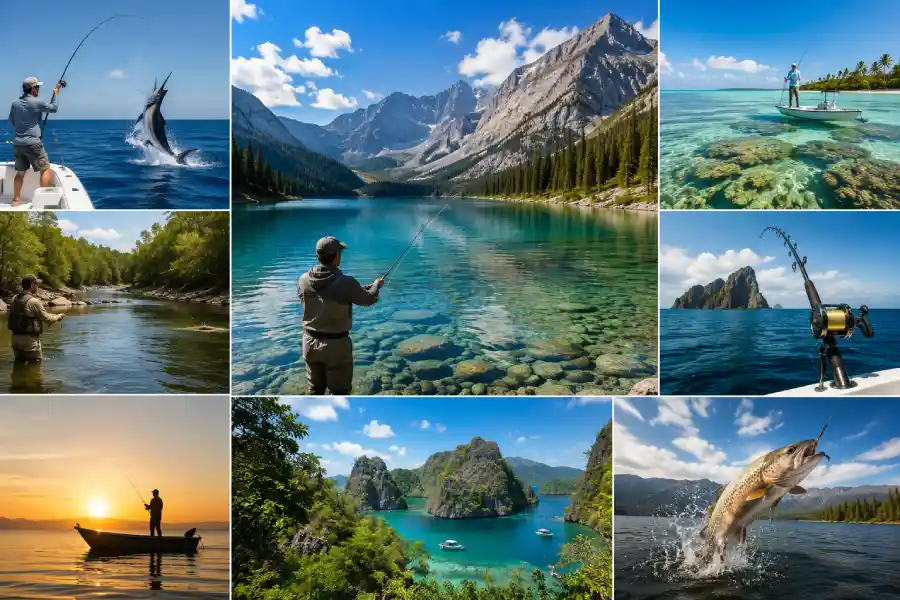 Planning an international angling vacation requires aligning your personal goals with seasonal realities. Different fisheries demand completely different tactics, tackle, and travel logistics. Whether you are an experienced fly fisherman chasing wild trout in the Southern Hemisphere, a saltwater enthusiast pursuing the flats “Grand Slam,” or a family seeking accessible inshore charters paired with coastal relaxation, choosing the right destination makes all the difference.
This comprehensive guide breaks down the 25 best fishing spots in the world. Each featured destination details the primary waterways, target species, optimal seasonal windows, recommended fishing techniques, and essential travel advice to help you plan an unforgettable outdoor adventure.
How We Selected the World’s Best Fishing Destinations
No single body of water can claim to be the absolute best for every angler. A serene, technical spring creek in New Zealand offers an entirely different experience than a heavy-tackle offshore charter off the coast of Australia or a remote river expedition deep within the Amazon rainforest.
To build this definitive guide, we evaluated fisheries worldwide across five core benchmarks:
- Biomass & Trophy Potential: Waterways supporting healthy, self-sustaining native or wild fish populations with proven record-class size potential.
- Environmental Quality & Scenery: Pristine landscapes, well-managed marine protected areas, and unpolluted watersheds that elevate the overall outdoor experience.
- Variety of Water & Structure: Locations offering diverse angling environments—such as estuaries, mangroves, coral reefs, deep drop-offs, freestone rivers, and spring creeks.
- Guiding & Charter Infrastructure: Access to licensed, knowledgeable local captains, reputable fly-fishing lodges, and well-maintained boats and gear.
- Conservation Management: Strong local enforcement of catch-and-release practices, bag limits, seasonal closures, and habitat preservation.
Top Global Fishing Spots #1 to #8
1. Florida Keys, United States
Primary Environment: Shallow Saltwater Flats, Backcountry Mangroves, Patch Reefs & Deep Gulf Stream Waters
Prize Species: Tarpon, Bonefish, Permit, Snook, Redfish, Mangrove Snapper, Mahi-Mahi, Sailfish
Stretching over 120 miles southwest from mainland Florida to Key West, the Florida Keys are widely regarded as the ultimate proving ground for light-tackle and saltwater fly fishing. The region’s extensive shallow-water grass flats and mangrove channels provide the setting for the coveted “Inshore Grand Slam”—catching a tarpon, bonefish, and permit on fly or light spin tackle in a single day.
Islamorada, often dubbed the “Sportfishing Capital of the World,” serves as the epicenter for backcountry skiff fishing in Florida Bay. Just a few miles offshore, the Atlantic barrier reef and deep cobalt waters of the Gulf Stream offer high-speed action for blackfin tuna, wahoo, king mackerel, and dolphin (mahi-mahi).
- Peak Season: April through July for migrating giant tarpon; October through May for bonefish and permit; winter for offshore sailfish.
- Recommended Gear: 8-weight to 10-weight fly rods with floating saltwater lines for bonefish and permit; 11- to 12-weight setups for migratory tarpon; 30–50 lb class conventional reels for offshore trolling.
- Travel Tip: Sight-fishing on the flats requires amber or copper polarized sunglasses to spot cruising fish against sandy and grassy bottoms.
2. Kenai Peninsula & Bristol Bay, Alaska, USA
Primary Environment: Glacial Freestone Rivers, Tundra Streams, Coastal Fjords & Estuaries
Prize Species: King (Chinook) Salmon, Sockeye (Red) Salmon, Coho (Silver) Salmon, Wild Trophy Rainbow Trout, Dolly Varden, Pacific Halibut
Alaska represents North America’s premier wild freshwater frontier. The glacial turquoise waters of the Kenai River and the remote tundra rivers flowing into Bristol Bay host the planet’s largest wild Pacific salmon migrations. Millions of salmon return each summer to spawn, drawing massive runs of sockeye, chum, pink, and coho salmon, along with the legendary giant King Salmon.
Following behind the salmon runs are world-record wild rainbow trout that gorge on drifting salmon eggs and flesh, frequently growing past the 30-inch mark. In coastal saltwater fjords like Resurrection Bay in Seward and Kachemak Bay in Homer, charter vessels drop heavy jigs into deep waters to battle giant Pacific halibut weighing over 100 to 200 pounds.
- Peak Season: June to July for sockeye and early king salmon; August to September for hard-fighting coho salmon and trophy rainbow trout; May to September for offshore halibut.
- Recommended Gear: 8-weight to 9-weight fly rods for salmon; 6-weight rods with bead rigs and flesh flies for trout; heavy 50–80 lb braided conventional setups for bottom halibut bouncing.
- Travel Tip: Weather in Alaska shifts rapidly; always pack breathable, high-durability chest waders, thermal under-layers, and a heavy-duty, seam-sealed Gore-Tex wading jacket.
3. Amazon Basin, Brazil & Colombia
Primary Environment: Blackwater Rivers (Rio Negro), Flooded Jungles, Lagoons & River Confluences
Prize Species: Speckled Peacock Bass (Açu), Butterfly Peacock Bass, Arapaima (Pirarucu), Payara (Vampire Fish), Redtail Catfish
Deep within the South American rainforest, the Amazon River basin provides an intense, jungle freshwater angling expedition. Blackwater tributaries like the Rio Negro, Rio Madeira, and remote lagoons host the three-striped and speckled peacock bass—an aggressive apex predator famous for hitting topwater woodchopper lures and baitfish streamers.
Anglers operating from specialized shallow-draft liveaboard riverboats or remote floating lodges navigate flooded jungle structure to target peacock bass that can exceed 20 pounds. In oxbow lakes, protected populations of prehistoric arapaima—the largest scaled freshwater fish in the world, growing to over 200 pounds—provide challenging sight-casting battles.
- Peak Season: September to February (during the dry season when water levels drop, concentrating fish inside river channels and lagoons).
- Recommended Gear: Heavy-action 6.5 to 7-foot baitcasting rods with 50–65 lb braided line; 9- to 10-weight fast-action fly rods with aggressive weight-forward tropical floating and intermediate sink-tip lines.
- Travel Tip: Pack high-strength fluorocarbon leaders and extra heavy-duty split rings; aggressive peacock bass easily bend standard saltwater hooks on impact.
4. Great Barrier Reef & Coral Sea, Australia
Primary Environment: Outer Coral Atolls, Ribbon Reefs, Continental Shelf Drop-offs & Mangrove Estuaries
Prize Species: Giant Black Marlin, Giant Trevally (GT), Coral Trout, Spanish Mackerel, Dogtooth Tuna, Wahoo
Spanning over 1,400 miles along the northeastern coast of Queensland, Australia’s Great Barrier Reef is an enormous marine ecosystem. The deep oceanic waters outside the outer ribbon reefs along the continental shelf are famous as the world’s premier hunting ground for “granders”—giant female black marlin weighing 1,000 pounds or more.
For casting enthusiasts, the shallow coral reef flats and bombora structures provide fast action popping for giant trevally (GT), red bass, and coral trout. Inshore rivers and coastal mangrove systems surrounding the reef also host the iconic, acrobatic Australian barramundi.
- Peak Season: September to December for giant black marlin; year-round for reef popping and jigging; March to May for inshore barramundi.
- Recommended Gear: 80-lb to 130-lb class heavy game chairs and custom bent-butt rods for black marlin; heavy popper rods with high-drag spinning reels (14,000–18,000 size) spooled with 80–100 lb braid for GTs.
- Travel Tip: Liveaboard charter motherships operating out of Port Douglas or Cairns provide the best access to the remote northern ribbon reefs.
5. Cairns & Daintree River, Northern Queensland, Australia
Primary Environment: Tropical River Estuaries, Mangrove Creeks & Inshore Headlands
Prize Species: Barramundi, Mangrove Jack, Queenfish, Fingermark, Threadfin Salmon
While Cairns is famous for offshore marlin, its inshore and coastal river systems deserve separate recognition for sport anglers. The Daintree, Russell, and Mulgrave rivers flow through tropical rainforests into the sea, creating prime habitat for Australia’s premier freshwater/estuarine game fish: the barramundi.
Anglers cast soft plastics, hardbody diving minnows, and surface poppers around sunken timber, mangrove roots, and tidal drains. Barramundi are prized for their hard initial strikes, powerful runs, and head-shaking jumps. Intercepting a wild “barra” or a red mangrove jack around heavy timber requires accurate casting and fast reflexes.
- Peak Season: September to December (the “Build-Up” before the wet season) and February to May (post-wet season run-off).
- Recommended Gear: 6-foot baitcasting setups with 20–30 lb braided line, paired with 40–60 lb abrasion-resistant fluorocarbon shock leaders.
- Travel Tip: Always be croc-wise; never wade into northern Australian rivers or clean catches along the water’s edge, as large saltwater crocodiles inhabit these estuaries.
6. Alphonse & Cosmoledo Atolls, Seychelles
Primary Environment: Remote Indian Ocean Coral Atolls, Sand Flats & Deep Oceanic Drop-offs
Prize Species: Giant Trevally (GT), Bonefish, Indo-Pacific Permit, Milkfish, Triggerfish, Sailfish
The outer atolls of the Seychelles archipelago—specifically Alphonse, Cosmoledo, Farquhar, and Astove—represent the pinnacle of remote, wilderness saltwater flats fly fishing. Far removed from mainland Africa in the western Indian Ocean, these untouched coral atolls host dense populations of giant trevally, earning Cosmoledo the title of the “GT Capital of the World.”
Anglers wade over hard white sand flats, coral margins, and surf channels, sight-casting to cruising giant trevally that hunt baitfish in the waves. The flats also support large schools of bonefish, permit, mustache triggerfish, and powerful vegetarian milkfish that feed on surface algae blooms.
- Peak Season: October to April (avoiding the strong southeasterly monsoon winds of the mid-year months).
- Recommended Gear: 9-foot 12-weight fly rods with heavy-duty sealed saltwater drag reels for GTs; 8-weight setups for bonefish; 9-weight rods for triggerfish and permit.
- Travel Tip: Wading over coral atolls requires heavy-duty flats boots with thick rubber puncture-resistant soles and neoprene gravel guards.
7. Central Pacific Coast (Quepos & Los Sueños), Costa Rica
Primary Environment: Deep Pacific Ocean Drop-offs, Continental Shelves, Inshore Rocky Islands & River Mouths
Prize Species: Pacific Sailfish, Blue Marlin, Black Marlin, Yellowfin Tuna, Dorado (Mahi-Mahi), Roosterfish, Cubera Snapper
Costa Rica’s Pacific coastline is an international hub for sportfishing. Marinas like Marina Pez Vela in Quepos and Los Sueños Marina in Herradura provide access to calm offshore waters that regularly produce double-digit billfish releases in a single day.
Offshore crews troll rigged ballyhoo and tease billfish to the surface using circle hooks for clean catch-and-release sport. Inshore, rocky headlands and volcanic reefs provide exciting casting for the roosterfish, identified by its seven-spined dorsal fin, alongside hard-fighting cubera snappers that hit live baits around shallow rocks.
- Peak Season: December to April for peak offshore billfish (sailfish and marlin); May to November for inshore roosterfish, wahoo, and large yellowfin tuna.
- Recommended Gear: 30–50 lb stand-up conventional gear for sailfish; 80-lb tackle for blue marlin; heavy spinning rods with live blue runners for inshore roosterfish.
- Travel Tip: Costa Rica strictly enforces catch-and-release for all billfish (marlin and sailfish) using non-offset circle hooks to protect marine populations.
8. South Island (Nelson, Marlborough & Fiordland), New Zealand
Primary Environment: Gin-Clear Spring Creeks, Freestone Alpine Rivers & Glacial Mountain Lakes
Prize Species: Wild Brown Trout, Wild Rainbow Trout
New Zealand’s South Island is globally recognized as the ultimate challenge for freshwater fly anglers. The region is famous for sight-fishing to wild brown and rainbow trout in water so clear that fish can be spotted resting over river bottoms from dozens of yards away.
Unlike high-volume fisheries where anglers cast repeatedly into deep pools, New Zealand fly fishing is a hunting game. Anglers walk miles along gravel riverbanks, spot a single cruising trout, carefully plan an approach to avoid casting shadows, and present small dry flies or weighted nymphs on long, delicate leaders (often 14 to 18 feet long). The average trout weighs between 3 and 6 pounds, with double-digit “10-pounder” trophies landed every season.
- Peak Season: October to April (high summer from December to February brings dry-fly and terrestrial cicada action).
- Recommended Gear: Fast-action 9-foot 5-weight or 6-weight fly rods; high-quality matte-finish lines; 4X to 6X fluorocarbon tippets.
- Travel Tip: Felt-soled wading boots are legally banned across New Zealand to prevent the spread of invasive *Didymo* algae; bring rubber-soled wading boots with aluminum studs.
Top Global Fishing Spots #9 to #17
9. Campbell River & Skeena River Basin, British Columbia, Canada
Primary Environment: Coastal Marine Channels, Fjords, Wild Glacial Rivers & Temperate Rainforest Runs
Prize Species: Chinook (Tyee) Salmon, Coho Salmon, Steelhead, Halibut, Cutthroat Trout
British Columbia provides diverse salmon and wilderness river fishing. The Skeena River watershed and its tributaries (like the Babine, Kispiox, and Bulkley rivers) host runs of wild, sea-run rainbow trout, known as steelhead, along with all five species of Pacific salmon.
On Vancouver Island, Campbell River—historically celebrated as the “Salmon Capital of the World”—maintains traditional Tyee Club rules, where anglers row wooden boats without motors, mooching plugs to land Chinook salmon weighing 30 pounds or more (designated as a “Tyee”). Coastal charters navigate the Inside Passage to drop downriggers for salmon and bottom gear for halibut.
- Peak Season: July to September for ocean Chinook and coho salmon; August to November for river steelhead; May to September for offshore halibut.
- Recommended Gear: Two-handed Spey fly rods (12–14 ft, 7–8 weight) for river steelhead; 10.5-foot mooching rods with single-action knuckle-buster reels for ocean salmon trolling.
10. San Juan River & Gulf Coast Bays, Florida, USA
Primary Environment: Coastal Mangrove Estuaries, Inshore Oyster Bars, Grass Flats & Passes
Prize Species: Red Drum (Redfish), Snook, Spotted Seatrout, Tarpon, Black Drum, Sheepshead
Florida’s Gulf Coast—stretching from Tampa Bay and Charlotte Harbor down through the Ten Thousand Islands—offers diverse inshore shallow-water saltwater angling. Shallow bays, mangrove islands, and oyster bars provide habitat for the “Inshore Slam”: redfish, snook, and spotted seatrout.
During winter and spring, anglers pole flats skiffs across shallow bays, sight-casting to “tailing” redfish foraging for crabs. In early summer, passes like Boca Grande channel host massive schools of migratory adult tarpon, providing live-bait and artificial-jig action against fish exceeding 150 pounds.
- Peak Season: Year-round for redfish and seatrout; May to July for Boca Grande tarpon; spring and fall for snook along mangrove edges.
- Recommended Gear: 7-foot medium-action spinning rods with 10–15 lb braid and 25–30 lb fluorocarbon leaders; 8-weight fly rods with crab and shrimp patterns.
11. Ambergris Caye & Turneffe Atoll, Belize
Primary Environment: Barrier Reef Flats, Mangrove Lagoons, Turtle Grass Flats & Ocean Channels
Prize Species: Bonefish, Permit, Tarpon, Snook, Barracuda, Jack Crevalle
Belize is a top destination for saltwater fly anglers targeting the flats Grand Slam. Protected by the Mesoamerican Barrier Reef, shallow sand and turtle grass flats around Ambergris Caye, Caye Caulker, and Turneffe Atoll provide clear water and steady tailing activity.
Belize is famous for its large populations of permit, an elusive flats species known for challenging fly anglers. Resident populations of juvenile tarpon hunt along mangrove-lined lagoons year-round, while adult tarpon arrive on open flats in the summer.
- Peak Season: Year-round for bonefish and permit; May to September for migratory adult tarpon and calmest sea conditions.
- Recommended Gear: 8-weight fly rod for bonefish; 9-weight or 10-weight for permit; 11-weight for tarpon; crab and mantis shrimp fly patterns.
12. Rio Grande & Limay River, Patagonia, Argentina
Primary Environment: Windswept Steppe Rivers, Alpine Glacial Streams & Large Lake Systems
Prize Species: Sea-Run Brown Trout, Wild Rainbow Trout, Brook Trout
Patagonia, spanning southern Argentina and Chile, offers premier cold-water trout fly fishing. In the southern province of Tierra del Fuego, the Rio Grande is the world’s most productive river for giant sea-run brown trout. These trout migrate from the Atlantic Ocean into the river to spawn, frequently reaching weights between 15 and 25 pounds.
Further north in the lake district near Bariloche and San Martin de los Andes, rivers like the Limay, Chimehuin, and Malleo provide dry-fly and streamer fishing for wild rainbow and brown trout against the backdrop of the Andes mountains.
- Peak Season: December to April (January through March is prime for sea-run browns in Tierra del Fuego).
- Recommended Gear: 13–15 foot 8/9 weight two-handed Spey rods with sinking tips for the Rio Grande; 9-foot 5-weight or 6-weight single-hand rods for northern rivers.
13. Outer Atolls (North Malé & Gaafu Dhaalu), Maldives
Primary Environment: Coral Reef Drop-offs, Oceanic Passes & Shallow Lagoon Flats
Prize Species: Giant Trevally, Bluefin Trevally, Dogtooth Tuna, Sailfish, Wahoo, Coral Trout
Beyond luxury overwater resorts, the Maldives provides diverse tropical saltwater game fishing across its 26 natural atolls. The deep channels (kandus) that cut between island reefs funnel oceanic currents, attracting large schools of baitfish and apex pelagic predators.
Anglers charter modern center consoles and liveaboards to cast heavy poppers along reef breaks for giant trevally, drop metal jigs into deep channels for dogtooth tuna, and troll offshore waters for sailfish and wahoo. Wading shallow sand flats inside lagoons also yields fly-fishing shots at bluefin trevally and bonefish.
- Peak Season: November to April (Northeast monsoon bringing dry days, calm seas, and high underwater visibility).
- Recommended Gear: Heavy PE 8–10 popping rods with 18,000-size spinning reels; 200–300g vertical jigging setups; 10-weight fly rods for lagoon flats.
14. Outer Banks & Gulf Stream, North Carolina, USA
Primary Environment: Coastal Barrier Island Inlets, Surf Beaches & Deep Continental Shelf Waters
Prize Species: Bluefin Tuna, Yellowfin Tuna, White Marlin, Blue Marlin, Red Drum, Striped Bass
North Carolina’s Outer Banks (OBX)—including Cape Hatteras and Oregon Inlet—sit at the collision point of two major ocean currents: the warm southern Gulf Stream and the cold northern Labrador Current. This meeting of waters creates a nutrient-rich marine environment that draws pelagic game fish close to the coastline.
In winter, giant Atlantic bluefin tuna—some exceeding 500 to 800 pounds—arrive within miles of the beach, providing intense stand-up and chair battles. During spring and summer, offshore fleets target yellowfin tuna, mahi-mahi, and white marlin, while surf fishermen cast into breaking waves for giant bull red drum.
- Peak Season: January to March for giant bluefin tuna; May to September for billfish, yellowfin tuna, and mahi-mahi; autumn for surf red drum.
- Recommended Gear: 80–130 lb heavy tackle for giant bluefin tuna; 12-foot surf casting rods for Hatteras beach casting.
15. Alta & Gaula Rivers, Norway
Primary Environment: Deep Glacial Valleys, Clear Northern Rivers & Coastal Fjords
Prize Species: Atlantic Salmon, Sea Trout, Arctic Char, Atlantic Cod, Halibut
Norway is home to the kings of Atlantic salmon fishing. Rivers like the Alta, Gaula, Namsen, and Lakselv have hosted salmon anglers for over a century. The Alta River in northern Norway is famous for producing large multi-sea-winter Atlantic salmon, with fish over 30 to 40 pounds landed every summer.
Anglers fish from traditional wooden river boats or wade rocky river banks, swinging classic salmon flies through deep pools under the midnight sun. Along Norway’s coast, deep fjord waters provide easy boat access to massive Atlantic cod, coalfish, and giant halibut.
- Peak Season: June to August (June brings the largest fresh-run salmon; July and August offer higher numbers).
- Recommended Gear: 13–15 foot 9/10 weight two-handed Spey rods with floating lines and variable sink-tips; classic tube flies.
16. Cape Point & False Bay, South Africa
Primary Environment: Open Ocean Upwellings, Rocky Coastal Headlands & Kelp Forests
Prize Species: Yellowfin Tuna, Longfin Tuna (Albacore), Yellowtail, Cape Snoek, Bronze Whaler Shark
Where the cold Atlantic Ocean meets the warm Indian Ocean off the tip of South Africa, deep nutrient-rich upwellings create an active marine food web. From the harbors of Hout Bay and Simon’s Town, offshore charter vessels run 20 to 40 miles south of Cape Point to target massive schools of yellowfin and albacore tuna that follow the continental shelf edge.
Inshore waters around False Bay offer high-speed surface spinning and jigging for hard-fighting yellowtail and snoek around coastal rocky points and kelp forests.
- Peak Season: October to May for offshore yellowfin tuna; year-round for inshore yellowtail and bottom reef species.
- Recommended Gear: 50–80 lb stand-up trolling and chunking gear for tuna; medium-heavy spinning rods with metal casting spoons for yellowtail.
17. Florida Everglades & Ten Thousand Islands, USA
Primary Environment: Coastal Mangrove Mazes, Brackish River Deltas, Shallow Bays & Sawgrass Marshes
Prize Species: Snook, Tarpon, Redfish, Largemouth Bass, Goliath Grouper
Spanning the southern tip of the Florida peninsula, Everglades National Park and the adjacent Ten Thousand Islands represent one of the world’s largest subtropical wilderness wetlands. The convergence of freshwater marsh runoff with saltwater tidal estuaries creates a fertile nursery for both freshwater and marine game fish.
Anglers navigate winding mangrove tunnels, oyster-lined bays, and hidden creeks. In a single day, you can catch largemouth bass in freshwater marsh canals and jump 100-pound tarpon, snook, and redfish in brackish coastal river mouths.
- Peak Season: November to April (lower humidity, fewer mosquitoes, and concentrated fish in deeper creeks); summer for night tarpon fishing.
- Recommended Gear: 7-foot medium-heavy spinning rods; 8- to 10-weight fly rods; weedless soft plastic jerkbaits and topwater frogs.
Top Global Fishing Spots #18 to #25
18. Galápagos Marine Reserve, Ecuador
Primary Environment: Volcanic Ocean Drop-offs, Deep Sea Trenches & Marine Upwelling Zones
Prize Species: Striped Marlin, Blue Marlin, Black Marlin, Bigeye Tuna, Wahoo, Almaco Jack
While the Galápagos Islands are strictly protected for conservation, regulated catch-and-release sportfishing is permitted in designated outer marine waters surrounding San Cristóbal Island. Fed by converging ocean currents (Humboldt, Cromwell, and Panama currents), these volcanic waters hold large numbers of billfish.
The region is famous for striped marlin, with boats routinely raising 10 to 20 marlin a day. Because the ocean floor drops into deep trenches right off the islands, productive fishing grounds sit just a short 20-minute run from the harbor.
- Peak Season: December to June (calmer ocean swells and peak striped marlin concentrations).
- Recommended Gear: 30–50 lb stand-up conventional trolling gear using non-offset circle hooks with pitch-bait setups.
19. Kamchatka Peninsula, Far East Russia
Primary Environment: Remote Volcanic Rivers, Braided Wilderness Streams & Untouched Coastal Basins
Prize Species: Wild Rainbow Trout (Mikizha), Kundzha, Dolly Varden, King Salmon, Silver Salmon
The Kamchatka Peninsula in the Russian Far East is one of the world’s most remote wild trout frontiers. Running through volcanic valleys populated by brown bears, Kamchatka’s pristine spring-fed rivers have never faced industrial pollution, dams, or commercial fish farming.
The native wild rainbow trout (*Mikizha*) are aggressively predatory, regularly attacking large mouse fly patterns skated across the river surface in broad daylight. Anglers access remote rivers via Russian MI-8 transport helicopters, floating wilderness waters for a week without seeing another human soul.
- Peak Season: July to September (July for dry-fly and early salmon runs; August and September for trophy rainbow trout and topwater mouse fishing).
- Recommended Gear: 9-foot 6-weight or 7-weight fast-action fly rods; floating lines; deer-hair surface mouse flies; sturdy chest waders.
20. Desroches & St. Francois Atolls, Outer Seychelles
Primary Environment: Coral Reef Drop-offs, Oceanic Flats & Barrier Sandbars
Prize Species: Sailfish, Wahoo, Yellowfin Tuna, Giant Trevally, Bonefish
The outer Amirantes bank and St. Francois lagoon in the Seychelles offer a rare combination of blue-water game fishing and technical flats fishing. In the morning, anglers can wade expansive sandbars sight-casting to schools of bonefish and permit; by afternoon, they can step aboard an offshore vessel to target sailfish, wahoo, and tuna just one mile outside the reef pass.
- Peak Season: October to May (stable tropical weather and minimal winds).
- Recommended Gear: 8-weight fly setups for flats; 12-weight fly rods for offshore sailfish; 50-lb conventional gear for trolling.
21. Eg-Uur & Delgermörön River Basins, Mongolia
Primary Environment: Remote Steppe Canyons, Gravel Mountain Rivers & Taiga Streams
Prize Species: Hucho Taimen (Siberian Giant Trout), Lenok Trout, Arctic Grayling
In the remote river systems of northern Mongolia, adventurous anglers seek the legendary *Hucho taimen*—the world’s largest salmonid, capable of growing over 50 inches in length and living for decades. Known as the “River Wolf,” taimen are fierce apex predators that hunt other fish, ducks, rodents, and even small mammals.
Anglers stay in traditional nomadic *ger* (yurt) camps along the Eg, Uur, and Delgermörön rivers, casting large surface poppers, tandem streamers, and squirrel-pattern flies into deep rocky pools. Catch-and-release using single barbless hooks is strictly enforced to protect these ancient river giants.
- Peak Season: June and September to October (autumn brings clear water conditions before the winter freeze).
- Recommended Gear: 9-foot 9-weight or 10-weight single-hand fly rods or 8/9-weight Spey rods; 40-lb wire or heavy fluorocarbon bite tippets.
22. Naknek & Kvichak Rivers, Bristol Bay, Alaska, USA
Primary Environment: Large Lake-River Systems, Rapids & Braided Gravel Channels
Prize Species: Sockeye Salmon, Wild Rainbow Trout, Arctic Char, Lake Trout
The Naknek and Kvichak rivers connect massive inland lakes (like Lake Iliamna) to Bristol Bay, serving as the primary highways for tens of millions of migrating sockeye salmon. These systems are home to some of the heaviest wild rainbow trout on the planet, with fish gorging on sockeye smolt in early summer and salmon eggs in the fall.
- Peak Season: June for sockeye smolt out-migration; July for salmon runs; late August to October for giant fall rainbow trout.
- Recommended Gear: 7-weight single-hand fly rods or switch rods; floating lines with indicator egg rigs; heavy articulated streamer patterns.
23. Central Highlands & Great Lake, Tasmania, Australia
Primary Environment: Alpine Tarns, Highland Hydro Lakes & Waved Grass Marshes
Prize Species: Wild Brown Trout, Wild Rainbow Trout
The Central Plateau of Tasmania—known as the “Land of Three Thousand Lakes”—offers a wild trout fishery with lineage dating back to the first European trout introductions in the 1860s. Highland waters like Great Lake, Arthur’s Lake, and Lake St Clair are famous for “tailing trout”—wild brown trout foraging head-down in shallow flooded marshlands along lake edges at dawn.
Anglers sight-fish along shallow marsh edges, casting small nymph and beetle imitations to cruising wild trout in cold mountain air.
- Peak Season: October to April (early season offers tailing trout in flooded marshes; summer brings mayfly and gum beetle hatches).
- Recommended Gear: 9-foot 5-weight fly rod; dull-colored floating lines; 12-foot 4X–5X monofilament leaders; terrestrial beetle and nymph fly patterns.
24. Key West & The Marquesas Keys, Florida, USA
Primary Environment: Isolated Coral Sand Atolls, Deep Channels & Gulf/Atlantic Convergence
Prize Species: Permit, Tarpon, Bonefish, Cobia, Mutton Snapper, Yellowtail Snapper
Located 25 miles west of Key West, the Marquesas Keys are an uninhabited coral sand atoll surrounding a shallow central lagoon. This remote location offers consistent sight-fishing for permit in the United States, alongside resident tarpon, bonefish, and sharks.
The surrounding deep-water wrecks in the Gulf of Mexico and Atlantic Ocean provide bottom fishing and light-tackle action for cobia, permit on wrecks, amberjack, and mutton snapper.
- Peak Season: March to June for calm seas and prime flats tailing action; winter for wreck cobia and snapper.
- Recommended Gear: 9-weight or 10-weight fly rods for permit; spinning rods with 15 lb braid and live blue crabs for permit and cobia.
25. Lake Thingvallavatn & Laxá I Kjos, Iceland
Primary Environment: Crystal-Clear Volcanic Rivers, Glacial Rift Lakes & Canyons
Prize Species: Giant Ice Age Brown Trout, Atlantic Salmon, Arctic Char
Iceland offers a unique volcanic freshwater fishing landscape. Lake Thingvallavatn, set within a tectonic rift valley where European and North American plates drift apart, is home to isolated “Ice Age” brown trout that grow up to 20 to 30 pounds on a diet of three-spined sticklebacks.
Nearby, rivers like Laxá í Kjós, Midfjardará, and the West Rangá wind through dramatic volcanic valleys, offering sight-casting with light single-handed fly rods and hitch-tube flies for fresh-run Atlantic salmon.
- Peak Season: May to June for giant lake brown trout; July to September for river Atlantic salmon and Arctic char.
- Recommended Gear: 9-foot 6-weight or 7-weight single-hand fly rods for salmon and lake trout; micro-hitch surface flies and small weighted nymphs.
Master Comparison Table: Species, Seasons & Styles
The table below summarizes the key operational details across all 25 world-class fishing destinations:
| # | Destination | Environment | Primary Prize Species | Peak Season Window |
|---|---|---|---|---|
| 1 | Florida Keys, USA | Saltwater Flats & Offshore | Tarpon, Bonefish, Permit, Mahi | April – July / Oct – May |
| 2 | Kenai & Bristol Bay, Alaska | Wild Rivers & Ocean Fjords | Salmon (All 5), Rainbow Trout, Halibut | June – September |
| 3 | Amazon Basin, Brazil | Jungle Rivers & Lagoons | Peacock Bass, Arapaima, Payara | September – February |
| 4 | Great Barrier Reef, Australia | Outer Reef & Deep Sea | Giant Black Marlin, GT, Coral Trout | September – December |
| 5 | Cairns Estuaries, Australia | Mangrove Rivers & Inshore | Barramundi, Mangrove Jack | Sept – Dec / Feb – May |
| 6 | Seychelles (Cosmoledo) | Indian Ocean Coral Atolls | Giant Trevally, Bonefish, Milkfish | October – April |
| 7 | Central Pacific, Costa Rica | Deep Blue Water & Inshore | Sailfish, Marlin, Roosterfish | December – April |
| 8 | South Island, New Zealand | Spring Creeks & Rivers | Wild Brown & Rainbow Trout | October – April |
| 9 | British Columbia, Canada | Wild Rivers & Coastal Fjords | Steelhead, Chinook, Coho Salmon | July – November |
| 10 | Florida Gulf Coast, USA | Shallow Inshore Bays & Flats | Redfish, Snook, Tarpon, Trout | Year-round / May–July |
| 11 | Turneffe & Ambergris, Belize | Coral Reef Flats & Lagoons | Bonefish, Permit, Tarpon | Year-round / May–Sept |
| 12 | Patagonia, Argentina | Steppe Rivers & Lakes | Sea-Run Brown Trout, Rainbows | December – April |
| 13 | Outer Atolls, Maldives | Oceanic Passes & Reef Flats | GT, Dogtooth Tuna, Sailfish | November – April |
| 14 | Outer Banks, NC, USA | Gulf Stream & Surf Beaches | Giant Bluefin Tuna, Marlin, Red Drum | Jan–Mar / May–Sept |
| 15 | Alta & Gaula, Norway | Glacial Rivers & Deep Fjords | Atlantic Salmon, Sea Trout, Halibut | June – August |
| 16 | Cape Point, South Africa | Oceanic Upwellings & Points | Yellowfin Tuna, Yellowtail, Snoek | October – May |
| 17 | Florida Everglades, USA | Mangrove Maze & Brackish Marsh | Snook, Tarpon, Redfish, Bass | November – April |
| 18 | Galápagos Islands, Ecuador | Volcanic Deep Ocean Trenches | Striped Marlin, Blue Marlin, Tuna | December – June |
| 19 | Kamchatka Peninsula, Russia | Wilderness Volcanic Streams | Wild Rainbow Trout, Char, Salmon | July – September |
| 20 | Desroches Atoll, Seychelles | Flats & Deep Offshore Drop | Sailfish, Wahoo, Bonefish, GT | October – May |
| 21 | Eg-Uur Basin, Mongolia | Steppe & Taiga Rivers | Giant Taimen, Lenok, Grayling | June / Sept – October |
| 22 | Naknek River, Alaska, USA | Lake Outlets & Gravel Channels | Trophy Rainbow Trout, Sockeye | June – October |
| 23 | Central Highlands, Tasmania | Alpine Lakes & Marshes | Wild Brown Trout, Rainbow Trout | October – April |
| 24 | Marquesas Keys, Florida, USA | Remote Sand Atolls & Wrecks | Permit, Tarpon, Cobia, Snapper | March – June |
| 25 | Lake Thingvallavatn, Iceland | Volcanic Rift Lake & Rivers | Ice Age Brown Trout, Atlantic Salmon | May – September |
Best Destinations Categorized by Angling Discipline
To help match your next journey with your preferred style of fishing, we have grouped the top destinations by discipline:
1. Premier Saltwater Flats & Inshore Sight-Fishing
- Florida Keys & Marquesas Keys, USA: The gold standard for sight-casting to tarpon, bonefish, and permit.
- Ambergris Caye & Turneffe Atoll, Belize: Reliable high-volume shots at tailing bonefish and permit.
- Cosmoledo & Alphonse Atolls, Seychelles: Unrivaled wading for aggressive giant trevally (GT) and triggerfish.
- Florida Everglades, USA: Mangrove maze fishing for snook, redfish, and backcountry tarpon.
2. World-Class Freshwater Wild Trout & Fly Fishing
- South Island, New Zealand: Ultimate sight-fishing to wild brown trout in gin-clear waters.
- Patagonia (Rio Grande & Limay), Argentina: Massive sea-run brown trout and expansive river systems.
- Central Highlands, Tasmania, Australia: Sight-casting to tailing trout in shallow alpine tarns.
- Lake Thingvallavatn, Iceland: Ancient, giant Ice Age brown trout in a volcanic rift lake.
3. Elite Salmon & Steelhead Expeditions
- Kenai Peninsula & Bristol Bay, Alaska: The world’s largest wild salmon migrations and heavy rainbow trout.
- Skeena River Basin, British Columbia, Canada: Historic trophy wild steelhead and river Chinook salmon.
- Alta & Gaula Rivers, Norway: Classic Spey casting for heavy multi-sea-winter Atlantic salmon.
4. Offshore Big-Game & Pelagic Blue-Water Charters
- Central Pacific Coast (Quepos), Costa Rica: Calm seas and prolific sailfish and marlin billfish releases.
- Great Barrier Reef (Cairns), Australia: The world epicenter for 1,000-lb “Grander” black marlin.
- Outer Banks (Hatteras), North Carolina, USA: Winter giant bluefin tuna and summer white marlin action.
- Galápagos Marine Reserve, Ecuador: Prolific multi-hookup striped marlin trolling along volcanic shelves.
5. Remote Wilderness & Apex Predator Adventures
- Amazon Basin (Rio Negro), Brazil: Explosive topwater strikes from trophy peacock bass and arapaima.
- Northern Steppes (Eg-Uur Rivers), Mongolia: Hunting giant, mouse-eating taimen in pristine taiga rivers.
- Kamchatka Peninsula, Russia: Pure wilderness rafting for wild rainbow trout and Pacific salmon.
Step-by-Step Guide to Planning an International Fishing Vacation
Executing a smooth international fishing vacation requires detailed advance planning. Follow this structured roadmap to organize your trip:
Step 1: Define Your Target Species & Discipline First
Never pick a destination based solely on general vacation appeal. Determine whether your priority is wading flats with a fly rod, trolling deep offshore waters on a sportfisher, or drifting down wilderness rivers. Your target species dictates the destination and the exact calendar window required for success.
Step 2: Time Your Booking Around Peak Migration & Run Timing
Fisheries are dictated by nature. Arriving in Alaska two weeks before the sockeye salmon run begins, or visiting Costa Rica during the height of the rainy season, can impact your catch rates. Consult historical fishing logs, tide charts, moon phases, and reputable lodge reports before confirming flight dates.
Step 3: Vet Lodges, Captains & Independent Guides
A great guide can make a trip successful even during difficult weather conditions. When booking charters or lodges, ask detailed questions:
- How many years has the captain or guide operated on these specific local waters?
- What type, size, and vintage of boat and safety equipment are used?
- Are high-end rods, reels, lines, terminal tackle, and flies provided, or must you bring everything?
- What is the cancellation, weather rebooking, or mechanical breakdown policy?
Step 4: Verify Regional Licensing, Permits & Entry Rules
Research international fishing licenses well in advance. Some destinations require state-issued licenses, tribal land permits, national park tags, or mandatory boat clearance documents. Confirm whether your outfitter handles these permits or if you must purchase them online prior to departure.
Essential Fishing Travel Packing Checklist
Packing for an angling vacation requires balancing specialized technical gear with travel weight limits:
- Polarized Eyewear: High-quality polarized sunglasses with amber, copper, or green-mirror lenses (essential for spotting cruising fish beneath the surface).
- Sun Protection Apparel: UPF 50+ long-sleeve sun hoodies, lightweight quick-dry pants, sun gloves, and broad-brim hats.
- Wading & Boat Footwear: Non-marking deck shoes for skiffs; sturdy rubber-soled wading boots with gravel guards for river trekking.
- Outer Shell & Dry Storage: A lightweight, breathable waterproof rain jacket and a submersible, roll-top waterproof dry bag to protect cameras, flies, and tackle.
- Tackle Backup Essentials: Extra fluorocarbon leader spools, terminal snap-swivels, hook hones, stainless steel pliers, and line clippers.
- Medical & Personal Care: Broad-spectrum reef-safe sunscreen, insect repellent, motion sickness medication, blister tape, and rehydration drink packets.
Hiring a Charter Guide vs. DIY Fishing
Deciding between booking an all-inclusive guided charter and organizing a self-guided (DIY) fishing trip depends on your experience level, budget, and familiarity with local waters:
| Factor | Guided Charter / All-Inclusive Lodge | Self-Guided (DIY) Fishing Trip |
|---|---|---|
| Local Knowledge | High: Captains know daily tides, seasonal fish movements, and productive spots. | Low to Moderate: Requires extensive map study, scouting, and trial-and-error. |
| Equipment & Boats | Fully supplied: High-end skiffs, offshore vessels, rods, reels, and bait provided. | Self-supplied: Must transport, rent, or purchase all tackle, waders, and gear. |
| Cost & Budget | Higher initial investment ($400–$1,500+ per day for boats/guides). | Budget-friendly: Pay only for travel, lodging, licenses, and fuel. |
| Safety & Logistics | High: Professional captains handle navigation, tides, weather, and emergencies. | Independent: You are fully responsible for marine safety and navigation. |
Pro Recommendation: If visiting an international destination for the first time, hire a licensed local guide for at least your first two days. You will learn productive techniques, safe navigation channels, and local patterns that you can apply if you explore independently later.
Ethical Angling & Fisheries Conservation
The survival of the world’s greatest fisheries depends on the ethics and practices of the anglers who visit them. Practice responsible catch-and-release to protect these waters for future generations:
- Use Single Barbless Hooks: Crushing the barbs on hooks reduces tissue damage and makes hook removal quick and clean.
- Minimize Handling & Air Exposure: Keep fish in the water while unhooking them. If taking a photograph, support the fish horizontally with wet hands and lift it out of the water for no more than a few seconds (“Keepemwet”).
- Avoid Playing Fish to Total Exhaustion: Use appropriately heavy line and tackle to land fish quickly, preventing lethal buildup of lactic acid, especially in warm tropical waters.
- Strictly Pack Out All Waste: Never leave spent monofilament or fluorocarbon fishing line, soft plastic baits, drink bottles, or food packaging on banks or in the water.
Frequently Asked Questions
What is the single best fishing spot in the world?
The ideal fishing spot depends on your target species. For wild salmon and trout, Alaska and British Columbia lead; for flats saltwater fly fishing, the Florida Keys and Belize are unmatched; for pelagic big-game marlin, Costa Rica and Cairns take top honors.
Which country is most famous for trout and fly fishing?
New Zealand and Argentine Patagonia are globally regarded as the twin capitals of wild trout fly fishing, celebrated for gin-clear waters, large wild brown and rainbow trout, and sight-casting opportunities.
Where is the best place to go deep-sea big game fishing?
The Pacific coast of Costa Rica (Quepos and Los Sueños) and Cairns, Australia (Great Barrier Reef) offer premier deep-sea charters for blue marlin, black marlin, sailfish, and yellowfin tuna.
Do I need to hire a local fishing guide when traveling abroad?
Hiring a licensed local guide is highly recommended on any unfamiliar fishery. Guides possess crucial real-time knowledge regarding tidal movements, insect hatches, water safety, seasonal fish migrations, and regional licensing laws.
What are the essential items to pack for an international fishing trip?
Essential items include polarized sunglasses (amber or copper lenses for sight-fishing), UPF 50+ sun protection clothing, non-marking boat shoes or felt-free wading boots, a lightweight waterproof shell, and a compact dry bag for sensitive electronics.
Final Thoughts on Global Angling Expeditions
A great fishing vacation is measured by much more than just the fish you bring to the boat. It is defined by the early morning boat rides across glassy lagoons, the shared stories with local captains, the focus required to spot a cruising fish in moving water, and the lasting memories of exploring wild places.
From the wild salmon rivers of Alaska and the volcanic rifts of Iceland to the warm flats of Belize and the remote coral atolls of the Seychelles, these 25 destinations offer world-class outdoor experiences. Research your target species, match your travel dates with peak seasonal runs, support local conservation efforts, and prepare for an unforgettable adventure on the water.
Editorial Note & Fisheries Advisory
Fishing seasons, bag limits, local license costs, and marine reserve regulations change periodically based on fisheries management data. Anglers should consult official wildlife and fisheries departments or certified local outfitter associations before departure to verify current rules.