

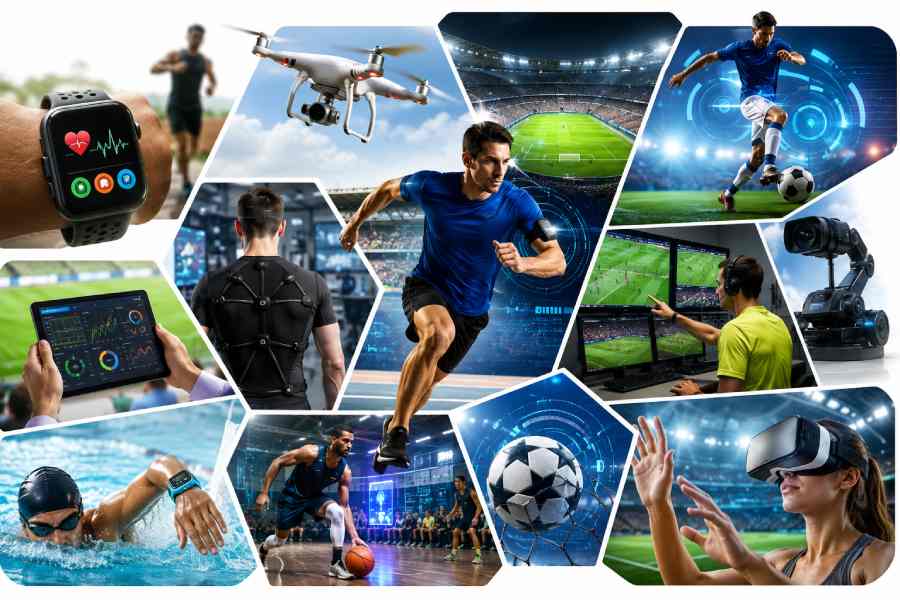
 Whether watching the FIFA World Cup, the Olympic Games, Formula One, cricket tournaments, tennis championships, or professional basketball leagues, technology now plays an essential role behind every major sporting event. High-speed cameras, biometric sensors, machine learning, GPS tracking, and cloud computing have introduced unprecedented levels of precision, fairness, and performance improvement.In this comprehensive guide, you’ll discover how technology is transforming modern sports, the innovations shaping today’s competitions, and what the future of sports technology may look like over the next decade.
The Evolution of Technology in Sports
Technology has influenced sports for decades, but the pace of innovation has accelerated dramatically over the past twenty years. Traditional coaching methods have evolved into data-driven decision-making powered by artificial intelligence, cloud computing, and advanced statistical modelling.
In the early days, technology in sports was limited to stopwatches, video recordings, and simple training equipment. Today, professional teams collect millions of data points during every match and practice session. Sophisticated software analyses player movement, speed, fatigue levels, heart rate variability, passing accuracy, shot selection, and tactical positioning in real time.
International sporting organisations increasingly rely on advanced technologies to improve fairness, athlete safety, and entertainment value. Hawk-Eye systems, goal-line technology, electronic timing systems, and sensor-based equipment have become standard in many competitions.
The combination of artificial intelligence, machine learning, cloud computing, robotics, and connected devices is creating a new era where sports become smarter, safer, and more engaging than ever before.
Why Technology Matters in Modern Sports
Technology benefits nearly every participant in the sports ecosystem. Athletes receive personalised performance insights, coaches gain tactical intelligence, medical teams reduce injury risks, referees make more accurate decisions, broadcasters create immersive viewing experiences, and fans enjoy deeper interaction with their favourite teams.
Major Benefits Include
- Improved athlete performance through real-time analytics.
- Reduced injury risks using wearable monitoring devices.
- More accurate officiating during competitions.
- Enhanced fan engagement through digital platforms.
- Advanced coaching strategies supported by artificial intelligence.
- Faster rehabilitation and recovery technologies.
- Improved stadium safety and operational efficiency.
- Personalised viewing experiences for global audiences.
Professional sports organisations increasingly invest billions in sports technology because even small improvements can significantly impact performance, revenue, and competitive success.
Artificial Intelligence Is Revolutionising Sports
Artificial Intelligence (AI) has emerged as one of the most transformative technologies in modern sports. AI systems analyse enormous datasets that would be impossible for humans to process manually, providing coaches and athletes with valuable insights that improve performance and decision-making.
Performance Analysis
AI-powered software evaluates every movement during training sessions and matches. Cameras combined with machine learning algorithms can identify weaknesses in technique, tactical positioning, reaction times, passing accuracy, and shooting efficiency.
Football clubs, basketball teams, cricket franchises, and Olympic training centres increasingly depend on AI-generated reports before every competition.
Predicting Injuries
One of AI’s greatest contributions is injury prevention. Machine learning algorithms analyse workload, movement patterns, muscle fatigue, sleep quality, hydration, and recovery data to identify athletes at greater risk of injury before physical symptoms appear.
Medical teams can then adjust training intensity, reducing long-term injuries while maintaining peak performance.
Match Strategy
AI can simulate thousands of possible game scenarios based on historical statistics and opponent behaviour. Coaches receive tactical recommendations regarding player selection, defensive formations, substitutions, and offensive strategies.
This allows teams to make more informed decisions under competitive pressure.
Scouting and Recruitment
Professional clubs now use AI to evaluate potential signings by analysing thousands of matches across domestic and international leagues. Instead of relying solely on traditional scouting reports, clubs compare technical ability, consistency, fitness records, and tactical compatibility using advanced algorithms.
Wearable Technology Is Improving Athletic Performance
Wearable technology has become one of the fastest-growing innovations in sports science. Lightweight sensors provide real-time health and performance information that helps athletes optimise training while reducing injury risks.
Many elite athletes wear smart devices during both practice sessions and competitive matches where regulations permit.
Popular Wearable Devices
- GPS Performance Trackers
- Smart Heart Rate Monitors
- Sleep Recovery Trackers
- Smart Compression Clothing
- Biomechanical Motion Sensors
- Blood Oxygen Monitors
- Hydration Sensors
- Smart Fitness Watches
Benefits of Wearables
These devices measure important health indicators such as heart rate, calories burned, sprint speed, acceleration, body temperature, oxygen saturation, workload, recovery time, and fatigue levels.
Instead of relying on guesswork, coaches receive accurate information that enables highly personalised training programmes tailored to each athlete.
Wearable technology is now widely used across football, cricket, rugby, cycling, athletics, swimming, basketball, baseball, and endurance sports.
Smart Sports Equipment Is Becoming More Intelligent
Sports equipment has evolved significantly with embedded sensors and wireless connectivity. Manufacturers now design intelligent equipment capable of collecting performance data while maintaining professional playing standards.
Examples Include
- Smart footballs with motion sensors.
- Connected cricket bats measuring swing speed.
- Smart tennis rackets tracking shot accuracy.
- Basketballs analysing shooting mechanics.
- Golf clubs measuring swing efficiency.
- Running shoes equipped with pressure sensors.
These technologies allow athletes to review detailed performance reports immediately after training sessions, accelerating skill development through measurable improvements.
Smart Stadiums Are Enhancing the Fan Experience
Modern stadiums are rapidly transforming into connected digital environments. High-speed internet, artificial intelligence, Internet of Things (IoT) devices, facial recognition, mobile ticketing, and intelligent crowd management systems create safer and more enjoyable experiences for spectators.
Fans can order food from their seats, navigate stadiums using mobile applications, access instant replays, receive personalised promotions, and enjoy interactive digital experiences before, during, and after sporting events.
Features of Smart Stadiums
- 5G connectivity.
- Cashless payments.
- Digital ticket verification.
- AI-powered security monitoring.
- Real-time crowd management.
- Interactive fan applications.
- Smart parking systems.
- Energy-efficient stadium operations.
These innovations not only improve convenience but also help sports organisations increase operational efficiency while delivering a premium spectator experience.
Sports Analytics and Big Data Are Changing Decision-Making
Big Data has become one of the most valuable assets in professional sports. Every training session, match, sprint, pass, tackle, shot, serve, or lap generates data that can be analysed to improve performance. Coaches and analysts use advanced software to transform millions of data points into practical insights that help teams make smarter decisions.
Instead of relying solely on intuition, modern coaching staff combine statistics with artificial intelligence to evaluate player performance, identify tactical weaknesses, and optimise game plans. Data-driven decision-making has become a competitive advantage across football, cricket, basketball, baseball, rugby, cycling, Formula One, and many other sports.
Common Metrics Analysed
- Passing accuracy
- Ball possession percentage
- Sprint speed
- Distance covered
- Player positioning
- Expected goals (xG)
- Reaction time
- Heart rate variability
- Recovery time
- Shot accuracy
- Defensive efficiency
- Player workload
These insights allow coaches to customise training plans, rotate players more effectively, reduce fatigue, and improve tactical execution during competitions.
Video Assistant Referee (VAR) and Digital Officiating
Technology has significantly improved fairness in sports through advanced officiating systems. Human error can influence the outcome of important matches, so many sports now rely on digital review technologies to assist officials.
Video Assistant Referee (VAR) has become an essential part of professional football, helping referees review key decisions involving goals, penalties, red cards, and mistaken identity. Multiple high-definition camera angles allow officials to review incidents with greater accuracy.
Benefits of VAR
- More accurate refereeing decisions
- Reduced controversial calls
- Greater transparency
- Improved competitive fairness
- Higher confidence among players and fans
Other sports have introduced similar systems. Tennis uses Hawk-Eye technology to determine whether the ball lands inside or outside the court. Cricket employs Decision Review System (DRS) with ball tracking, UltraEdge, and Hot Spot technologies. Goal-line technology instantly confirms whether the ball has completely crossed the line in football.
These innovations continue to improve the integrity of professional competitions while maintaining consistency in officiating.
Virtual Reality (VR) and Augmented Reality (AR) in Sports
Virtual Reality and Augmented Reality are transforming how athletes train and how fans experience sporting events. These immersive technologies allow players to practise game situations repeatedly without physical fatigue while enabling supporters to enjoy more engaging digital experiences.
Virtual Reality Training
Athletes can simulate match scenarios in realistic virtual environments, improving reaction speed, tactical awareness, and decision-making. Quarterbacks, goalkeepers, racing drivers, and batters increasingly use VR simulations to prepare for high-pressure situations.
Augmented Reality Applications
AR overlays digital information onto the real world using smartphones, tablets, or smart glasses. Fans watching live events can access player statistics, tactical formations, live scores, and interactive content instantly.
Advantages
- Safe skills practice
- Faster learning
- Improved tactical understanding
- Enhanced fan interaction
- Reduced training costs
Technology Is Revolutionising Sports Medicine
Medical science has advanced significantly with the integration of digital technologies. Sports medicine professionals now use artificial intelligence, diagnostic imaging, biomechanical analysis, and wearable sensors to prevent injuries and accelerate recovery.
Instead of treating injuries after they occur, medical teams increasingly focus on prevention through continuous athlete monitoring.
Modern Medical Technologies
- 3D body scanning
- Motion capture analysis
- MRI imaging
- AI-assisted diagnosis
- Recovery monitoring software
- Cryotherapy systems
- Electrical muscle stimulation
- Rehabilitation robotics
These innovations reduce recovery times, improve rehabilitation programmes, and help athletes return to competition safely.
Technology Has Transformed Sports Broadcasting
Watching sports has changed dramatically over the last decade. Broadcasters now use ultra-high-definition cameras, aerial drones, slow-motion replay systems, virtual graphics, and AI-powered production tools to deliver richer viewing experiences.
Streaming services have also expanded access to live sporting events, allowing fans to watch matches from smartphones, tablets, laptops, and smart televisions anywhere with an internet connection.
Modern Broadcasting Innovations
- 4K and 8K video
- 360-degree cameras
- Drone footage
- Player tracking graphics
- Real-time match statistics
- Interactive live streams
- Multi-camera viewing options
- Artificial intelligence highlights
AI can automatically identify the most exciting moments of a match, generating highlight reels within minutes for television networks and social media platforms.
Digital Technology Is Enhancing Fan Engagement
Sports organisations now prioritise digital engagement as much as on-field performance. Mobile applications, social media platforms, fantasy sports, live streaming, and personalised content have strengthened relationships between clubs and supporters.
Fans expect real-time updates, exclusive behind-the-scenes content, interactive voting, fantasy leagues, and personalised notifications about their favourite teams.
Popular Fan Technologies
- Official mobile apps
- Fantasy sports platforms
- Live score applications
- Interactive polls
- Digital memberships
- Virtual meet-and-greets
- AI-powered chatbots
- Personalised content recommendations
These technologies help sports organisations increase audience loyalty, merchandise sales, sponsorship opportunities, and digital revenue streams.
The Rise of eSports and Competitive Gaming
Technology has also created an entirely new sporting ecosystem through eSports. Competitive gaming has grown into a global industry attracting millions of viewers and offering substantial prize pools.
Professional gamers compete in organised tournaments featuring games such as football simulations, racing, strategy games, first-person shooters, and multiplayer online battle arenas.
Major eSports events are broadcast worldwide and attract sponsorship from leading technology companies, sports brands, and media organisations.
Why eSports Continue Growing
- Global online accessibility
- Large streaming audiences
- Professional team organisations
- High-value sponsorship deals
- International competitions
- Growing youth participation
Many traditional sports clubs have even established professional eSports divisions, recognising the increasing popularity of competitive gaming among younger audiences.
Cybersecurity Has Become Essential in Modern Sports
As sports organisations rely more heavily on digital technologies, protecting sensitive information has become increasingly important. Teams store confidential player medical records, tactical plans, contract information, financial data, and performance analytics that must remain secure.
Cybersecurity systems defend against hacking, ransomware, phishing attacks, and unauthorised access to critical sporting infrastructure.
Protected Digital Assets
- Player health records
- Training data
- Financial information
- Scouting databases
- Ticketing systems
- Fan account information
- Streaming platforms
- Club communication systems
Strong cybersecurity strategies help maintain trust, protect competitive advantages, and ensure uninterrupted operations during major sporting events.
The Future of Technology in Sports
The next decade promises even greater innovation. Artificial intelligence will become more sophisticated, wearable devices will collect increasingly accurate biometric data, robotics will support athlete rehabilitation, and immersive technologies will redefine fan experiences.
Emerging technologies such as digital twins, quantum computing, blockchain ticketing, autonomous camera systems, and next-generation smart equipment may transform every aspect of sports, from grassroots participation to elite international competition.
Future Trends to Watch
- AI-powered coaching assistants
- Fully autonomous camera production
- Blockchain ticket verification
- Digital twin athlete modelling
- Advanced biometric wearables
- Robotic rehabilitation systems
- Cloud-based performance intelligence
- Personalised AI fan experiences
- Smart connected sports equipment
- Mixed Reality sporting events
Technology will continue to enhance athletic performance, improve player safety, strengthen competitive fairness, and create richer experiences for fans around the world. Sports will remain driven by human talent and determination, but innovation will increasingly shape how that talent is developed, measured, and celebrated.
Frequently Asked Questions (FAQs)
1. How is technology improving modern sports?
Technology improves modern sports by enhancing athlete performance, reducing injuries, increasing officiating accuracy, providing advanced analytics, improving fan engagement, and making sporting events more accessible through digital platforms and smart technologies.
2. What is the role of Artificial Intelligence in sports?
Artificial Intelligence helps coaches analyse player performance, predict injuries, optimise tactics, evaluate opponents, improve scouting, and generate data-driven insights that support better decision-making during training and competitions.
3. What are wearable technologies in sports?
Wearable technologies include GPS trackers, heart-rate monitors, smartwatches, motion sensors, sleep trackers, hydration sensors, and biometric devices that monitor athlete health and performance in real time.
4. Why is data analytics important in sports?
Sports analytics helps teams understand player strengths, weaknesses, fitness levels, tactical efficiency, and match statistics, allowing coaches to make smarter strategic decisions backed by measurable data.
5. What are smart stadiums?
Smart stadiums integrate technologies such as IoT devices, 5G connectivity, AI security systems, mobile ticketing, cashless payments, digital signage, and interactive fan experiences to improve convenience and safety.
6. How does technology reduce sports injuries?
Wearable sensors, AI-powered monitoring systems, biomechanical analysis, and sports medicine technologies identify fatigue and injury risks early, enabling coaches and medical teams to adjust training before serious injuries occur.
7. What is the future of sports technology?
Future innovations include AI coaching assistants, robotic rehabilitation, blockchain ticketing, digital twins, immersive mixed reality experiences, autonomous broadcasting, advanced biometrics, and even smarter sports equipment.
Conclusion
Technology has fundamentally transformed the world of modern sports. From elite athlete training and injury prevention to officiating accuracy, fan engagement, broadcasting, and stadium operations, digital innovation continues to reshape every aspect of the sporting industry.
Artificial intelligence, wearable devices, sports analytics, virtual reality, smart equipment, and connected stadiums are no longer futuristic concepts—they are essential components of today’s competitive environment. Teams that embrace these technologies gain valuable advantages in performance, efficiency, and strategic planning.
At the same time, technology enhances the experience for millions of sports fans by delivering immersive broadcasts, personalised content, real-time statistics, and interactive digital experiences. As emerging technologies continue to evolve, sports will become even smarter, safer, more connected, and more exciting for athletes, coaches, officials, and spectators alike.
The future of sports belongs to those who combine athletic excellence with technological innovation. While talent, dedication, and teamwork will always remain at the heart of competition, technology will continue to unlock new possibilities that push the boundaries of human performance.