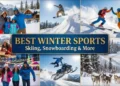

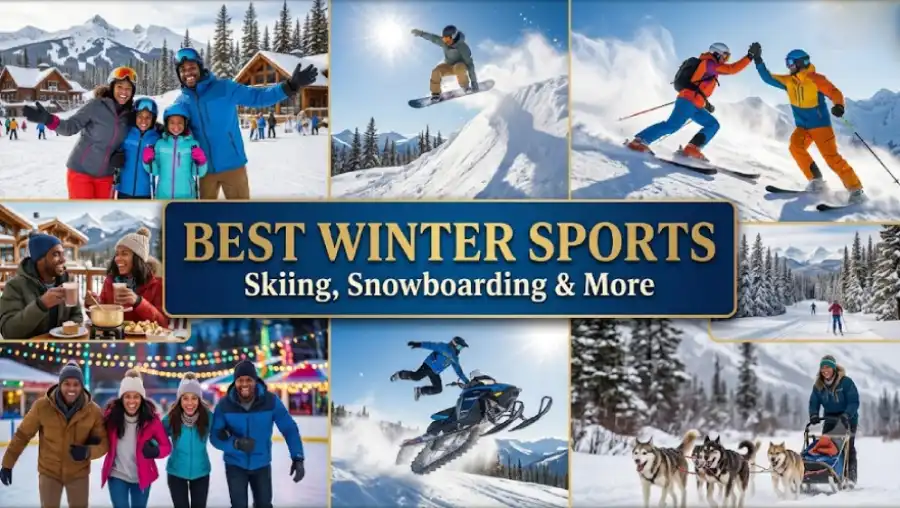
When winter arrives in the United States, millions of square miles of mountain peaks, evergreen forests, and northern lakes transform into an expansive outdoor playground. Rather than retreating indoors when temperatures drop, active travelers embrace the cold. The best winter sports in the USA offer an incredible variety of movement, speed, and peaceful wilderness connection across diverse frozen landscapes.
The American winter landscape is among the most geographically diverse in the world. You can drop into double-black diamond powder bowls in the Colorado Rockies, navigate dense glades of birch and pine in Vermont, skate along urban ice trails in New York and Chicago, power through deep backcountry snowdrifts on a high-output snowmobile in Wyoming, or enjoy a quiet afternoon ice fishing on a frozen lake in Minnesota.
 However, winter sports require thoughtful preparation. Operating in sub-freezing temperatures, changing mountain weather, varying snowpacks, and high-altitude air demands the right technical gear, thermal clothing layers, and safety awareness. A scenic mountain trail that is accessible in the morning can quickly become hazardous as winter afternoon winds kick up, and navigating resort slopes or backcountry bowls requires respecting your personal skill level.
This comprehensive guide breaks down the 20 best winter sports in the USA. Each discipline is detailed with premier national destinations, required technical gear, physical fitness demands, seasonal timing, safety protocols, and beginner advice to help you plan your next cold-weather getaway.
Quick Answer: Top Winter Sports Across the USA
The spectrum of American winter sports spans three distinct environments:
- Alpine Resorts & Mountain Slopes: Downhill skiing, snowboarding, freestyle skiing, ski jumping, and snow tubing thrive in major mountain corridors like Colorado, Utah, Wyoming, California, and Vermont.
- Groomed Forest Trails & Backcountry Terrain: Cross-country Nordic skiing, snowshoeing, alpine touring (backcountry skiing), fat biking, snowmobiling, and winter mountaineering take over state parks and national forests.
- Ice Sheets, Rinks & Frozen Lakes: Ice skating, ice hockey, curling, and ice fishing dominate the Upper Midwest, New England, and urban winter arenas across the country.
If you want low-impact, scenic family outings, choose snow tubing, recreational ice skating, scenic snowshoeing, or winter hiking. If you crave speed, vertical drop, and athletic challenge, prioritize downhill skiing, snowboarding, alpine touring, and freestyle park riding.
The Winter Landscape: Rockies, Wasatch, Sierra Nevada & Northeast
Snow quality and terrain vary dramatically across the major mountain ranges and winter recreation corridors of the United States:
1. The Colorado Rockies & Continental Divide
Home to the highest base elevations in North America, Colorado ski resorts—such as Breckenridge, Vail, Aspen Snowmass, and Telluride—frequently sit above 9,000 to 12,000 feet. The dry continental air produces light, fluffy “champagne powder” that makes skiing through dense aspen glades and open alpine bowls an incredible experience.
2. The Wasatch Range of Utah
Trademarked as having the “Greatest Snow on Earth,” Utah’s Wasatch Mountains (home to Alta, Snowbird, Park City, and Deer Valley) benefit from a unique meteorological phenomenon. As Pacific storms pass over the Great Salt Lake, they pick up moisture and dump an average of 500 inches of low-density, high-flotation powder each season in Little and Big Cottonwood Canyons, located just 40 minutes from Salt Lake City International Airport.
3. The Sierra Nevada of California & Nevada
Surrounding Lake Tahoe, the Sierra Nevada range receives massive maritime snowstorms known as “atmospheric rivers.” Resorts like Palisades Tahoe, Heavenly, and Mammoth Mountain boast incredible snow depths (often exceeding 400 to 600 inches in heavy winters), combined with mild, sunny bluebird days and stunning views over deep alpine lakes.
4. The Northern Rockies of Wyoming, Montana & Idaho
Jackson Hole in Wyoming and Big Sky in Montana deliver massive vertical drop, steep couloirs, and uncrowded wilderness terrain. These northern regions maintain cold temperatures throughout winter, preserving snow conditions and creating world-class corridors for snowmobiling, backcountry touring, and winter wildlife observation in Yellowstone National Park.
5. The Green & White Mountains of New England
Vermont (Stowe, Killington), New Hampshire (Mount Washington Valley), and Maine (Sugarloaf) are the historic birthplaces of American ski culture. Characterized by technical, winding trails cut through dense hardwood forests, New England skiing emphasizes precise edge control, rapid decision-making, and charming colonial ski-town hospitality.
6. The Upper Midwest Lake-Effect Belt
Minnesota, Wisconsin, and Michigan’s Upper Peninsula receive heavy lake-effect snow from Lake Superior and Lake Michigan. With colder, longer winters and flatter topography, these states lead the nation in groomed cross-country ski trail networks, ice hockey culture, ice fishing villages, and expansive snowmobile systems.
How to Select the Right Winter Sport for Your Travel Style
Selecting the right winter sport requires honest evaluation of your physical fitness, comfort with cold weather, budget, and travel party:
1. Physical Conditioning & Muscle Engagement
Different winter sports demand completely different muscle groups. Alpine skiing and snowboarding heavily load the quadriceps, glutes, core, and calves through sustained eccentric contractions. Cross-country Nordic skiing and snowshoeing are full-body cardiovascular workouts that engage the upper back, triceps, and hip flexors. If you prefer low-exertion winter leisure, snow tubing, sledding, and guided snowmobile tours provide downhill speed and scenic access without intense muscular strain.
2. Elevation & Altitude Adaptation
If traveling from sea level to high-altitude mountain resorts in Colorado or Utah (9,000 to 12,000+ feet), your body requires 24 to 48 hours to acclimatize to thinner air. Vigorous sports like alpine touring or cross-country skiing should be scheduled for later in your trip, allowing your body to adapt while starting with low-intensity activities on day one.
3. Budget & Gear Logistics
Equipment-intensive sports like alpine skiing and snowboarding involve lift tickets, equipment rentals, and specialized apparel, making them a higher-investment vacation. Conversely, snowshoeing, winter hiking, sledding, and public ice skating require minimal gear, making them accessible, budget-friendly choices for families and beginners.
Sports #1 to #7: Classic Alpine Slopes, Ice Trails & Forest Touring
1. Downhill Alpine Skiing
Primary Terrain: Groomed Resort Slopes, Open Alpine Bowls, Steep Chutes & Gladed Forests
Physical Demand: High (Quadriceps Strength, Knee Joint Stability & Core Balance)
Skill Progression: Beginner (Green Circles) to Expert (Double-Black Diamonds)
Downhill alpine skiing is the classic American winter sport. Securely attached to two parabolic shaped skis via spring-loaded mechanical release bindings and wearing stiff plastic boots, skiers use weight transfer, edge engagement, and synchronized pole plants to carve down mountain trails.
The United States hosts over 470 commercial ski areas. Beginners can learn on wide, gently sloped “magic carpet” learning areas and rolling green cruiser runs at family-friendly mountains like Steamboat Springs, Colorado, or Deer Valley, Utah. Advanced skiers can challenge steep couloirs like Corbet’s Couloir at Jackson Hole, Wyoming, or navigate technical gladed tree runs at Stowe, Vermont.
- Premier National Locations: Vail and Breckenridge (Colorado); Park City and Alta (Utah); Jackson Hole Mountain Resort (Wyoming); Palisades Tahoe (California); Stowe Mountain Resort (Vermont); Big Sky Resort (Montana).
- Essential Gear: Modern carving or all-mountain skis with matched DIN-rated bindings, fitted plastic ski boots, aluminum or carbon ski poles, MIPS-certified winter sports helmet, and polarized anti-fog goggles.
- Beginner Tip: Never skip professional lessons on your first day. An experienced PSIA-certified ski instructor will teach you the fundamentals of the snowplow (wedge), how to stop reliably, and how to safely load and unload chairlifts.
2. Snowboarding
Primary Terrain: Wide Groomed Trails, Deep Powder Bowls, Natural Gullies & Terrain Parks
Physical Demand: High (Core Abdominal Strength, Calve Endurance & Agility)
Skill Progression: Steeper Initial Learning Curve, Rapid Intermediate Progression
Pioneered in the United States during the late 1960s and 1970s through early boards like the “Snurfer,” snowboarding has evolved into an Olympic discipline and core mountain lifestyle. Standing sideways with both feet secured into ratcheting strap-in bindings on a single composite board, riders use heel-to-toe edge pressure and upper-body rotation to carve through snow.
Snowboarding offers incredible freedom in fresh, deep powder, where riders achieve a floating sensation akin to ocean surfing. Across the country, resort terrain parks—such as those at Mammoth Mountain, California, and Mount Snow, Vermont—feature progressive jump lines, rails, boxes, and halfpipes for freestyle riders.
- Premier National Locations: Mammoth Mountain (California); Breckenridge Ski Resort (Colorado); Snowbird (Utah); Mount Baker (Washington – famous for deep snowfall); Mount Snow (Vermont).
- Essential Gear: All-mountain or freestyle snowboard, comfortable medium-flex snowboard boots, responsive bindings, wrist guards, padded impact shorts, and a certified helmet.
- Rider Technique: Expect to fall frequently during your first two days while learning your heel-side and toe-side edges. Once edge control clicks, progression to carving blue runs happens quickly.
3. Cross-Country Nordic Skiing (Classic & Skate)
Primary Terrain: Machine-Groomed Track Systems, Rolling Meadow Trails & Snow-Covered Forests
Physical Demand: Extremely High (Continuous Full-Body Aerobic & Muscular Endurance)
Skill Progression: Classic (Beginner Friendly) to Skate Skiing (High Cardio Demand)
Cross-country Nordic skiing leaves crowded lift lines behind in favor of peaceful, human-powered forest travel. Using narrow, lightweight skis with free-heel bindings that allow the heel to lift off the ski while the toe remains secured, skiers propel forward across flat and rolling terrain.
Nordic skiing divides into two distinct techniques: Classic Skiing, where skiers slide forward within parallel machine-set snow tracks using a diagonal stride motion; and Skate Skiing, a faster, high-intensity technique where skiers push outward on groomed snow decks in a V-shaped skating motion similar to ice skating. It provides an exceptional full-body cardiovascular workout with zero joint impact.
- Premier National Locations: Trapp Family Lodge, Stowe (Vermont); Methow Valley (Washington – 120+ miles of interconnected trails); Cable and Hayward (Wisconsin – home of the American Birkebeiner); Devil’s Thumb Ranch (Colorado); Sun Valley Nordic Center (Idaho).
- Essential Gear: Lightweight Nordic skis (waxless classic or stiff skate skis), low-profile flexible Nordic boots, long carbon-fiber poles, and breathable, wind-resistant softshell athletic apparel.
4. Ice Skating (Figure, Hockey & Speed Skating)
Primary Terrain: Temperature-Controlled Indoor Arenas, Zamboni-Groomed Outdoor Village Ovals & Tested Wild Lake Ice
Physical Demand: Moderate (Ankle Strength, Glute Engagement & Balance)
Skill Progression: Beginner Friendly with Ice-Aid Supports
Ice skating is one of the most accessible winter pastimes in America. Gliding on steel blades across polished ice requires learning to center your body mass over the blade’s inside and outside edges.
The United States offers diverse skating settings. Urban outdoor rinks—like The Rink at Rockefeller Center in New York City, Millennium Park in Chicago, and the Boston Common Frog Pond—turn city parks into winter wonderlands. In Lake Placid, New York, visitors can skate on the historic Olympic Speed Skating Oval where Eric Heiden won five gold medals, while mountain resort rinks in Sun Valley, Idaho, and Keystone, Colorado, let you skate under the stars against snowy peaks.
- Premier National Locations: Rockefeller Center & Wollman Rink (New York City); McCormick Tribune Ice Rink, Millennium Park (Chicago, IL); Lake Placid Olympic Center (New York); Sun Valley Outdoor Rink (Idaho); Keystone Lake (Colorado).
- Essential Gear: Properly fitted figure skates or hockey skates (snug around the ankle without pinching), thick warm socks, gloves, and a lightweight winter coat.
5. Snowshoeing
Primary Terrain: Deep Unpacked Forest Trails, Subalpine Meadows & National Park Backcountry
Physical Demand: Moderate (Cardiovascular Walking Workout with Stride Resistance)
Skill Progression: Immediate (“If You Can Walk, You Can Snowshoe”)
For hikers who want to explore forest trails through winter without post-holing waist-deep into soft powder, snowshoeing is the ultimate entry-level winter sport. Modern snowshoes feature lightweight aluminum frames with synthetic decking that distribute your body weight over a large surface area (flotation), combined with integrated steel underfoot crampons that bite securely into hard-packed snow and crusty ice.
Snowshoeing lets you explore quiet forests where wildlife tracks cross snowy trails and frozen waterfalls hang from rock walls. National parks like Rocky Mountain, Mount Rainier, and Yellowstone offer marked winter snowshoe routes with guided ranger walks.
- Premier National Locations: Rocky Mountain National Park (Colorado); Mount Rainier National Park (Washington); Tahoe Rim Trail (California/Nevada); Green Mountain National Forest (Vermont); Glacier National Park (Montana).
- Essential Gear: Modern lightweight aluminum-frame snowshoes with pivoting bindings, adjustable trekking poles fitted with wide snow baskets, waterproof insulated winter boots, and breathable gaiters to keep snow out of your boots.
- Trail Etiquette: Never walk your snowshoes directly inside the parallel tracks set for cross-country skiers. Walk alongside the tracks to preserve the smooth groove for skiers.
6. Snowmobiling
Primary Terrain: Groomed Forest Trail Networks, High-Altitude Mountain Passes & Deep Powder Meadows
Physical Demand: Moderate to High (Upper Body Steering, Standing Balance & Throttle Control)
Skill Progression: Beginner (Guided Trail Rides) to Expert (Deep-Powder Mountain Boondocking)
Snowmobiling (or “sledding” in mountain regions) allows riders to cover dozens of miles of winter wilderness in a single day. Powered by high-output two-stroke or four-stroke engines driving a wide rubber rear track with front steering skis, modern snowmobiles range from comfortable two-passenger touring sleds to high-horsepower mountain machines designed to carve through deep powder.
The United States features thousands of miles of interconnected, club-maintained snowmobile trails. Michigan’s Upper Peninsula and northern Wisconsin offer dense trail networks through forests connecting trailside lodges and towns. In the West, West Yellowstone, Montana, and the Togwotee Pass in Wyoming offer big-mountain riding through high-altitude basins and views of the Teton Range.
- Premier National Locations: West Yellowstone (Montana); Togwotee Pass & Continental Divide Trail (Wyoming); Upper Peninsula Trail Network (Michigan); Black Hills National Forest (South Dakota); White Mountain National Forest (New Hampshire).
- Essential Gear: DOT-certified full-face snowmobile helmet with heated anti-fog electric shield, insulated waterproof one-piece riding suit (monosuit), heavy-duty snowmobile boots, and warm insulated leather gloves.
7. Traditional Sledding & Tobogganing
Primary Terrain: Dedicated Municipal Sledding Hills, Neighborhood Parks & Wooden Toboggan Chutes
Physical Demand: Low to Moderate (Walking Back Up the Hill)
Skill Progression: 100% Beginner and Family Friendly
Traditional sledding is a timeless winter joy that requires little investment beyond warm clothing and a hill. Whether riding classic wooden runner sleds with steerable front bars (like the Flexible Flyer), molded plastic speed saucers, or multi-person wooden toboggans, sledding delivers quick downhill speed and laughs for all ages.
Across northern states, public parks designate safe, unobstructed hills with gentle runouts. For a historic experience, the Camden Snow Bowl in Maine features a 400-foot-long wooden toboggan chute that launches riders onto frozen Hosmer Pond, home to the annual U.S. National Toboggan Championships. In Lake Placid, New York, the Olympic Jumping Complex features a refrigerated toboggan chute operating onto Mirror Lake.
- Premier National Locations: Camden Snow Bowl Toboggan Chute (Maine); Lake Placid Toboggan Chute, Mirror Lake (New York); Firecracker Hill, Telluride (Colorado); Soldier Hollow (Utah); Chestnut Ridge Park (Orchard Park, New York).
- Essential Gear: Sturdy molded sled, foam slider, or wooden toboggan, thick winter mittens, waterproof snow pants, and a protective winter sports helmet for young children.
- Safety Check: Avoid hills that terminate near roads, parking lots, frozen open-water ponds, trees, or fence lines. Walk back up the outer edges of the hill to keep the center run clear for descending sleds.
Sports #8 to #14: Rink Team Sports, Backcountry Ascents & Winter Trails
8. Ice Hockey
Primary Terrain: Indoor Municipal Arenas, Outdoor Refrigerated Community Rinks & Backcountry Pond Ice
Physical Demand: Extremely High (Explosive Anaerobic Sprints, Upper Body Checking & Stickhandling)
Skill Progression: Intermediate to Advanced Skating Mechanics
Ice hockey is a fast, physical, and team-oriented winter sport. Balancing on thin steel blades, players maneuver a vulcanized rubber puck across the ice at speeds up to 30 mph using composite sticks, passing, checking, and shooting on a 4-by-6 foot netted goal guarded by a padded goaltender.
The United States has deep hockey roots across the northern tier. Minnesota—known as the “State of Hockey”—hosts the legendary Minnesota State High School Hockey Tournament, packing 20,000 screaming fans into the Xcel Energy Center. Across Massachusetts, New York, and Michigan, community outdoor ponds and neighborhood rinks host vibrant youth and adult “beer league” games throughout winter.
- Premier National Locations: Minneapolis/St. Paul (Minnesota); Boston (Massachusetts); Buffalo (New York); Detroit (“Hockeytown”, Michigan); Chicago (Illinois).
- Essential Gear: Stiff-boot hockey skates, composite hockey stick, HECC-certified helmet with full wire cage or visor, shoulder pads, elbow pads, shin guards, and hockey gloves.
9. Freestyle Skiing & Terrain Park Riding
Primary Terrain: Progressive Resort Terrain Parks, SuperPipes, Mogul Fields & Rail Plazas
Physical Demand: Very High (Aerial Spatial Awareness, Rotational Core Agility & High Impact)
Skill Progression: Advanced Skiing Foundation Mandatory
Born as an alternative movement against rigid alpine ski racing, freestyle skiing blends acrobatic gymnastics with big-mountain skiing. Disciplines include Mogul Skiing (sprinting through tight bump fields while performing two upright jumps), Slopestyle (navigating a technical park run of metal handrails, boxes, and massive 60-foot jump tables), and Halfpipe (carving 22-foot high vertical snow walls to perform aerial spins and grabs).
Resorts like Buttermilk at Aspen Snowmass (host of the Winter X Games for over two decades) and Mammoth Mountain in California feature the world’s most advanced terrain parks, attracting Olympic athletes and passionate freeskiers.
- Premier National Locations: Buttermilk Mountain, Aspen (Colorado); Mammoth Mountain (California); Park City Mountain (Utah); Copper Mountain (Colorado); Mount Snow (Vermont).
- Essential Gear: Twin-tip skis with centered bindings (allowing backward skiing and landing), lightweight park poles, flexible ski boots, certified helmet, and back-protector spine vest.
10. Ski Jumping
Primary Terrain: Certified Olympic Nordic Ski Jumps (Normal Hill HS90 to Large Hill HS140)
Physical Demand: Extreme (Explosive Quadriceps Launch & Precise Aerodynamic Balance)
Skill Progression: Highly Specialized Elite Sport
Ski jumping is one of the most visually dramatic winter sports in existence. Competitors slide down a steep in-run track at speeds exceeding 55 to 60 mph, launch off the takeoff lip with explosive precision, form a stabilized aerodynamic “V” with their long skis, and glide hundreds of feet through the air before executing a graceful Telemark landing on a steep slope.
While recreational access is limited to organized development programs, visiting historic Olympic facilities like the Utah Olympic Park in Park City or the Olympic Jumping Complex in Lake Placid, New York, allows fans to watch elite national teams train. These venues offer public passenger rides on bobsled runs and ziplines running parallel to the jumps.
- Premier National Locations: Utah Olympic Park (Park City, Utah); Olympic Jumping Complex (Lake Placid, New York); Steamboat Springs Winter Sports Club (Colorado); Pine Mountain Jump (Iron Mountain, Michigan).
- Essential Gear: Specialized extra-long jumping skis (without sidecut), free-heel wedge jumping boots, aerodynamic jumping suit, and aerodynamic helmet.
11. Alpine Touring (Backcountry Skiing & “Skinning”)
Primary Terrain: Unpatrolled Wilderness Mountains, Avalanche Chutes & Undeveloped Forest Bowls
Physical Demand: Extremely High (Aerobic Mountain Climbing Under Heavy Pack Weight)
Skill Progression: Expert (AIARE Avalanche Safety Certification Mandatory)
Alpine touring (AT)—often called ski mountaineering or backcountry skiing—leaves behind chairlifts and groomed trails. Skiers apply reusable synthetic adhesive strips called “climbing skins” to the bases of their skis, allowing the ski to slide forward on snow without slipping backward. Utilizing specialized pin-tech bindings that unlock the heel for uphill climbing, skiers hike thousands of vertical feet up alpine peaks, remove the skins at the summit, lock their heels into downhill mode, and ski down untouched wilderness powder.
The sport offers incredible solitude, mountain fitness, and access to fresh powder. However, because backcountry terrain is completely unpatrolled and uncontrolled, skiers assume full responsibility for their own safety. Understanding avalanche dynamics, snowpack pit testing, and rapid companion rescue is non-negotiable.
- Premier National Locations: Berthoud Pass & Silverton (Colorado); Wasatch Backcountry (Utah); Teton Pass (Wyoming); Mount Washington / Tuckerman Ravine (New Hampshire); Snoqualmie Pass (Washington).
- Essential Gear: Touring skis with pin-tech bindings, climbing skins, collapsible avalanche probe, aluminum snow shovel, digital 3-antenna avalanche transceiver (worn on the body), and an avalanche airbag backpack.
12. Winter Trail Hiking & Microspiking
Primary Terrain: Hard-Packed Snow Trails, Icy Mountain Paths & Frozen River Canyons
Physical Demand: Moderate (Paced Aerobic Hiking with Step Traction)
Skill Progression: Beginner Friendly
Winter hiking requires no skis or complex gear, opening scenic summer hiking routes when snowpack is packed hard by trail traffic. Winter transforms familiar forest trails: crowds disappear, leaves drop to reveal wide mountain views, and frozen waterfalls form intricate ice sculptures.
When trails are packed firm, snowshoes are unnecessarily bulky. Instead, winter hikers strap microspikes (flexible elastomeric bands fitted with stainless steel ice spikes) over standard waterproof hiking boots. Microspikes bite securely into packed snow and slippery trail ice, providing confident footing on trails across New England, the Pacific Northwest, and the Appalachian Mountains.
- Premier National Locations: White Mountain National Forest (New Hampshire); Shenandoah National Park (Virginia); Zion National Park (Utah – quiet winter hiking); Mount Hood National Forest (Oregon); Starved Rock State Park (Illinois – frozen canyon waterfalls).
- Essential Gear: Insulated waterproof hiking boots, stainless steel trail microspikes (like Kahtoola MICROspikes), breathable gaiters, trekking poles with snow baskets, and a headlamp with spare lithium batteries.
13. Winter Fat Biking
Primary Terrain: Machine-Groomed Singletrack Snow Trails, Packed Forest Roads & Frozen Beaches
Physical Demand: High (Continuous Pedaling Resistance & Core Balance Control)
Skill Progression: Intermediate Cycling Mechanics
Fat biking extends the mountain biking season through all twelve months of the year. Built on reinforced aluminum or carbon mountain bike frames, fat bikes feature oversized tires measuring 3.8 to 5.0 inches wide, inflated to low pressures (often just 4 to 8 PSI).
This low pressure allows the wide tire to deform over soft snow, creating a broad contact patch that floats on top of packed snow trails without sinking. Communities across the Upper Midwest, Idaho, and Colorado groom dedicated winter singletrack trails specifically for fat bikes.
- Premier National Locations: Cuyuna Country State Recreation Area (Crosby, Minnesota); Kingdom Trails (East Burke, Vermont); Victor & Grand Targhee (Idaho/Wyoming); Grand Rapids and Marquette (Michigan); Crested Butte (Colorado).
- Essential Gear: Fat tire mountain bike with rigid fork or snow suspension, pogies (insulated handlebar mitts that slip over brake levers), flat mountain bike pedals paired with insulated winter boots, and clear-lens eye protection.
- Trail Rule: Do not ride on groomed ski trails if the snow is too warm or soft. If your tires leave a rut deeper than one inch, turn around to avoid damaging trail infrastructure for other users.
14. Ice Fishing
Primary Terrain: Frozen Inland Lakes, Reservoirs, Protected Ocean Bays & River Deltas
Physical Demand: Low to Moderate (Drilling Ice Holes & Cold Exposure)
Skill Progression: Beginner Friendly with Experienced Guide
Ice fishing transforms northern frozen lakes into seasonal villages. Once lake ice freezes to a safe thickness of 4 to 12+ inches, anglers use power gas or electric augers to drill 8-inch holes through the ice sheet, lowering baited jigs and tip-up lines to catch walleye, northern pike, yellow perch, and lake trout swimming below.
While traditional anglers sit on overturned five-gallon buckets over open holes, the modern sport has evolved. Many participants fish inside heated, insulated “pop-up” hub shacks or luxury hard-sided “wheelhouses” equipped with gas furnaces, flat-screen televisions, bunk beds, and underwater video cameras that allow you to watch fish strike your lure in real time.
- Premier National Locations: Lake of the Woods & Mille Lacs Lake (Minnesota); Lake Winnebago & Green Bay (Wisconsin); Lake Champlain (Vermont/New York); Devils Lake (North Dakota); Houghton Lake (Michigan).
- Essential Gear: Gas or battery-powered ice auger, short 24- to 36-inch sensitive ice fishing rods, mechanical spring-loaded tip-ups, flasher sonar unit, ice safety picks (worn around the neck), and heavily insulated sub-zero pack boots.
- Critical Ice Safety: No ice is 100% safe. You need a minimum of 4 inches of clear, solid black ice for walking, 5 to 7 inches for snowmobiles and ATVs, and 12 to 15+ inches for passenger trucks. Check with local bait shops and lake patrols daily.
Sports #15 to #20: Precision Ice, Gravity Thrills & Endurance Disciplines
15. Curling
Primary Terrain: Dedicated Indoor Curling Clubs & Seasonal Outdoor Ice Rinks
Physical Demand: Moderate (Deep Lunge Flexibility, Core Balance & High-Cadence Sweeping)
Skill Progression: Accessible to All Ages; Highly Strategic Mechanics
Affectionately known as “Chess on Ice,” curling is a strategic team sport played on a 150-foot sheet of prepared ice. Teams of four players slide polished 44-pound Scottish granite stones toward a circular target called the “house.” Two sweepers use specialized synthetic brooms to rapidly sweep the ice ahead of the moving stone, melting a microscopic film of water to reduce friction and manipulate the stone’s distance and curved “curl.”
Curling has built a passionate following across the northern United States, especially in Minnesota, Wisconsin, and North Dakota. Curling clubs are famous for their welcoming social culture, sportsmanship, and traditional post-game “broomstacking,” where winners buy the losing team a drink in the club lounge.
- Premier National Locations: St. Paul Curling Club (Minnesota – oldest dedicated club in the US); Wausau Curling Center (Wisconsin); Broomstones Curling Club (Wayland, Massachusetts); Charlotte Curling Association (North Carolina); Fairbanks Curling Club (Alaska).
- Essential Gear: Specialized curling shoes (featuring one smooth Teflon slider sole and one high-grip rubber gripper sole), synthetic curling broom, and flexible athletic trousers.
16. Commercial Snow Tubing
Primary Terrain: Groomed Multi-Lane Snow Hills with Magic Carpet Lifts
Physical Demand: Very Low | Skill Progression: Zero (100% Beginner and Family Friendly)
Commercial snow tubing provides all the speed of sliding downhill without needing to hike back up. Located at dedicated winter adventure parks and ski resorts, tubing parks feature machine-carved, banked snow lanes separated by safety berms.
Riders sit inside heavy-duty vinyl-bottom inflatable tubes, slide down steep 1,000-foot lanes at speeds up to 30 mph, and hook onto a moving magic carpet or surface lift that pulls rider and tube effortlessly back to the summit. Many parks offer nighttime “cosmic tubing,” lighting the lanes with neon LED light shows, laser beams, and upbeat music.
- Premier National Locations: Coca-Cola Tube Park, Winter Park Resort (Colorado); Soldier Hollow Nordic Center (Midway, Utah – longest lanes in the West); Camelback Resort (Poconos, Pennsylvania); Frisco Adventure Park (Colorado); Mount Hood Skibowl (Oregon).
- Essential Gear: Heavy-duty commercial tube (supplied by the park), waterproof winter snow pants, warm gloves, and snow boots (ski boots are strictly prohibited on tubing runs).
17. Competitive Snowshoe Racing
Primary Terrain: Groomed Winter Cross-Country Trails & Alpine Singletrack
Physical Demand: Extremely High (Intense Anaerobic and Aerobic Running Output)
Skill Progression: Intermediate to Advanced Trail Running Endurance
Snowshoe racing adapts competitive trail running to winter snow conditions. Sanctioned by the United States Snowshoe Association (USSSA), athletes race distances from 5K sprints to 100-mile ultra-marathons over packed snow trails.
Unlike bulky recreational hiking snowshoes, racing snowshoes are featherlight (weighing under two pounds per pair), narrow, and feature tapered tails that prevent leg interference while sprinting. Running on snow with snowshoes requires roughly 40% to 50% more energy output than road running, delivering an intense cardiovascular workout.
- Premier National Locations: Cable and Hayward (Wisconsin); Leadville and Frisco (Colorado); Saranac Lake (New York); Mount Spokane (Washington); Anchorage (Alaska).
- Essential Gear: USSSA-compliant lightweight racing snowshoes (minimum 120 square inches of surface area), trail running shoes paired with low-cut running gaiters, and breathable moisture-wicking athletic tights.
18. Snow Kiting
Primary Terrain: Frozen Open Lake Sheets, Expansive High-Alpine Passes & Tundra Basins
Physical Demand: High (Core Strength, Spatial Wind Reading & Line Tension Balancing)
Skill Progression: Advanced (Kite Flying and Board/Ski Skills Required)
Snow kiting combines the wind power of kitesurfing with alpine skiing or snowboarding. Harnessed to a large foil kite or inflatable depowerable kite on 25-meter lines, the kiter uses wind energy to glide across open snowfields, frozen lakes, and up mountain inclines without needing chairlifts.
The sport eliminates the need for downhill gravity: with a steady 12- to 15-knot breeze, snow kiters can travel across flat valleys, climb mountain passes, and catch wind lift to float gently across snowy terrain.
- Premier National Locations: Skyline Drive, Manti-La Sal National Forest (Utah); Camas Prairie (Idaho); Lake Mille Lacs (Minnesota); Dillon Reservoir (Colorado); Thompson Pass (Valdez, Alaska).
- Essential Gear: Foil kite or inflatable snow kite, control bar and lines, waist or seat harness, standard downhill skis or snowboard, certified helmet, and GPS tracking beacon.
- Safety Check: Always practice in wide-open, obstacle-free zones far away from power lines, trees, fences, and roads. Take lessons from a certified instructor to master quick-release safety systems.
19. Winter Triathlon
Primary Terrain: Multi-Discipline Nordic Venues & Groomed Winter Sports Complexes
Physical Demand: Extreme (Multi-Hour Total-Body Endurance & Rapid Transitions)
Skill Progression: Advanced Endurance Athletes
Sanctioned by USA Triathlon and the International Triathlon Union (ITU), the winter triathlon replaces the traditional swimming, road cycling, and road running stages with a snowy challenge: Snow Trail Running, Winter Fat Biking, and Nordic Cross-Country Skiing.
Athletes race continuously through transition zones, swapping running shoes for cycling footwear and finally stepping into cross-country ski bindings. The sport demands cardiovascular endurance and technical transitions while managing body temperature and sweat in sub-freezing air.
- Premier National Locations: Soldier Hollow Nordic Center (Utah); Anchorage and Fairbanks (Alaska); Bend (Oregon); Lake Placid (New York); Marquette (Michigan).
- Essential Gear: Winter trail running shoes with carbide spikes, high-performance fat bike, skate skis, poles, boots, and a form-fitting aerodynamic winter tri-suit.
20. Winter Mountaineering & Ice Climbing
Primary Terrain: Vertical Frozen Waterfalls, Alpine Glaciers & Snow-Covered High Peaks
Physical Demand: Extreme (Upper Body Pulling, Calve Endurance, Grip Strength & Mental Grit)
Skill Progression: Highly Technical (Technical Rope & Glacier Travel Instruction Required)
Winter mountaineering and ice climbing take outdoor adventure to the highest vertical alpine environments. Ice climbers use dual technical ice axes and steel boot crampons to ascend sheer, vertical columns of blue waterfall ice. Mountaineers navigate wind-swept ridgelines, cross snow bridges over glacial crevasses, and climb exposed alpine faces.
Ouray, Colorado—home to the world-famous Ouray Ice Park—is the capital of American ice climbing, featuring more than 150 farmed ice climbs set inside a steep river canyon. In New Hampshire, Mount Washington and Huntington Ravine deliver extreme, Himalayan-style alpine climbing conditions with severe weather and high winds.
- Premier National Locations: Ouray Ice Park & Rocky Mountain National Park (Colorado); Mount Washington & Frankenstein Cliff (New Hampshire); Hyalite Canyon (Bozeman, Montana); Mount Rainier (Washington); Valdez (Alaska).
- Essential Gear: Rigid steel crampons, technical curved ice tools (axes), mountaineering harness, dynamic climbing ropes, ice screw protection, climbing helmet, and insulated mountaineering double-boots.
- Safety Warning: This is an expert, high-consequence mountain activity. Never attempt ice climbing or winter mountaineering without certified AMGA/IFMGA mountain guides or extensive technical training.
Master Comparison Matrix: 20 Winter Sports at a Glance
Use the cross-reference table below to compare the difficulty, primary terrain, physical demand, and ideal travel destinations across all 20 American winter sports:
| # | Winter Sport | Primary Winter Terrain | Physical Demand & Skill Level | Premier U.S. Destination |
|---|---|---|---|---|
| 1 | Downhill Alpine Skiing | Groomed Slopes & Bowls | High (Leg Power & Balance) | Vail & Breckenridge (Colorado) |
| 2 | Snowboarding | Resort Slopes & Terrain Parks | High (Core & Edge Control) | Mammoth Mountain (California) |
| 3 | Cross-Country Skiing | Groomed Nordic Track Networks | Extremely High (Aerobic Cardio) | Methow Valley (Washington) |
| 4 | Ice Skating | Indoor & Outdoor Rinks | Moderate (Ankle & Balance) | Lake Placid (New York) |
| 5 | Snowshoeing | Deep Powder & Forest Trails | Moderate (Beginner Friendly) | Rocky Mountain National Park (CO) |
| 6 | Snowmobiling | Groomed Trails & High Passes | Moderate to High (Motorized) | West Yellowstone & Togwotee (WY) |
| 7 | Sledding & Tobogganing | Park Hills & Chutes | Low to Moderate (Family) | Camden Snow Bowl (Maine) |
| 8 | Ice Hockey | Indoor Rinks & Frozen Ponds | Extremely High (Speed & Contact) | Minneapolis/St. Paul (Minnesota) |
| 9 | Freestyle Skiing | Terrain Parks & Halfpipes | Very High (Aerial Acrobatics) | Aspen Snowmass (Colorado) |
| 10 | Ski Jumping | Engineered Olympic Jump Hills | Extreme (Specialized Elite) | Utah Olympic Park (Park City, UT) |
| 11 | Alpine Touring (Backcountry) | Unpatrolled Wilderness Peaks | Extremely High (Avalanche Certified) | Silverton & Berthoud Pass (CO) |
| 12 | Winter Trail Hiking | Hard-Packed Snow & Trail Ice | Moderate (Microspikes) | White Mountains (New Hampshire) |
| 13 | Winter Fat Biking | Groomed Singletrack Snow | High (Cardio & Balance) | Cuyuna Recreation Area (MN) |
| 14 | Ice Fishing | Solid Lake Ice Sheets | Low to Moderate (Patience) | Lake of the Woods (Minnesota) |
| 15 | Curling | Dedicated Indoor Ice Sheets | Moderate (Strategy & Lunges) | Wausau Curling Center (WI) |
| 16 | Commercial Snow Tubing | Carved Lanes & Lift Hills | Very Low (Zero Skill Required) | Soldier Hollow (Utah) |
| 17 | Snowshoe Racing | Groomed Running Snow Tracks | Extremely High (Anaerobic Running) | Cable & Hayward (Wisconsin) |
| 18 | Snow Kiting | Open Snowfields & Frozen Lakes | High (Wind Kiting Mechanics) | Skyline Drive (Utah) |
| 19 | Winter Triathlon | Run, Fat Bike & Nordic Ski | Extreme (Multi-Hour Endurance) | Soldier Hollow (Utah) |
| 20 | Winter Mountaineering | Vertical Ice & Alpine Summits | Extreme (Technical Mountain Skills) | Ouray Ice Park (Colorado) |
Regional Winter Sports Guide: Top States for Snow Travel
Different regions of the United States deliver completely different winter recreation based on topography, snowfall density, and winter heritage:
1. Colorado & The Mountain West (Utah, Wyoming, Montana, Idaho)
The undisputed capital of big-mountain vertical drop, light continental powder, and luxury ski resorts. Best for downhill skiing, big-mountain snowboarding, backcountry ski touring, high-altitude snowmobiling, and world-class resort dining.
2. California & The Pacific Northwest (Washington, Oregon)
Famous for massive snow depths, atmospheric river storms, and volcanoes like Mount Hood and Mount Rainier. Premier territory for tree skiing, coastal winter surfing, high-flow glacier ski touring, and scenic cross-country trails around Lake Tahoe.
3. The Upper Midwest (Minnesota, Wisconsin, Michigan)
America’s heartland for classic cold-weather community traditions. Unrivaled for groomed Nordic cross-country skiing, youth and adult ice hockey, hundreds of miles of interconnected snowmobile trails, fat biking singletrack, and ice-fishing villages.
4. New England & The Mid-Atlantic (Vermont, New Hampshire, Maine, New York)
Steeped in American winter sporting history. Home to iconic, technical eastern skiing, historic village green outdoor ice skating, wooden toboggan chutes, Lake Placid Olympic facilities, and mountaineering in the White Mountains.
Winter Timing: Early Season Dustings, Mid-Winter Powder & Spring Corn
Timing your winter sports getaway properly ensures you encounter the exact snow conditions you want:
- Early Season (November through December): High-altitude Rocky Mountain resorts begin opening in late October and November using snowmaking technology. Early season brings holiday excitement, smaller crowds, and early terrain park features, though natural snow depth and glade skiing remain limited.
- Mid-Winter Peak (January through February): The prime national window for deep powder snow, cold temperatures, and open terrain. Lake ice reaches safe thickness for ice fishing and skating, Nordic ski trails are fully packed, and mountain snowpack reaches peak coverage.
- Late Season & Spring Skiing (March through April): Longer daylight hours, warmer temperatures, and soft “corn snow” conditions. Ideal for family ski vacations, outdoor sun decks, spring festival fun, and high-altitude backcountry touring with stable snowpack.
Cold-Weather Survival: Three-Layer Principle, Frostbite & Avalanche Awareness
Outdoor recreation in winter is safe and enjoyable when you respect the elements. Adhere strictly to these cold-weather safety standards:
1. The Three-Layer Clothing System
Never wear cotton (including denim jeans, cotton t-shirts, and cotton athletic socks) in cold, snowy environments. Cotton absorbs sweat, loses all insulating ability when damp, and leads directly to hypothermia. Use this three-layer system:
- Base Layer (Moisture Management): Snug-fitting merino wool or synthetic polyester tops and bottoms that wick sweat away from your skin.
- Mid-Layer (Thermal Insulation): Fleece jackets, down vests, or synthetic puffy jackets that trap warm body heat in air pockets.
- Outer Layer (Weather Shell): Breathable, waterproof, windproof Gore-Tex or DWR-treated jackets and snow pants that block freezing wind and melting snow.
2. Frostbite & Hypothermia Prevention
Exposed skin can develop frostbite in under 15 minutes in high winds and sub-zero air temperatures. Cover your extremities: wear insulated waterproof mittens (which keep fingers warmer than gloves), a warm wool beanie under your helmet, a fleece neck gaiter, and thermal wool socks. If skin turns numb, waxy, or pale white, head indoors immediately.
3. Backcountry Avalanche Safety
If venturing outside designated, patrolled resort boundaries into the winter backcountry, carry the mandatory rescue trio: a digital 3-antenna avalanche transceiver, a collapsible aluminum probe, and a metal snow shovel. Always check the daily avalanche forecast through your regional avalanche center (such as the CAIC in Colorado or the UAC in Utah) before setting out.
Complete Winter Sports Equipment & Apparel Checklist
Use this comprehensive packing list to ensure you have all essential gear for your cold-weather trip:
| Category | Essential Clothing & Protection | Sport-Specific Technical Gear |
|---|---|---|
| Core Apparel | • 2–3 Sets Merino Wool Base Layers • Insulated Fleece or Down Mid-Layer Jacket • Waterproof Breathable Outer Ski/Snowboard Jacket • Waterproof Insulated Snow Pants / Bibs • 3–4 Pairs Merino Wool Ski/Snowboard Socks | • Thermal Neck Gaiter / Balaclava • Waterproof Insulated Winter Gloves or Mittens • Moisture-Wicking Fleece Beanie • Casual Winter Snow Boots with Ice Grip |
| Head & Optics | • Certified MIPS Winter Sports Helmet • Double-Lens Anti-Fog Snow Goggles • Polarized UV-Blocking Sunglasses (for snow glare) | • Low-Light Amber/Yellow Goggle Replacement Lens • Helmet Liner / Thin Balaclava Hood |
| Safety & Hardware | • Portable USB Battery Bank (Cold drains batteries fast) • Insulated Water Bottle / Hydration Tube Cover • SPF 50 Mineral Sunscreen & Zinc Oxide Lip Balm | • Stainless Steel Trail Microspikes • Chemical Hand and Toe Warmers • Avalanche Beacon, Probe & Shovel (Backcountry only) |
Frequently Asked Questions
What is the most popular winter sport in the USA?
Downhill alpine skiing and snowboarding are the most popular winter sports in the United States by commercial participation, followed closely by recreational ice skating and ice hockey.
Which winter sports are best for complete beginners and families?
Snow tubing, traditional sledding, recreational ice skating on indoor/outdoor municipal rinks, snowshoeing, and groomed trail winter hiking require minimal specialized technical skill and are accessible for all ages.
Which states offer the best destinations for winter sports in America?
Colorado and Utah offer world-class alpine skiing and snowboarding due to high altitudes and light dry powder snow. Wyoming and Montana provide rugged big-mountain terrain and snowmobiling. Vermont and New Hampshire lead the East Coast, while Minnesota and Michigan excel in cross-country skiing, ice hockey, and ice fishing.
What winter sport provides the highest cardiovascular calorie burn?
Cross-country Nordic skiing (skate skiing) and snowshoe racing burn the most calories, frequently exceeding 800 to 1,000 calories per hour due to continuous total-body engagement of major muscle groups in cold ambient temperatures.
Is backcountry skiing safe for beginners?
No. Backcountry skiing takes place on unmanaged avalanche terrain outside resort boundaries. Beginners must first master advanced resort skiing, complete certified AIARE avalanche safety courses, and carry dedicated beacon, probe, and shovel rescue gear.
Final Thoughts: Embrace the Snowy Season
Winter in America is far too magnificent to spend entirely indoors. Whether you feel the rush of carving fresh corduroy slopes in Colorado, experience the quiet rhythm of cross-country skiing through snow-laden Vermont woods, or share an afternoon of laughter on a sledding hill with your family, winter sports connect us with the natural world in an invigorating way.
Choose the winter sport that matches your fitness goals and sense of adventure, invest in warm technical clothing layers, respect mountain safety guidelines, and step outside to experience the beauty of winter!
Editorial Advisory & Winter Safety Notice: Winter weather, resort lift schedules, avalanche hazard ratings, and lake ice conditions change rapidly based on regional weather patterns. Always consult official resort snow reports, local avalanche forecast centers, and park ranger stations before departing on any cold-weather excursion.