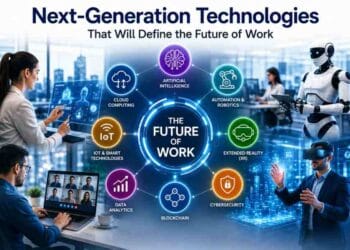

Technology is advancing at an unprecedented pace, transforming the way people live, work, communicate, and solve complex problems. Innovations that once seemed like science fiction—such as artificial intelligence, autonomous robots, quantum computers, and connected smart devices—are becoming part of everyday life.
Governments, businesses, researchers, and consumers are investing heavily in emerging technologies to improve productivity, healthcare, education, transportation, manufacturing, and environmental sustainability. Understanding these innovations is essential for anyone preparing for the future digital economy.
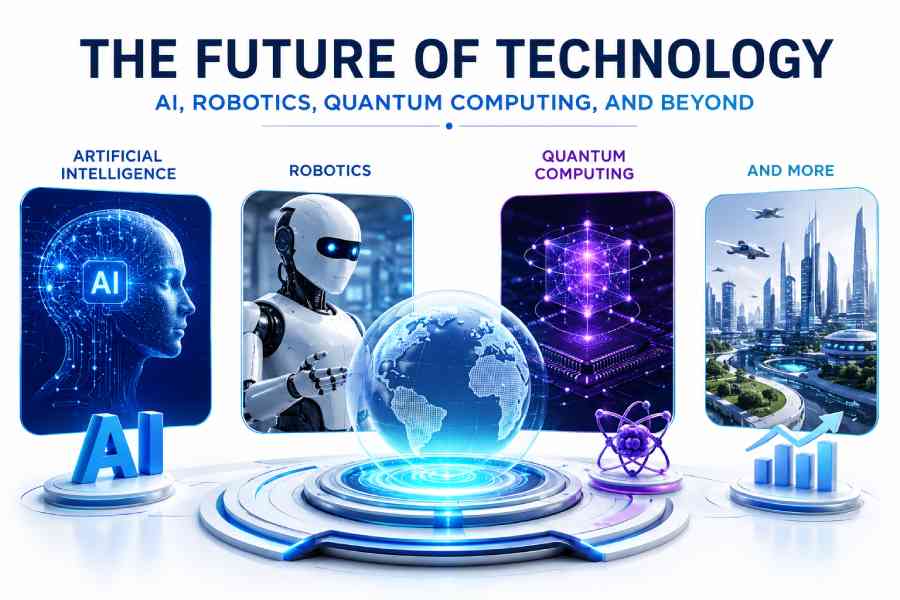 This guide explains the most important future technologies, how they work, where they are used, and why they matter for individuals and organizations alike.
Table of Contents
- What Is Future Technology?
- Artificial Intelligence Explained
- Machine Learning and Deep Learning
- Robotics and Intelligent Automation
- AI and Robotics Working Together
- Quantum Computing Explained
- Internet of Things (IoT)
- Edge Computing and 5G
- Blockchain Beyond Cryptocurrency
- Cloud Computing and Big Data
- Extended Reality
- Digital Twins and Smart Cities
- Green Technology
- Future Predictions
- Challenges and Opportunities
- Frequently Asked Questions
1. What Is Future Technology?
Future technology refers to emerging innovations that have the potential to significantly improve industries, economies, and everyday life. These technologies combine advanced computing, intelligent software, automation, and connected systems to solve increasingly complex challenges.
Unlike traditional technologies, future technologies continuously evolve through research, data analysis, and artificial intelligence. They are designed to become smarter, faster, more efficient, and more adaptable over time.
Main Characteristics
- Intelligent decision-making
- Automation of repetitive tasks
- Real-time data processing
- High-speed connectivity
- Continuous learning capabilities
- Global digital collaboration
| Technology Area | Primary Purpose |
|---|---|
| Artificial Intelligence | Intelligent decision-making |
| Robotics | Automating physical tasks |
| Quantum Computing | Solving highly complex calculations |
| IoT | Connecting smart devices |
2. Artificial Intelligence Explained
Artificial Intelligence (AI) enables computer systems to perform tasks that typically require human intelligence, such as recognizing speech, analyzing images, understanding language, making recommendations, and solving problems.
Modern AI systems process enormous amounts of data, identify patterns, and continuously improve their performance using advanced algorithms.
Common AI Applications
- Virtual assistants
- Customer support chatbots
- Medical diagnosis
- Fraud detection
- Recommendation systems
- Autonomous vehicles
| Industry | AI Example |
|---|---|
| Healthcare | Disease detection and medical imaging |
| Finance | Fraud monitoring and credit analysis |
| Retail | Product recommendations |
| Manufacturing | Predictive maintenance |
AI continues to improve operational efficiency while supporting faster and more accurate decision-making.
3. Machine Learning and Deep Learning
Machine Learning (ML) is a branch of artificial intelligence that enables systems to learn from historical data without being explicitly programmed for every task. Deep Learning is a specialized form of ML that uses neural networks with multiple layers to process complex information.
Machine Learning Applications
- Speech recognition
- Image classification
- Spam filtering
- Demand forecasting
- Predictive analytics
- Personalized recommendations
| Technology | Main Use |
|---|---|
| Machine Learning | Pattern recognition |
| Deep Learning | Complex image and language processing |
| Neural Networks | Learning from large datasets |
Machine learning allows AI systems to improve continuously as they process additional information.
4. Robotics and Intelligent Automation
Robotics combines mechanical engineering, electronics, software, and AI to create machines capable of performing physical tasks with precision and consistency.
Modern robots are used in manufacturing, healthcare, agriculture, logistics, defense, hospitality, and even space exploration.
Benefits of Robotics
- Higher productivity
- Improved workplace safety
- Consistent quality
- 24/7 operations
- Reduced manual labor
- Lower long-term operating costs
| Robot Type | Primary Application |
|---|---|
| Industrial Robots | Manufacturing automation |
| Medical Robots | Surgical assistance |
| Service Robots | Customer assistance |
| Autonomous Robots | Warehouse logistics |
5. AI and Robotics Working Together
Artificial intelligence gives robots the ability to perceive their surroundings, interpret information, learn from experience, and make decisions with minimal human intervention.
This combination enables intelligent automation in industries where speed, accuracy, and adaptability are critical.
Industries Using AI-Powered Robotics
- Healthcare
- Manufacturing
- Agriculture
- Logistics
- Retail
- Construction
| Industry | AI Robotics Application |
|---|---|
| Healthcare | Robot-assisted surgery |
| Manufacturing | Automated assembly lines |
| Agriculture | Autonomous harvesting systems |
| Logistics | Warehouse automation |
The integration of AI and robotics is creating intelligent systems capable of performing increasingly sophisticated tasks while supporting human workers rather than replacing them entirely.
6. Quantum Computing Explained
Quantum computing is one of the most advanced technologies being developed today. Unlike traditional computers that process information using binary bits (0 and 1), quantum computers use quantum bits (qubits), allowing them to perform many calculations simultaneously.
Although commercial adoption is still in its early stages, quantum computing has the potential to revolutionize scientific research, finance, cybersecurity, logistics, healthcare, and artificial intelligence.
How Quantum Computing Differs from Classical Computing
| Feature | Classical Computer | Quantum Computer |
|---|---|---|
| Processing Unit | Bits | Qubits |
| Data Processing | Sequential calculations | Parallel calculations |
| Complex Problem Solving | Limited by processing speed | Designed for extremely complex problems |
| Primary Applications | General computing | Scientific modeling and optimization |
Potential Business Applications
- Drug discovery and pharmaceutical research
- Financial portfolio optimization
- Climate and weather modeling
- Supply chain optimization
- Advanced encryption research
- Artificial intelligence acceleration
Although practical quantum computing is still developing, many organizations are already investing in research to prepare for future commercial applications.
7. Internet of Things (IoT)
The Internet of Things (IoT) connects physical devices through the internet, allowing them to collect, exchange, and analyze data in real time. Sensors, smart devices, industrial equipment, vehicles, and home appliances all contribute to connected digital ecosystems.
IoT improves efficiency, reduces operational costs, enhances automation, and enables better decision-making across industries.
Examples of IoT Devices
- Smart home devices
- Wearable fitness trackers
- Connected medical equipment
- Industrial sensors
- Smart agriculture systems
- Fleet management devices
| Industry | IoT Application |
|---|---|
| Healthcare | Remote patient monitoring |
| Manufacturing | Equipment monitoring |
| Agriculture | Smart irrigation systems |
| Retail | Inventory tracking |
| Transportation | Fleet management |
As IoT networks continue expanding, businesses gain greater visibility into operations while improving efficiency through real-time monitoring.
8. Edge Computing and 5G Connectivity
Modern applications require immediate responses. Instead of sending all information to centralized cloud servers, edge computing processes data closer to where it is generated. This significantly reduces latency while improving application performance.
When combined with 5G networks, edge computing supports faster communication between connected devices, autonomous vehicles, smart factories, and intelligent healthcare systems.
Advantages of Edge Computing
- Faster data processing
- Reduced latency
- Improved IoT performance
- Lower bandwidth usage
- Enhanced reliability
- Real-time decision-making
| Technology | Primary Benefit |
|---|---|
| Edge Computing | Processes data locally |
| 5G Networks | Ultra-fast wireless communication |
| IoT Integration | Supports connected smart devices |
| AI at the Edge | Real-time intelligent analysis |
Industries such as healthcare, transportation, manufacturing, and smart cities increasingly rely on edge computing to deliver faster digital services.
9. Blockchain Beyond Cryptocurrency
Although blockchain became widely known through cryptocurrencies, its business applications extend far beyond digital assets. Blockchain creates secure, transparent, and tamper-resistant digital records that improve trust between organizations.
Enterprise Blockchain Applications
- Supply chain transparency
- Digital identity verification
- Healthcare record management
- Financial settlements
- Smart contracts
- Property ownership records
| Sector | Blockchain Benefit |
|---|---|
| Finance | Secure transactions |
| Healthcare | Protected patient records |
| Supply Chain | Product traceability |
| Government | Identity management |
Blockchain technology continues expanding into industries that require secure record keeping, transparency, and trusted digital transactions.
10. Cloud Computing and Big Data
Cloud computing provides scalable digital infrastructure, while big data technologies help organizations analyze enormous amounts of structured and unstructured information. Together, they enable businesses to make faster and more informed decisions.
Organizations increasingly depend on cloud platforms for collaboration, software deployment, cybersecurity, artificial intelligence, and business continuity.
Benefits of Cloud Computing
- Flexible infrastructure
- Reduced hardware costs
- Business scalability
- Remote collaboration
- Automatic software updates
- Disaster recovery capabilities
Benefits of Big Data Analytics
- Customer behavior analysis
- Business forecasting
- Operational optimization
- Predictive maintenance
- Market trend identification
- Improved strategic planning
| Technology | Main Advantage |
|---|---|
| Cloud Computing | Scalable computing resources |
| Big Data Analytics | Actionable business insights |
| Artificial Intelligence | Automated decision support |
| Machine Learning | Predictive analysis |
How These Technologies Work Together
| Technology | Works Together With | Main Outcome |
|---|---|---|
| Artificial Intelligence | Big Data, Cloud | Smarter decision-making |
| Robotics | AI, IoT | Intelligent automation |
| Quantum Computing | AI, Big Data | Advanced scientific computing |
| IoT | Edge Computing, 5G | Real-time connected systems |
| Blockchain | Cloud Computing | Secure digital transactions |
| Cloud Computing | All Technologies | Scalable digital infrastructure |
The future of technology lies in the integration of multiple innovations rather than relying on a single solution. Organizations that combine AI, cloud computing, robotics, IoT, blockchain, and quantum research will be better prepared for future challenges and opportunities.
11. Extended Reality (AR, VR, and MR)
Extended Reality (XR) is a collective term that includes Augmented Reality (AR), Virtual Reality (VR), and Mixed Reality (MR). These immersive technologies are transforming how people learn, work, shop, receive healthcare, and collaborate remotely.
Businesses are using XR to improve employee training, product design, customer engagement, remote maintenance, and virtual collaboration while reducing costs and increasing productivity.
Real-World Applications
- Medical training and virtual surgery simulations
- Virtual classrooms and interactive education
- Remote equipment maintenance
- Retail virtual product visualization
- Architectural design reviews
- Employee onboarding and training
| Technology | Main Purpose |
|---|---|
| Augmented Reality (AR) | Overlays digital information onto the real world |
| Virtual Reality (VR) | Creates fully immersive digital environments |
| Mixed Reality (MR) | Combines physical and digital environments interactively |
12. Digital Twins and Smart Cities
Digital twins are virtual replicas of physical assets, buildings, factories, transportation systems, and even entire cities. These digital models continuously receive real-time data from sensors, enabling organizations to simulate operations, monitor performance, and predict maintenance requirements.
Smart cities use digital twins alongside IoT, AI, cloud computing, and big data analytics to improve traffic management, public safety, waste management, environmental monitoring, and energy efficiency.
Benefits of Digital Twins
- Predictive maintenance
- Operational optimization
- Lower maintenance costs
- Improved planning
- Higher efficiency
- Better risk management
| Industry | Digital Twin Application |
|---|---|
| Manufacturing | Factory performance optimization |
| Healthcare | Hospital operations planning |
| Construction | Building lifecycle management |
| Transportation | Traffic flow optimization |
13. Green Technology and Sustainable Innovation
Technology is playing an essential role in helping businesses and governments achieve sustainability goals. Green technology focuses on reducing environmental impact while improving operational efficiency and supporting long-term economic growth.
Examples of Green Technology
- Renewable energy systems
- Smart electrical grids
- Energy-efficient data centers
- Electric vehicles
- Carbon monitoring platforms
- AI-powered energy optimization
| Green Innovation | Environmental Benefit |
|---|---|
| Renewable Energy | Reduces carbon emissions |
| Smart Grids | Improves energy efficiency |
| Electric Vehicles | Lowers fuel consumption |
| Cloud Computing | Optimizes resource utilization |
Sustainable innovation will continue becoming a major priority as organizations seek to balance economic growth with environmental responsibility.
14. Future Predictions Beyond 2030
Experts expect future technologies to become increasingly connected, autonomous, and intelligent. Artificial intelligence will support nearly every industry, while robotics, quantum computing, biotechnology, and advanced communications will reshape global economies.
Expected Technology Developments
- Highly intelligent AI assistants
- Fully autonomous transportation
- Commercial quantum computing applications
- Advanced humanoid robots
- Personalized precision healthcare
- Fully connected smart cities
- Greater human-machine collaboration
| Technology | Future Impact |
|---|---|
| Artificial Intelligence | Transforms decision-making across industries |
| Quantum Computing | Accelerates scientific discoveries |
| Robotics | Expands intelligent automation |
| Smart Infrastructure | Improves urban efficiency |
15. Challenges and Opportunities
Despite tremendous opportunities, organizations must address several challenges before fully benefiting from future technologies. Strategic planning, workforce development, cybersecurity, and ethical governance will remain essential.
Key Challenges
- Cybersecurity threats
- Data privacy concerns
- High implementation costs
- Technology skills shortages
- Ethical AI governance
- Regulatory compliance
| Challenge | Recommended Solution |
|---|---|
| Cybersecurity | Implement Zero Trust security frameworks |
| Skills Gap | Invest in continuous employee training |
| Technology Adoption | Deploy solutions in phased stages |
| Privacy | Strengthen governance and compliance |
Advantages of Future Technologies
| Advantage | Impact |
|---|---|
| Greater Productivity | Automates repetitive work |
| Improved Accuracy | Supports better decision-making |
| Lower Operating Costs | Optimizes business processes |
| Innovation | Creates new products and services |
| Global Connectivity | Enhances collaboration worldwide |
Frequently Asked Questions
1. What is future technology?
Future technology refers to emerging innovations such as AI, robotics, quantum computing, IoT, blockchain, and advanced computing systems that are expected to transform industries and society.
2. How does artificial intelligence work?
AI analyzes data, recognizes patterns, learns from experience, and supports decision-making using algorithms and machine learning models.
3. What is the purpose of robotics?
Robotics automates physical tasks, improves productivity, increases precision, and enhances workplace safety.
4. Why is quantum computing important?
Quantum computing can solve highly complex scientific and mathematical problems much faster than traditional computers.
5. What is the Internet of Things?
IoT connects physical devices through the internet so they can collect, exchange, and analyze real-time data.
6. How does blockchain improve security?
Blockchain stores tamper-resistant digital records that improve transparency and trust between organizations.
7. What industries benefit most from future technologies?
Healthcare, finance, education, manufacturing, logistics, agriculture, retail, transportation, and government services all benefit significantly.
8. What skills will be important in the future?
AI literacy, data analytics, cloud computing, cybersecurity, problem-solving, and continuous learning will become increasingly valuable.
9. What are the biggest challenges of emerging technologies?
Cybersecurity, privacy, implementation costs, regulatory compliance, workforce training, and ethical governance remain major challenges.
10. How can businesses prepare for future technology?
Organizations should invest in digital transformation, employee upskilling, cybersecurity, cloud infrastructure, responsible AI, and innovation strategies.
Conclusion
Future technologies are rapidly changing how people live, work, communicate, and solve global challenges. Artificial intelligence, robotics, quantum computing, IoT, blockchain, cloud computing, extended reality, and sustainable innovation are creating opportunities that were unimaginable just a few years ago.
Individuals and organizations that understand these technologies, invest in digital skills, and adopt innovation responsibly will be better prepared to thrive in an increasingly connected and intelligent world.