
Successful SEO campaigns increasingly rely on AI-assisted workflows to identify opportunities, optimize content, and stay competitive in search results.
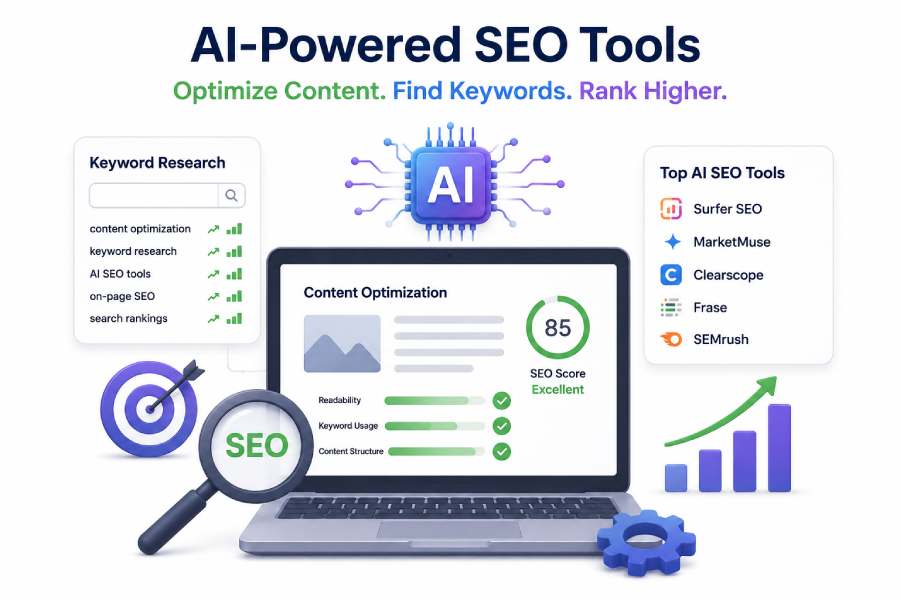
This guide explores the best AI SEO tools for content optimization and keyword research, explaining how they work and how to use them effectively.
Table of Contents
- Why AI SEO Tools Are Important in 2026
- How AI Improves Keyword Research
- How AI Helps Content Optimization
- Best AI SEO Tool #1: Semrush
- Best AI SEO Tool #2: Ahrefs
- Best AI SEO Tool #3: Surfer SEO
- Best AI SEO Tool #4: Clearscope
- Best AI SEO Tool #5: Frase
- How to Choose the Right AI SEO Tool
- Best AI SEO Tool by Category
- The Complete AI SEO Workflow for 2026
- Frequently Asked Questions
Why AI SEO Tools Are Important in 2026
Search engine optimization has become more complex due to AI-powered search experiences, evolving ranking systems, and growing competition.
AI SEO tools help automate research, uncover opportunities, and improve decision-making.
Major Advantages
- Faster keyword discovery.
- Better content optimization.
- Competitor analysis.
- Topic clustering.
- Search intent analysis.
- Workflow automation.
- Scalable content production.
AI tools help marketers spend less time on repetitive tasks and more time on strategy.
How AI Improves Keyword Research
Traditional keyword research often focuses on search volume and competition.
AI tools go further by identifying semantic relationships, topical relevance, user intent, and content gaps.
AI Keyword Research Capabilities
- Keyword clustering.
- Intent detection.
- Topic suggestions.
- Trend identification.
- SERP analysis.
- Competitor keyword discovery.
How AI Helps Content Optimization
Content optimization tools analyze top-ranking pages and provide recommendations for improving relevance and comprehensiveness.
Common Optimization Features
- Content scoring.
- Semantic keyword suggestions.
- Heading recommendations.
- Readability analysis.
- Content gap identification.
- Internal linking suggestions.
These features help create content aligned with modern ranking expectations.
Best AI SEO Tool 1: Semrush
Semrush remains one of the most comprehensive SEO platforms available.
Key Features
- Keyword research.
- Keyword gap analysis.
- Competitive intelligence.
- Content marketing tools.
- Site audits.
- Rank tracking.
Best For
Businesses, agencies, and advanced SEO professionals.
Best AI SEO Tool 2: Ahrefs
Ahrefs is widely recognized for its backlink database and keyword research capabilities.
Key Features
- Keyword Explorer.
- Content Explorer.
- Site Explorer.
- Competitor analysis.
- Link building research.
Best For
SEO professionals focused on backlinks and competitive research.
Best AI SEO Tool 3: Surfer SEO
Surfer SEO specializes in content optimization using data-driven recommendations.
Key Features
- Content Editor.
- AI-assisted writing.
- Optimization scores.
- Keyword suggestions.
- SERP analysis.
Best For
Content creators and SEO-focused publishers.
Best AI SEO Tool 4: Clearscope
Clearscope helps improve content quality and topical relevance.
Key Features
- Content grading.
- Keyword recommendations.
- Competitive analysis.
- Content optimization.
Best For
Teams focused on creating highly optimized editorial content.
Best AI SEO Tool 5: Frase
Frase combines AI writing assistance with SEO optimization features.
Key Features
- Content briefs.
- Question research.
- AI writing tools.
- Optimization recommendations.
Best For
Bloggers and content marketing teams.
Quick Comparison Table
| Tool | Keyword Research | Content Optimization | Best For |
|---|---|---|---|
| Semrush | Excellent | Excellent | All-in-One SEO |
| Ahrefs | Excellent | Good | Backlinks |
| Surfer SEO | Good | Excellent | Content SEO |
| Clearscope | Good | Excellent | Content Teams |
| Frase | Good | Very Good | Bloggers |
How to Choose the Right AI SEO Tool
The best AI SEO tool depends on your goals, budget, experience level, and content strategy.
For Bloggers
- RankIQ
- Frase
- WriterZen
- ChatGPT
For Small Businesses
- SE Ranking
- Semrush
- Surfer SEO
For Agencies
- Semrush
- Ahrefs
- MarketMuse
- Clearscope
For Enterprise SEO
- MarketMuse
- Semrush
- Ahrefs
Select tools that solve your biggest SEO challenges rather than choosing the platform with the most features.
Best AI SEO Tool by Category
| Category | Recommended Tool |
|---|---|
| Keyword Research | Ahrefs |
| Content Optimization | Surfer SEO |
| Topic Clustering | MarketMuse |
| Competitive Analysis | Semrush |
| Blog SEO | RankIQ |
| AI Content Assistance | ChatGPT |
| Budget-Friendly SEO | SE Ranking |
How AI Supports Google’s EEAT Requirements
Google increasingly rewards content that demonstrates Experience, Expertise, Authoritativeness, and Trustworthiness.
AI tools can support EEAT efforts when used responsibly.
Examples
- Content gap analysis.
- Topic research.
- Question discovery.
- Competitive benchmarking.
- Content optimization recommendations.
However, genuine expertise and fact-checking must still come from human contributors.
Can AI SEO Tools Improve Rankings?
AI tools do not directly improve rankings. Instead, they help marketers make better decisions and execute SEO strategies more effectively.
Benefits That Influence Rankings
- Better keyword targeting.
- Improved content quality.
- Stronger topical authority.
- More comprehensive coverage.
- Enhanced user experience.
- Improved internal linking.
When combined with quality content and technical SEO, these improvements can contribute to higher rankings.
The Complete AI SEO Workflow
- Identify target audience.
- Research seed keywords.
- Generate keyword clusters.
- Analyze search intent.
- Study competitors.
- Create content outlines.
- Develop comprehensive content.
- Optimize using AI recommendations.
- Add internal links.
- Implement schema markup.
- Improve page speed.
- Monitor rankings.
- Refresh content regularly.
This workflow combines human expertise with AI efficiency.
Pros and Cons of AI SEO Tools
Advantages
- Time savings.
- Automation.
- Data analysis.
- Keyword discovery.
- Content optimization.
- Competitive insights.
Disadvantages
- Subscription costs.
- Potential inaccuracies.
- Over-automation risks.
- Dependence on AI recommendations.
Successful SEO teams use AI as a support tool rather than a replacement for strategic thinking.
Frequently Asked Questions (FAQ)
What is the best AI SEO tool overall?
Semrush is often considered one of the most comprehensive AI-assisted SEO platforms because it combines keyword research, competitor analysis, content tools, and technical SEO capabilities.
Which AI SEO tool is best for bloggers?
RankIQ, Frase, WriterZen, and ChatGPT are popular choices among bloggers due to their content-focused features.
Can AI replace SEO professionals?
No. AI can automate tasks and provide recommendations, but strategy, creativity, expertise, and decision-making still require human involvement.
Are AI SEO tools worth the investment?
For businesses actively investing in SEO, AI tools can improve efficiency, content quality, and research capabilities, making them valuable investments.
Can AI-generated content rank in Google?
Content can rank if it is useful, accurate, original, and demonstrates value for users regardless of how it was created.
Google Discover Optimization Tips
- Create original content.
- Use unique research and insights.
- Publish AI and SEO trend updates.
- Add high-quality featured images.
- Maintain strong EEAT signals.
- Create compelling headlines.
- Update content frequently.
- Build topical authority.
Discover traffic often rewards websites that consistently publish expert-led content covering trending topics.
Final Thoughts
AI SEO tools have become valuable assets for marketers, bloggers, agencies, and businesses seeking stronger search visibility in 2026.
From keyword research and content planning to optimization and competitor analysis, AI-powered platforms help simplify complex SEO workflows and uncover opportunities that might otherwise be missed.
However, the most successful SEO strategies combine AI efficiency with human expertise. Search engines continue prioritizing content that demonstrates experience, authority, trustworthiness, and genuine value.
By choosing the right tools and using them strategically, website owners can improve rankings, increase organic traffic, and build long-term search visibility.