

The days of the smartwatch recorded your steps. Nowadays, a new breed of gadgets is changing the way we view the way we look at fitness, health and even lifestyle. These are AI-powered wearables–intelligent gadgets that don’t just collect data, but also analyze, learn, and provide personalized insights. From smartwatches that can detect abnormalities in health, or fitness tracking devices that design customized workout programs These devices are changing our interaction with technology. What exactly are they what do they mean, and exactly how can they accomplish their magic? In this article we’ll explore the science behind AI wearables, and look at the ways they’re creating our future.
What are wearables powered by AI?
At its heart the idea behind it is a fundamental fact that an artificial intelligence-powered device is a piece of equipment that goes far beyond data collection. While traditional wearables may monitor your heart rate, or even steps however, an AI-powered wearable utilizes embedded artificial intelligence and machine-learning algorithms to interpret information in an insightful manner. This is an important distinction between a basic calculator and a private data analyst.
Imagine this in the following as follows: a simple fitness tracker informs you that you walked 10,000 steps this morning. A wearable powered by AI however it informs it that the patterns of your walk aren’t consistent and suggests that you may be more inclined to one side and suggests exercises to improve your walk. The wearable takes the raw data and transforms them into actionable, personalised information.
Some examples are numerous and expanding:
Wearables with HTML0: Similar to Apple Watch and Samsung Galaxy Watch, Apple Watch or Samsung Galaxy Watch, these watches make use of AI to analyse ECG readings, identify irregular heart beats, and record sleep patterns to give you a an extensive health overview.
Fitness trackers devices from companies such as Fitbit and Garmin utilize AI to count not just calories and steps, but also to anticipate fatigue, recommend optimal recovery time, and design dynamic training programs.
Smart clothing: Imagine a shirt equipped with sensors to monitor the muscle activity during exercise and provides real-time feedback on your technique and form.
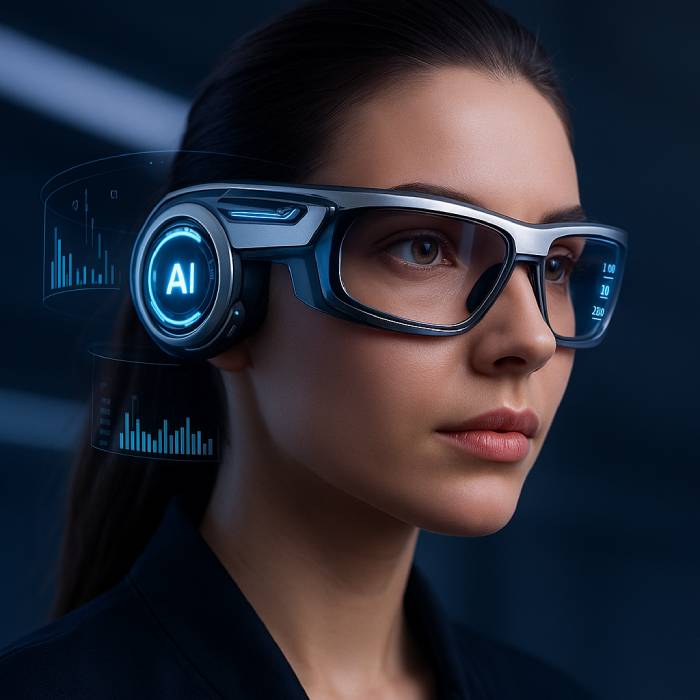
AR Glasses Although they are still an developing field, augmented-reality glasses are currently being developed using AI to give real-time information overlays, like directions to navigate or data on your surroundings without the requirement for an additional screen.
The Key Features of Wearables Powered by AI
How can these products be smart and essential? It’s their unique blend of features:
Real-time data tracking: Wearables powered by AI are fitted with a range of sensors, from accelerometers and gyroscopes to heart rate monitors as well as ECG sensors that continuously record an array of data from the environment and physiological.
Predictive Analytics Here is the place where “AI” truly comes into the picture. By analysing historical data and finding trends, the devices are able to detect health problems that could be a problem prior to them becoming grave. For instance the wearable could detect an underlying change in the heart rate variation over time, and warn you of an illness or burnout and prompt you to take a break.
Personalized Recommendations Instead of a generic method, AI wearables use your specific data to offer you customized guidance. This could include a personalised program for exercise that adjusts to your needs and sleep schedule, or a suggestion for a better sleeping routine in relation to your sleep quality or a suggestion for your diet in relation to your level of activity.
Seamless Integration These devices are created to integrate into the larger digital ecosystem. They seamlessly connect to your smartphone as well as smart home devices and even health platforms, resulting in a seamless and a more convenient experience.
What is the AI-powered Wearables Perform?
The power behind these devices lies in a sophisticated interaction between hardware as well as cloud-based software and systems.
4.1 Hardware Components
The base of every AI device is the hardware.
Sensors They are data collection devices. They cover anything from motion sensors (accelerometers and Gyroscopes) as well as biosensors (ECG photoplethysmography (also known as PPG) to measure heart rates) along with environmental sensors (thermometers and sensors for air quality). The precision and range of these sensors is crucial for the quality of information.
processors The tiny processors with low power perform computing on-device. In lieu of sending the entire details to cloud servers, a number of AI wearables today use “edge computation,” in which a part of AI analysis is performed right on the device. This helps reduce latency, extends battery life, and improves the privacy of data.
Connection: Wi-Fi, Bluetooth and cellular connectivity let the wearable transfer data to your phone or cloud, get updates, and remain connected.
The battery: The battery powers the whole system. The latest advances in battery technology and effective AI algorithms are essential to ensure a prolonged battery lifespan, since the continuous processing and tracking is extremely demanding.
4.2 Software & AI Algorithms
It is also this is “brain” for the process. The software gathers information from the sensors and employs AI algorithms to interpret it.
Data Collect: The software continuously collects data streams from sensors–your heartbeat and motion, your skin temperature and much more.
Personalization AI-based algorithms study the data to determine your own personal baseline. They discover what’s “normal” to you. and allow them to identify any abnormalities or major changes.
Predictive alerts When you compare your present data with your previous patterns and patterns, the AI is able to make predictions. When your quality of sleep has been always poor, for instance it may suggest a decrease in cognitive function or a greater risk of stress. It can also suggest an effective solution.
4.3 Cloud & App Integration
While some processing takes place in the hardware, the majority of analysis and long-term trend detection and data storage takes place via the cloud.
data synchronization: It syncs with an app that is compatible with your smartphone, which then in turns uploads your files into the cloud. This enables greater depth of analysis as well as the possibility of accessing your data across different devices.
Safety and Privacy The security of your sensitive health information is essential. The companies use encryption from end to end and adhere to strict privacy laws to ensure that personal information remains safe.
How-To Prompts: Making the Most Value from Your AI-Powered Wearable
5.1 How to Select the right AI-powered Wearable that meets Your Specific Needs
With all the choices available, picking the right one can be a challenge. Take into consideration your primary objective:
Focused on fitness: For those whose primary intention is to improve your workout choose a device with high-end heart rate variation (HRV) analysis and VO2 max tracking as well as built-in GPS.
Medical Monitoring: For managing a chronic illness, you should consider using equipment that is medically certified and monitor specific metrics such as ECG and blood pressure as well as blood glucose.
Use for lifestyle: When you’re in search of a broad health-related companion look for a device that has a long batteries, comfy appearance, and features like sleep and stress monitoring.
5.2 How to get the most accurate readings
To make sure your device is supplying reliable information:
Correct fit: Wear your device in a snug, but not uncomfortable snug. An unfit fit could result in incorrect heart rate measurements.
Calibration: Some devices require initial calibration. Follow the manufacturer’s directions to set up the device correctly.
Maintenance Maintain your devices and the sensors in good condition. Dust, sweat and lotions may interfere with the readings.
5.3 How to troubleshoot common issues
connectivity: If your device isn’t synchronizing, attempt restarting the wearable as well as your phone. Check that Bluetooth is enabled and that you have the app companion active.
Application Syncing When data doesn’t seem to be appearing, make sure you have app updates and make sure that your device has a reliable internet connection.
Problems with Battery: If the battery is draining quickly, look for any background applications or settings that are taking up too much power, for example, the continuous GPS tracking.
Applications in real-world scenarios of AI-powered Wearables
AI wearables are expanding out of the realms of consumer electronics into different industries.
Health Monitoring in healthcare settings, the devices allow remote monitoring of patients suffering from chronic diseases such as heart disease and diabetes. They can alert doctors of an illness that is deteriorating which allows for earlier intervention.
sports performance tracking: Professional athletes utilize AI wearables to improve their training, avoid injuries, and evaluate their performance in granular specificity, from fatigue to muscle to the level of hydration.
Safe Workplace: In industrial settings, AI wearables are used to monitor employees’ level of fatigue, identify symptoms of fatigue, and even alert them to dangerous situations, thus enhancing safety overall.
Style and lifestyle technology: The line between technology and fashion is becoming blurred. Jewelry, smart rings and even clothing are now trendy accessories that provide discrete health tracking as well as seamless integration with the world of technology.
Benefits of Wearables Powered by AI
The benefits from this technique are numerous:
Greater Health Awareness Through providing constant stream of data and insight, AI wearables empower individuals to take an active in their approach to health.
Individualized Information: The user will get completely unique knowledge of your body. You also receive suggestions and alerts that are specifically tailored to your needs.
The convenience of everyday life: From contactless payments to hands-free messaging, AI wearables streamline daily chores and make life more easy.
Motivation to Reach goals: by gamifying health and giving real-time feedback these devices can provide the motivation necessary to maintain a consistent approach to fitness and health goals.
Challenges and Limitations
Despite their promises, AI wearables are not free of obstacles:
Information Privacy Risques: The gathering of personal information raises important privacy issues. Who is responsible for this data what is its purpose, and the way it’s utilized?
Battery Life Concerns: Although improvements are made the need for frequent charging is still a frequent problem, particularly with the most power-intensive functions.
Limitations on Accuracy: No device is flawless. Things like skin tone, movement, and sweat may influence the accuracy of the sensor readings.
Hi-cost Barriers: Wearables with advanced AI typically come with a steep cost, making them unattainable to a significant part of the populace.
Trends & Industry Insights
9.1 Artificial Intelligence: The Next Generation of Wearables in Healthcare
Healthcare is evolving towards an active model which is why AI wearables are on the forefront. They will allow the continuous monitoring of remote locations, which will enable doctors to identify diseases in the earliest stage. Imagine a wearable device that can detect blood glucose levels without invasive procedure or an intelligent patch that monitors important signs with precision that is clinical.
9.2 Market Growth & Consumer Adoption Trends
There is a huge demand of AI wearables is growing rapidly. As technology becomes more accessible and trustworthy it will be able to see a greater use by consumers. The major players are always developing and we are likely to see more devices designed that can be used in a variety of scenarios such as the monitoring of mental health to advanced analysis of sports.
9.3 Fashion and Design Trends
Wearables aren’t simply clunky gadgets. Designers integrate technological advances seamlessly into ordinary objects making devices that are both practical and stylish. The trend is towards delicate, elegant, and personalized accessories that reflect your individual fashion while offering powerful insight into lifestyle and health.
Conclusion
Wearables powered by AI are more than just a trend. They are a major shift in the way we interact with technology and the health of our bodies. In addition to simple collecting data they provide us with personalized information as well as predictive alerts and an understanding about our body. While issues like security and accuracy are still a concern but the advantages that this new technology brings are changing sectors from fitness to healthcare. As AI gets more advanced and the technology becomes more compact We can anticipate the devices that are intelligent to be increasingly integrated into our lives. They will act as active partners as we strive to achieve better health.
Are you ready to control your health and wellness with an intelligent partner? Check out the most recent Wearables powered by AI Today, you can shop around look for the model that best suits your needs.