
 As AI-powered generative search components expand globally in 2026, web properties must adapt their traditional execution models. This comprehensive guide highlights exactly how AI is changing SEO and details the actionable milestones required to secure your organic Google traffic.
What Is AI SEO?
AI SEO refers to the symbiotic impact of artificial intelligence on search engine optimization workflows. It encompasses two primary fields: how search engines leverage machine learning models to score web content, and how optimization experts utilize AI tools to build better search experiences.
Unlike historic algorithmic models that strictly scanned for linear keyword frequency and rudimentary backlink quantities, modern AI architecture comprehensively evaluates contextual word relationships, structural semantic relevance, real-world source validation, and complex user behavior. AI evaluates content exactly like an analytical human audience member would, requiring a pivot away from formulaic optimization toward profound value delivery.
Why Google Is Investing Heavily in AI Search
Google’s baseline mission remains stable: delivering highly precise, structured, and helpful answers instantly. As the global web grows geometrically, artificial intelligence provides the only viable processing layer capable of filtering through trillions of data nodes accurately.
Advanced AI models empower search engines to:
- Isolate implicit, multifaceted user search intent.
- Differentiate between thin programmatic text and high-value original prose.
- Spot scaled webspam manipulations instantly.
- Contextualize external author and brand authority indicators.
- Serve hyper-personalized predictive results based on user journeys.
- Synthesize real-time multi-source summaries directly inside SERPs.
How AI Decodes and Understands Search Intent
The single most definitive evolution in optimization is how AI extracts explicit user intent. Historical mechanisms looked for exact phrase correlations. Modern search systems analyze natural, conversational queries to pinpoint what the user expects to see.
Consider a search query like “best laptops for college students.” AI recognizes the user expects an un-biased editorial comparison table, price-to-performance evaluations, and battery life metrics—not a clinical dictionary definition explaining what a notebook computer is. If your page layout fails to meet that exact conceptual layout, keyword presence alone will not save its rankings.
The Four Cardinal Intent Vectors
- Informational: Users seeking structural answers, guides, or instructional solutions.
- Navigational: Users searching for a specific branded URL, login gateway, or web resource.
- Commercial Investigation: Users analyzing competitive product solutions, looking for reviews, and running comparisons before a purchase.
- Transactional: Users displaying immediate purchase behaviors looking for checkout channels or booking links.
AI-Powered Overviews Are Reshaping Click Behavior
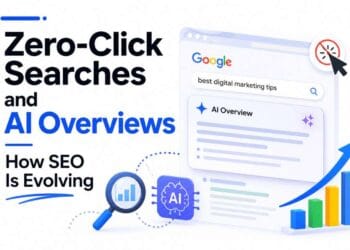
With generative engines populating zero-click solutions natively at the apex of search result interfaces, users find immediate answers without needing to navigate outside the interface. This structural design changes organic Click-Through-Rates (CTR).
Rather than optimization targets focusing purely on traditional blue links, web properties must aim to be featured directly within the data panels compiled by generative AI systems. Brand references inside these conversational AI units require a fundamental optimization shift:
- Publish thoroughly exhaustive, semantic content frameworks.
- Structure core answers in precise, highly conversational formats.
- Incorporate clear, nested Heading structures (H2, H3, H4) across layouts.
- Implement Schema markup variants explicitly across data models.
- Aggressively build out a comprehensive topical footprint.
How Modern AI Evaluates Content Quality
Google utilizes AI filters to review on-page presentation metrics. Machine learning looks beyond surface text, scanning for detailed contextual attributes:
- Information Gain: Does this document add unique ideas, data points, or angles, or is it merely rephrasing existing index resources?
- Structural Readability: Is the text easily scannable, formatted naturally, and optimized cleanly for mobile displays?
- Comprehensive Depth: Does the article thoroughly solve the query problem, or does it leave major technical gaps?
The Growing Importance of the EEAT Framework
Google’s E-E-A-T (Experience, Expertise, Authoritativeness, Trustworthiness) quality rater framework serves as a cornerstone of AI alignment. Search systems use predictive algorithms to weigh indicators of trust and true source reputation.
E-E-A-T Defined:
• Experience: Firsthand, practical usage or physical exposure to a topic.
• Expertise: Formal training, credentials, or documented knowledge specialization.
• Authoritativeness: Overall brand recognition, media references, and niche topical standing.
• Trustworthiness: Content transparency, structural verification, safe web infrastructure, and factual accuracy.
To insulate your digital footprint against quality updates, explicitly highlight verified author bios, append primary case-study data, cite peer-reviewed external links, and ensure transparency across your digital identity pages.
How AI Is Transforming Content Creation Workflows
Generative AI tools can create functional outlines, structural research modules, and full editorial drafts instantly. While this drastically reduces processing time for lean web teams, it also unlocks a severe threat: a massive influx of indistinguishable content across every niche.
AI Content Production: Strategic Comparison
| Operational Advantages | Core Algorithmic Risks |
|---|---|
| Accelerates internal research framing and editorial scoping. | Generates repetitive, commoditized information footprints. |
| Pinpoints overlooked programmatic keyword groupings easily. | Sacks structural Information Gain and creative prose variations. |
| Optimizes technical text structuring and initial readability paths. | Prone to factual hallucinations and data inaccuracies if left unchecked. |
The solution requires an asset-focused strategy: utilize generative platforms to scale layout ideation, data structuring, and initial structural drafting, but rely fully on human subject matter experts to introduce personal viewpoints, real tests, and deep editorial analysis.
AI-Powered Keyword Research Is Becoming Smarter
Relying exclusively on fixed legacy metrics like raw search volume or standard difficulty indicators is no longer sufficient. Advanced AI optimization tools dissect contextual entities, semantic topic relationships, search gaps, and predictive seasonal intents with immense precision.
Rather than engineering isolated, keyword-stuffed landing pages targeting single phrase match vectors, smart operators map out fully interconnected topic ecosystems. This methodology captures hundreds of long-tail variations through singular, highly unified premium resources.
AI Is Making Keyword Stuffing Completely Obsolete
Artificial intelligence evaluates natural communication patterns natively. Forcing unnatural repetitions of raw target keywords down content sections to hitting an arbitrary percentage metric triggers immediate quality filters.
What Drives Rank Performance in 2026:
- Contextual Relevance: Addressing semantic terms naturally mapped across a niche topic.
- Comprehensive Intent Fulfillment: Answering sub-queries naturally connected to a core topic.
- Audience Engagement: Earning clean scrolling habits, visual interactions, and clear reading behaviors.
How AI Helps Google Detect Low-Quality Content Systems
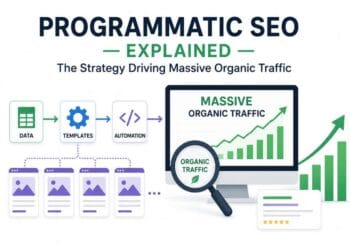
As massive programmatic systems create large networks of generic text, Google deploys deep machine learning classifiers to isolate and demote mass-produced, low-value sites. Portals that rely on churning out large quantities of generic content with minimal editorial gatekeeping face sitewide manual or algorithmic demotions.
Modern search evaluation emphasizes a clear paradigm: Premium Quality over Massive Quantity. A single exceptional, comprehensively researched asset that fulfills explicit user intent will generate more sustainable conversions and visibility than dozens of poorly optimized, shallow pages.
AI and Real-Time User Experience Signals
User experience remains a core indicator of true post-click content quality. Google utilizes AI components to decode how audiences move through a web property. Properties that fail to address interface usability elements quickly drop off competitive search layouts.
- Loading Benchmarks: Fast rendering speeds mapped via Core Web Vitals.
- Responsive Design: Dynamic rendering layouts tailored across all mobile displays.
- Visual Stability: Zero layout shifts during document load sequences.
- Layout Clarity: Highly readable typography choices devoid of aggressive intrusive ads.
How AI Influences Modern Link Building Evaluation
Hyperlinks remain an essential indicator of web trust, but AI filters judge inbound links with profound intellectual rigor. Legacy tactics focused strictly on total link volumes are increasingly ineffective. Today, AI isolates the true entity relationship, subject relevance, and programmatic validity of every referring source.
A few editorial links earned natively from hyper-relevant, authoritative, high-traffic portals in your exact vertical offer exponentially more ranking value than thousands of low-cost blog network links. Build link authority safely by publishing primary research reports, developing open-source tools, and cultivating real relationships with industry publishers.
Website Owners Must Focus on Digital Trust Foundations
In an ecosystem where synthetic media can be scaled effortlessly, explicit trust indicators form your primary defense against search visibility loss. Google aims to ensure users encounter reliable information pathways. Cultivating digital trust requires transparency across your web layout:
- Maintain easily accessible, clearly detailed corporate contact points.
- Build independent, verifiable author profiles linking to external channels.
- Rigorously fact-check all data assertions and explicitly attribute reliable sources.
- Implement regular content update schedules to maintain information accuracy.
The Future of AI SEO in 2026 and Beyond
The pace of AI evolution is accelerating. Over the coming years, search landscapes will move entirely away from standard manual query lookups toward conversational, contextual assistants. Web structures must plan for an index driven by continuous real-time page evaluation.
Emerging Technical Vectors:
- Deeply personalized search delivery models adapted to individual historical journeys.
- Ubiquitous visual and multi-modal query lookups driven by image and device cameras.
- Smarter natural language understanding that bypasses literal phrases to match conceptual solutions.
- Instantaneous extraction of authoritative industry expertise across unstructured web layouts.
How Website Owners Should Adapt Their Current SEO Strategy
To win consistently in an AI-driven environment, you must combine core technical foundations with user-first content frameworks. Update your long-term organic playbook with these essential pillars:
- Construct Multi-Tiered Topic Hubs: Develop interconnected hubs and spokes to fully own a topic space.
- Satisfy True Search Intent: Audit live SERPs to verify the preferred structural format for your target topic before creating content.
- Incorporate Verified EEAT Elements: Feature authentic credentials, author signatures, and primary research across every page.
- Optimize On-Page UX: Fix page speed bottlenecks and clean up navigation layouts.
- Leverage AI Tools Responsibly: Treat machine learning systems as brainstorming assistants, relying on human editors for final drafts.
- Commit to Regular Content Lifecycles: Frequently audit and upgrade existing index files to preserve topical relevance.
Technical SEO Architecture Still Matters in the AI Era
No matter how phenomenal your content quality is, it cannot rank if search crawlers encounter obstacles parsing your infrastructure. Technical SEO represents the base layer that allows search engines to read, categorize, and process your content files seamlessly.
- Schema Deployment: Apply structured microdata formats to feed clear entity identities directly to AI systems.
- Crawl Budget Preservation: Maintain clean site hierarchies, safe redirect rules, and error-free index files.
- Internal Link Interconnects: Use descriptive anchor text across internal links to clearly map contextual content associations.
Why Unfiltered Human Expertise Remains Essential
AI tools operate by predicting text based on historical web information. They cannot conduct new laboratory tests, share personal professional challenges, or generate original business insights. This limitation creates a massive opportunity for human creators.
Content that highlights genuine case studies, primary data visualizations, real-world failures, and direct industry interviews offers unique value. This data-driven material provides unique value that is difficult for generic LLMs to replicate.
Common AI SEO Pitfalls to Avoid
- Programmatic Automation Without Human Editing: Copying raw AI outputs directly into your CMS without deep editorial passes.
- Neglecting Structural Fact-Checking: Permitting unverified statistics or unchecked assumptions to make it to publication.
- Chasing Search Volume Over Real Intent: Targeting keywords with high volume metrics that lack commercial or relevant value for your business model.
- Overlooking Technical Site Foundations: Ignoring mobile usability issues or broken crawl scripts under the assumption that good text alone can rank.
Google Discover Optimization Strategies
Google Discover relies heavily on predictive machine learning models to push hyper-relevant interest streams to user devices without explicit search entries. Capturing traffic from Discover requires optimizing for specific visual and engagement signals:
- Incorporate high-resolution, compelling visual feature assets (minimum 1200px wide).
- Craft punchy, highly engaging headlines that dodge manipulative clickbait traps.
- Publish timely, highly relevant updates aligned with trending cultural or market patterns.
- Maintain strong sitewide entity trust, author clarity, and platform authority signals.
Frequently Asked Questions (FAQ)
Is AI replacing SEO?
No. AI is changing SEO, but optimization remains absolutely necessary. Website owners must adapt their strategies to align with AI-powered search landscapes rather than old algorithmic signals.
Can AI-generated content rank on Google?
Yes. AI-generated content can rank if it is helpful, accurate, completely original, satisfies true user intent, and offers real-world value.
Does Google penalize AI content?
No, Google explicitly focuses on content quality rather than how content is created. Low-quality, programmatic spam will struggle regardless of whether it is written by a human or an AI tool.
What is the biggest AI SEO trend?
The evolution of generative AI search overviews and deep semantic search understanding are the most impactful shifts affecting CTR and user engagement.
Should small websites use AI tools?
Yes, small websites can leverage AI tools to equalize resources and scale workflows efficiently, though human oversight remains essential for maintaining credibility and EEAT.