
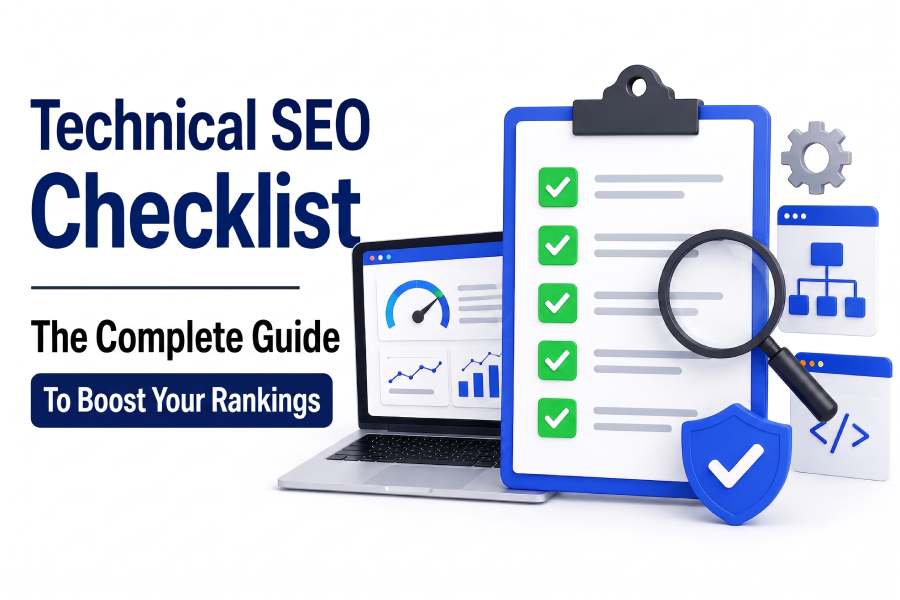
This comprehensive guide covers the most important technical SEO tasks for 2026 and provides a practical checklist you can use to improve rankings, visibility, and user experience.
Table of Contents
- What Is Technical SEO?
- Why Technical SEO Matters in 2026
- Checklist Item #1: HTTPS Security
- Checklist Item #2: Mobile-First Optimization
- Checklist Item #3: XML Sitemap Optimization
- Checklist Item #4: Robots.txt Configuration
- Checklist Item #5: Crawlability Improvements
- Checklist Item #6: Core Web Vitals
- Checklist Item #7: Website Speed
- Checklist Item #8: Structured Data (Schema Markup)
- Checklist Item #9: Canonical Tags
- Checklist Item #10: Indexing Problems
- Checklist Item #11: SEO-Friendly URL Structures
- Checklist Item #12: Internal Linking
- Checklist Item #13: Broken Links
- Checklist Item #14: Breadcrumb Navigation
- Checklist Item #15: Monitor Redirects
- Checklist Item #16: Image Optimization
- Checklist Item #17: Structured Site Architecture
- Checklist Item #18: International SEO
- Checklist Item #19: Server Log Analysis
- Checklist Item #20: Regular SEO Audits
- The Complete Technical SEO Checklist Summary
- Frequently Asked Questions
- Google Discover Optimization Tips
What Is Technical SEO?
Technical SEO refers to the optimization of website infrastructure to help search engines crawl, index, and rank pages effectively.
Unlike content SEO and link building, technical SEO focuses on backend elements that influence how search engines access and interpret website content.
A technically optimized website creates a stronger foundation for all other SEO efforts.
Why Technical SEO Matters in 2026
Google’s ranking systems continue to evolve, but technical SEO remains essential because search engines still need to discover, understand, and process content efficiently.
Technical issues can prevent even high-quality pages from ranking.
Common technical SEO problems include:
- Slow loading speeds.
- Broken links.
- Indexing issues.
- Poor mobile experiences.
- Duplicate content.
- Crawl errors.
- Improper redirects.
Fixing these issues helps search engines access content more efficiently and improves user satisfaction.
Technical SEO Checklist Item 1: Use HTTPS Across the Entire Website
Security remains a fundamental ranking consideration.
Google has long encouraged website owners to use HTTPS encryption because it protects data transferred between users and websites.
HTTPS Best Practices
- Install a valid SSL certificate.
- Redirect HTTP pages to HTTPS.
- Update internal links.
- Fix mixed-content issues.
- Renew certificates before expiration.
A secure website improves trust while supporting SEO performance.
Technical SEO Checklist Item 2: Prioritize Mobile-First Optimization
Google primarily uses mobile versions of websites for indexing and ranking.
If your site performs poorly on mobile devices, rankings may suffer.
Mobile SEO Checklist
- Responsive website design.
- Fast loading speeds.
- Readable text.
- Touch-friendly navigation.
- Mobile-friendly forms.
- Optimized images.
Excellent mobile experiences improve both rankings and conversions.
Technical SEO Checklist Item 3: Optimize XML Sitemaps
An XML sitemap helps search engines discover important pages on your website.
While Google can often find pages through links, XML sitemaps provide a clear roadmap for crawling.
Sitemap Best Practices
- Include indexable URLs only.
- Remove redirected pages.
- Update automatically.
- Submit to Google Search Console.
- Keep file sizes manageable.
A clean sitemap improves crawl efficiency and indexing.
Technical SEO Checklist Item 4: Review Robots.txt Configuration
The robots.txt file tells search engines which areas of your website can or cannot be crawled.
Incorrect robots.txt settings can accidentally block important content from search engines.
Robots.txt Checklist
- Allow important pages.
- Block unnecessary areas.
- Reference XML sitemaps.
- Test directives regularly.
- Avoid blocking critical resources.
Proper configuration helps search engines crawl websites efficiently.
Technical SEO Checklist Item 5: Improve Crawlability
Crawlability refers to how easily search engines can access and navigate your website.
Websites with strong crawlability often get indexed more effectively.
Ways to Improve Crawlability
- Create logical site architecture.
- Use internal linking.
- Fix broken links.
- Eliminate orphan pages.
- Reduce redirect chains.
The easier your website is to crawl, the easier it is for Google to understand your content.
Technical SEO Checklist Item 6: Optimize Core Web Vitals
Core Web Vitals remain one of the most important user experience metrics in Google’s ranking systems. These metrics measure how quickly content loads, how responsive a page feels, and how stable the layout remains while loading.
Although content quality remains the primary ranking factor, poor Core Web Vitals can negatively affect user satisfaction and engagement.
Key Core Web Vitals Metrics
- Largest Contentful Paint (LCP): Measures loading performance.
- Interaction to Next Paint (INP): Measures responsiveness.
- Cumulative Layout Shift (CLS): Measures visual stability.
Optimization Tips
- Use faster hosting.
- Compress images.
- Reduce JavaScript execution.
- Enable caching.
- Optimize CSS delivery.
- Use a CDN.
Improving Core Web Vitals helps both SEO performance and user experience.
Technical SEO Checklist Item 7: Improve Website Speed
Page speed directly affects user satisfaction, conversions, and crawl efficiency.
Google wants users to access information quickly, making speed optimization an ongoing priority.
Page Speed Checklist
- Compress images using modern formats.
- Minify CSS files.
- Minify JavaScript files.
- Enable GZIP compression.
- Use browser caching.
- Reduce server response time.
- Remove unnecessary plugins.
Fast websites create a better experience and often perform better in search results.
Technical SEO Checklist Item 8: Implement Structured Data (Schema Markup)
Schema markup helps search engines understand content more accurately.
While schema is not a direct ranking factor, it can improve visibility through enhanced search features and rich results.
Recommended Schema Types
- Article Schema.
- FAQ Schema.
- Organization Schema.
- Breadcrumb Schema.
- How-To Schema.
- Review Schema.
- Local Business Schema.
Schema markup increases the likelihood of earning rich snippets that improve click-through rates.
Technical SEO Checklist Item 9: Use Canonical Tags Correctly
Canonical tags help prevent duplicate content issues by telling search engines which version of a page should be treated as the primary version.
Duplicate content can dilute ranking signals and create confusion for search engines.
Canonical Tag Best Practices
- Use self-referencing canonicals.
- Point duplicates to the preferred URL.
- Keep canonical URLs indexable.
- Avoid canonical chains.
- Monitor implementation regularly.
Proper canonicalization helps consolidate ranking signals and improve SEO performance.
Technical SEO Checklist Item 10: Fix Indexing Problems
Indexing issues can prevent valuable pages from appearing in search results.
Website owners should regularly monitor indexing status through Google Search Console.
Common Indexing Problems
- Noindex tags.
- Blocked URLs.
- Duplicate pages.
- Soft 404 errors.
- Crawl anomalies.
- Redirect mistakes.
Regular audits help ensure important pages remain discoverable.
Technical SEO Checklist Item 11: Create SEO-Friendly URL Structures
URL structures help users and search engines understand page topics.
Simple, descriptive URLs improve usability and crawlability.
URL Optimization Checklist
- Keep URLs short.
- Use descriptive words.
- Include target keywords naturally.
- Avoid unnecessary parameters.
- Use hyphens instead of underscores.
Well-structured URLs contribute to a cleaner site architecture.
Technical SEO Checklist Item 12: Strengthen Internal Linking
Internal links help search engines discover content and understand topic relationships.
A strong internal linking strategy improves crawlability and supports topical authority.
Internal Linking Best Practices
- Link related articles together.
- Use descriptive anchor text.
- Connect content clusters.
- Avoid orphan pages.
- Update links regularly.
Internal links distribute authority throughout the website and improve navigation.
Technical SEO Checklist Item 13: Eliminate Broken Links
Broken links create poor user experiences and can waste crawl resources.
Regularly checking for broken internal and external links should be part of every technical SEO audit.
Broken Link Audit Checklist
- Identify 404 errors.
- Replace outdated URLs.
- Update redirected links.
- Fix navigation issues.
- Monitor external references.
Maintaining healthy links improves website quality and usability.
Technical SEO Checklist Item 14: Optimize Breadcrumb Navigation
Breadcrumb navigation helps users and search engines understand a website’s structure.
Google often displays breadcrumbs in search results, making them valuable for both usability and SEO.
Breadcrumb Best Practices
- Show the full content hierarchy.
- Use descriptive labels.
- Implement Breadcrumb Schema.
- Keep navigation consistent.
- Ensure every page belongs to a logical category.
Well-implemented breadcrumbs improve user experience and crawlability.
Technical SEO Checklist Item 15: Monitor Redirects Properly
Redirects are essential when pages are moved, deleted, or consolidated.
Improper redirect management can waste link equity and create crawling issues.
Redirect Optimization Checklist
- Use 301 redirects for permanent moves.
- Avoid redirect chains.
- Avoid redirect loops.
- Update internal links after redirects.
- Monitor redirect performance regularly.
Clean redirect implementation helps preserve rankings and user experience.
Technical SEO Checklist Item 16: Optimize Images for SEO
Images contribute significantly to page performance and search visibility.
Proper image optimization improves loading speed while increasing opportunities to rank in image search results.
Image SEO Checklist
- Compress image files.
- Use descriptive file names.
- Add keyword-relevant alt text.
- Use modern formats such as WebP.
- Specify image dimensions.
- Enable lazy loading.
Image optimization improves both technical performance and accessibility.
Technical SEO Checklist Item 17: Use Structured Site Architecture
Site architecture influences how efficiently search engines crawl and understand content.
A clear hierarchy helps distribute authority across important pages.
Ideal Site Structure
- Homepage.
- Main Categories.
- Subcategories.
- Individual Articles.
- Supporting Content Clusters.
Users and search engines should be able to reach important pages within a few clicks.
Technical SEO Checklist Item 18: Optimize for International SEO (If Applicable)
Websites targeting multiple countries or languages should implement international SEO best practices.
International SEO Checklist
- Use hreflang tags correctly.
- Create localized content.
- Use country-specific targeting when necessary.
- Avoid duplicate translated content.
- Maintain consistent URL structures.
Proper international SEO helps Google deliver the correct version of content to users worldwide.
Technical SEO Checklist Item 19: Analyze Server Logs
Log file analysis provides insights into how search engine bots interact with your website.
This advanced technical SEO technique helps identify crawl inefficiencies and indexing opportunities.
Benefits of Log Analysis
- Discover crawl waste.
- Identify indexing issues.
- Monitor bot behavior.
- Find orphan pages.
- Improve crawl budget usage.
Large websites benefit significantly from regular log file analysis.
Technical SEO Checklist Item 20: Conduct Regular SEO Audits
Technical SEO is not a one-time project.
Websites constantly change as new pages, plugins, themes, and updates are added.
Regular audits help identify issues before they impact rankings.
Monthly Technical SEO Audit Checklist
- Check indexing status.
- Review Core Web Vitals.
- Audit internal links.
- Test mobile usability.
- Check schema markup.
- Monitor crawl errors.
- Verify redirects.
- Review sitemap health.
Consistent monitoring helps maintain long-term SEO performance.
The Complete Technical SEO Checklist
- Enable HTTPS.
- Optimize for mobile-first indexing.
- Maintain XML sitemaps.
- Configure robots.txt properly.
- Improve crawlability.
- Optimize Core Web Vitals.
- Improve page speed.
- Implement schema markup.
- Use canonical tags.
- Fix indexing issues.
- Create SEO-friendly URLs.
- Strengthen internal linking.
- Remove broken links.
- Optimize breadcrumbs.
- Manage redirects properly.
- Optimize images.
- Improve site architecture.
- Implement international SEO.
- Analyze server logs.
- Perform regular audits.
Frequently Asked Questions (FAQ)
What is technical SEO?
Technical SEO focuses on improving a website’s infrastructure so search engines can crawl, index, and understand content efficiently.
Does technical SEO still matter in 2026?
Yes. Technical SEO remains essential because it supports crawlability, indexing, user experience, and ranking performance.
What are Core Web Vitals?
Core Web Vitals are performance metrics that measure loading speed, responsiveness, and visual stability.
Is schema markup important for SEO?
Schema markup helps search engines understand content and can improve visibility through rich search results.
How often should I perform a technical SEO audit?
Most websites benefit from monthly audits and continuous monitoring of critical technical issues.
Google Discover Optimization Tips
- Use original images larger than 1200px.
- Create strong feature images.
- Demonstrate expertise and trust.
- Publish evergreen content regularly.
- Maintain mobile-friendly experiences.
- Update articles frequently.
- Improve page speed.
Technical SEO improvements indirectly support Discover performance by enhancing overall user experience.
Final Thoughts
Technical SEO remains one of the most important foundations of search engine optimization in 2026.
While content quality and backlinks continue to influence rankings, technical issues can prevent even outstanding content from reaching its full potential.
By following this complete technical SEO checklist, website owners can improve crawlability, indexing, page performance, user experience, and overall search visibility.
The most successful websites combine strong technical foundations with high-quality content and authoritative backlinks.
As Google’s AI-powered ranking systems continue evolving, technical excellence will remain a competitive advantage for websites seeking long-term organic growth.